Five EU States Pursue Rwanda Asylum Outsourcing Deal
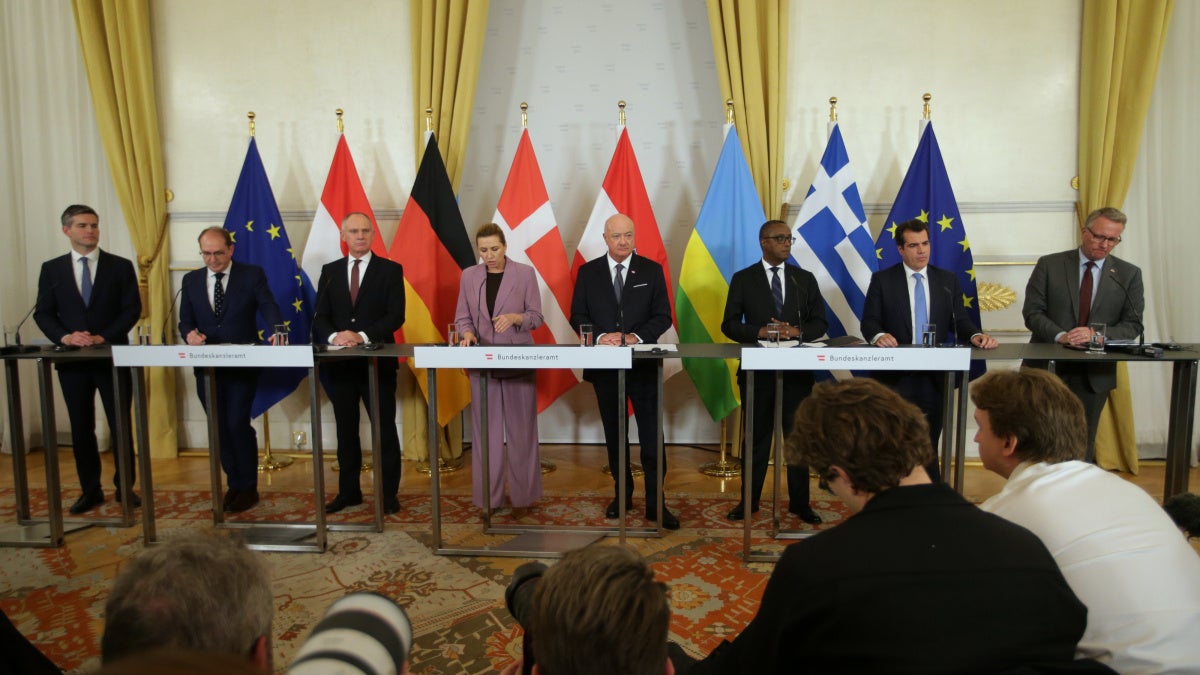
Austria, Denmark, Germany, Greece, and the Netherlands have confirmed negotiations to establish offshore deportation hubs in Rwanda for rejected asylum seekers starting in 2027.
 ⚖️Law & Policy
Photo: Human Rights Watch
Key points
- Austria, Denmark, Germany, Greece, and the Netherlands announced Rwanda deportation talks.
- Transfers of rejected asylum seekers are targeted to begin in 2027.
- Human Rights Watch and international bodies have condemned the deal over human rights concerns.
Five European Union member states have officially confirmed ongoing negotiations with Rwanda to establish offshore deportation centers for rejected asylum seekers, marking a significant shift in the bloc's migration policy. Austria, Denmark, Germany, Greece, and the Netherlands announced the initiative on November 16, 2026, alongside Rwanda's interior minister during the Vienna Migration Conference.
Under the newly enacted EU Return Regulation, member states are permitted to set up return hubs outside the bloc for individuals who cannot be sent directly to their countries of origin. The participating governments intend to begin transferring individuals, including families with children, to Rwanda by 2027. However, the announcement lacked any accompanying human rights or due diligence assessments.
Human Rights Watch and various international organizations have sharply criticized the plan, highlighting Rwanda's documented record of suppressing political dissent, interfering with the judiciary, and supporting armed groups in the Democratic Republic of Congo. Critics argue that third-country transfers violate foundational European rights obligations and expose deportees to arbitrary detention, ill-treatment, and subsequent chain refoulement.
The stakes
If implemented, the agreement will reshape European migration enforcement by establishing a formal precedent for externalizing asylum processing. Participating governments gain a mechanism to bypass domestic legal hurdles for deportations, while deported individuals face severe human rights risks. Furthermore, the partnership threatens to bolster Rwanda's international standing and financial position, potentially compromising the EU's willingness to critique domestic and foreign abuses by Kigali.
Two readings
- Supporters read the deal as a necessary and pragmatic enforcement tool to deter irregular migration, ease domestic reception burdens, and ensure that individuals without legal status are successfully removed from Europe.
- Critics read the agreement as a cynical abdication of humanitarian responsibility that funnels financial aid to an authoritarian regime while violating international human rights law and endangering vulnerable migrants.
Source Human Rights Watch — hrw.org/news/2026/11/16/eu-countries-plan-rwanda-deportation-centers ↗
Read next
 ✒️Opinion & Analysis
ICJ Rules Myanmar Military Committed Genocide Against Rohingya
The International Court of Justice has found Myanmar's military guilty of genocide against the Rohingya, a ruling that damages the international standing of both Aung San…
 🕯️Democracy & Rights
Chinese teachers face rising parental pressure over personal life choices
Chinese educators are encountering a surge in unreasonable demands from parents, including complaints regarding teachers' pregnancy and maternity leave.
 🛡️War & Security
Ukraine Restricts Media Coverage of Infrastructure Damage Amid Russian Strikes
President Volodymyr Zelenskyy has issued a decree prohibiting media outlets from reporting on the impact of Russian strikes against critical infrastructure and the status…
 🏮China & Taiwan
Beijing Reaffirms Reunification Stance Following Taiwan Local Election Results
China’s Taiwan Affairs Office declared that the island’s reunification with the mainland remains inevitable, despite recent shifts in Taiwan's local political landscape.
 🇪🇺Europe
US Air Force Repels Unauthorized Drone Incursion at RAF Lakenheath
U.S. security forces at a British air base successfully countered a group of unidentified drones, amid growing concerns over potential foreign state involvement.
 🕯️Democracy & Rights
Malaysia to Display Artworks Recovered in 1MDB Corruption Scandal
The Malaysian National Art Gallery will exhibit four pieces of art previously linked to the 1MDB financial scandal, following their successful repatriation to the country…