South Africa Faces Legislative Hurdles in Providing Modern Cancer Care
South African patients are struggling to access modern cancer treatments due to outdated medical regulations and funding constraints within both public and private healthcare sectors.
 ⚖️Law & Policy
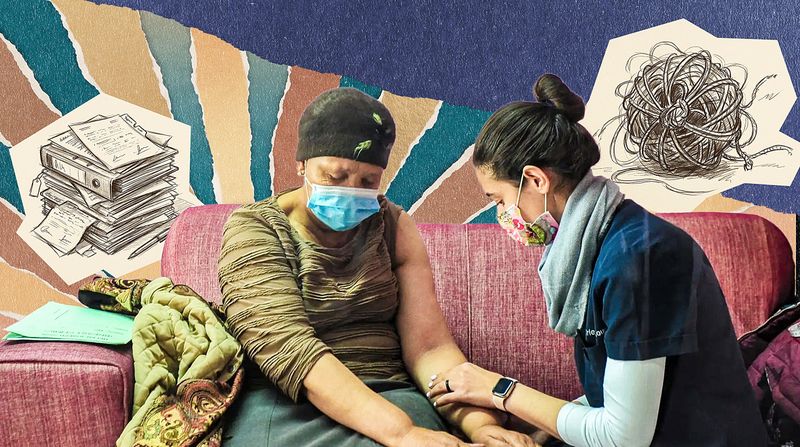
Photo: Daily Maverick
Key points
- Outdated medical regulations prevent coverage of modern cancer therapies.
- The mandatory review of Prescribed Minimum Benefits has been stalled since 2003.
- Public sector access is limited by the National Essential Medicines List and budget constraints.
Access to innovative cancer therapies in South Africa is currently hindered by a combination of high costs and a legislative framework that has failed to keep pace with medical advancements. While global breakthroughs in immunotherapy and targeted treatments offer new hope, patients in the public sector often find these options unavailable, while private medical scheme members frequently face funding denials or significant out-of-pocket expenses.
The current regulatory landscape, governed by the Medical Schemes Act, relies on a list of Prescribed Minimum Benefits (PMBs) that critics argue is severely outdated. Although the law mandates that these benefits be reviewed every two years to incorporate new health technologies, a comprehensive review has not been completed since 2003. Consequently, modern biological and immunotherapy treatments remain largely excluded from mandatory coverage.
In the public sector, access is dictated by the National Essential Medicines List, which balances clinical efficacy with the constraints of limited provincial budgets. While the National Essential Medicines List Committee is currently evaluating the inclusion of newer therapies, patient advocates emphasize that the core issue remains a systemic failure to align national health policy with the rapid evolution of oncology science.
The stakes
If the government fails to update the PMB framework and streamline the Essential Medicines List, patients will continue to face inequitable access to life-saving care. Successful reform would likely increase the financial burden on medical schemes and state budgets, but it would also standardize care levels and improve survival outcomes for thousands of South Africans.
Two readings
- Supporters of reform argue that updating the legislative framework is a moral and scientific imperative to ensure that modern medicine is not restricted to the wealthy.
- Critics and medical scheme administrators often caution that rapidly expanding coverage without sustainable funding models could threaten the financial viability of the entire private healthcare system.
Source Daily Maverick — dailymaverick.co.za/article/2026-11-18-sas-cancer-story-navigating-… ↗
Read next
 ✒️Opinion & Analysis
ICJ Rules Myanmar Military Committed Genocide Against Rohingya
The International Court of Justice has found Myanmar's military guilty of genocide against the Rohingya, a ruling that damages the international standing of both Aung San…
 🕯️Democracy & Rights
Chinese teachers face rising parental pressure over personal life choices
Chinese educators are encountering a surge in unreasonable demands from parents, including complaints regarding teachers' pregnancy and maternity leave.
 🛡️War & Security
Ukraine Restricts Media Coverage of Infrastructure Damage Amid Russian Strikes
President Volodymyr Zelenskyy has issued a decree prohibiting media outlets from reporting on the impact of Russian strikes against critical infrastructure and the status…
 🏮China & Taiwan
Beijing Reaffirms Reunification Stance Following Taiwan Local Election Results
China’s Taiwan Affairs Office declared that the island’s reunification with the mainland remains inevitable, despite recent shifts in Taiwan's local political landscape.
 🇪🇺Europe
US Air Force Repels Unauthorized Drone Incursion at RAF Lakenheath
U.S. security forces at a British air base successfully countered a group of unidentified drones, amid growing concerns over potential foreign state involvement.
 🕯️Democracy & Rights
Malaysia to Display Artworks Recovered in 1MDB Corruption Scandal
The Malaysian National Art Gallery will exhibit four pieces of art previously linked to the 1MDB financial scandal, following their successful repatriation to the country…