Canada Supreme Court Upholds Key Provisions of Quebec Secularism Law
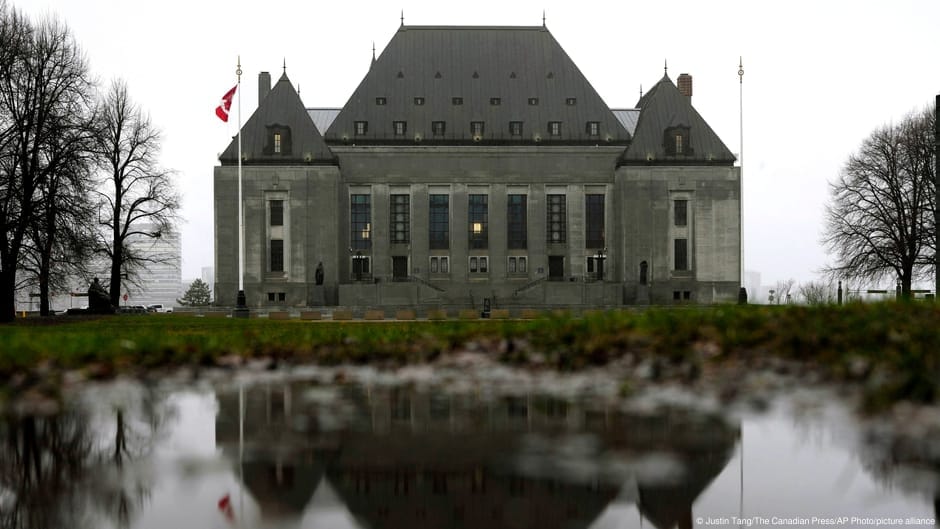
Canada's Supreme Court has largely upheld Quebec's controversial Bill 21, which prohibits public sector employees from wearing religious symbols, while granting an exemption for provincial legislators.
 ⚖️Law & Policy
Photo: DW English
Key points
- Supreme Court upholds ban on religious symbols for Quebec public servants.
- Provincial legislators are exempt from the religious symbol restrictions.
- The ruling validates the use of the notwithstanding clause to bypass constitutional rights.
- Critics argue the law institutionalizes discrimination against religious minorities.
The Supreme Court of Canada issued a significant ruling on Friday regarding Quebec's Bill 21, a 2019 law that restricts public servants—including teachers and police officers—from wearing religious attire such as hijabs, turbans, and yarmulkes. While the court affirmed the province's authority to enforce these secularism standards in the broader public sector, it carved out a specific exception for members of Quebec’s National Assembly, ruling they may continue to display religious symbols while performing their duties.
Chief Justice Richard Wagner stated that the legislation aligns with Quebec's historical commitment to state secularism. The provincial government utilized the "notwithstanding clause" during the bill's passage, a constitutional mechanism that shields provincial laws from certain federal charter challenges. This legal maneuver was central to the case, as it allowed Quebec to bypass standard constitutional protections regarding freedom of religion.
The decision has drawn sharp reactions from political figures and civil rights advocates. Supporters within the Coalition Avenir Québec (CAQ) framed the court's validation as a triumph for provincial autonomy and the preservation of Quebec’s secular identity. Conversely, critics, including the National Council of Canadian Muslims, argue the law institutionalizes discrimination, particularly against Muslim women, and sets a dangerous precedent for the potential erosion of fundamental rights across Canada.
The stakes
The ruling solidifies the power of provincial governments to utilize the notwithstanding clause to bypass constitutional rights, potentially altering the balance of power between federal and provincial jurisdictions. While the Quebec government gains legal reinforcement for its secularism agenda, critics argue that minority groups face systemic barriers to employment and public participation, further deepening the debate over state-mandated neutrality versus individual religious expression.
Two readings
- Supporters view the ruling as a vital affirmation of Quebec’s right to define its own social values and protect the secular nature of its public institutions.
- Critics contend the law is a form of state-sanctioned Islamophobia that undermines the Canadian Charter of Rights and Freedoms by prioritizing secularism over individual liberty.
Source DW English — dw.com/en/canada-supreme-court-largely-upholds-quebec-secularism-bi… ↗
Read next
 ✒️Opinion & Analysis
ICJ Rules Myanmar Military Committed Genocide Against Rohingya
The International Court of Justice has found Myanmar's military guilty of genocide against the Rohingya, a ruling that damages the international standing of both Aung San…
 🕯️Democracy & Rights
Chinese teachers face rising parental pressure over personal life choices
Chinese educators are encountering a surge in unreasonable demands from parents, including complaints regarding teachers' pregnancy and maternity leave.
 🛡️War & Security
Ukraine Restricts Media Coverage of Infrastructure Damage Amid Russian Strikes
President Volodymyr Zelenskyy has issued a decree prohibiting media outlets from reporting on the impact of Russian strikes against critical infrastructure and the status…
 🏮China & Taiwan
Beijing Reaffirms Reunification Stance Following Taiwan Local Election Results
China’s Taiwan Affairs Office declared that the island’s reunification with the mainland remains inevitable, despite recent shifts in Taiwan's local political landscape.
 🇪🇺Europe
US Air Force Repels Unauthorized Drone Incursion at RAF Lakenheath
U.S. security forces at a British air base successfully countered a group of unidentified drones, amid growing concerns over potential foreign state involvement.
 🕯️Democracy & Rights
Malaysia to Display Artworks Recovered in 1MDB Corruption Scandal
The Malaysian National Art Gallery will exhibit four pieces of art previously linked to the 1MDB financial scandal, following their successful repatriation to the country…