Iranian Heritage Official Advocates for Traditional Water Management Systems
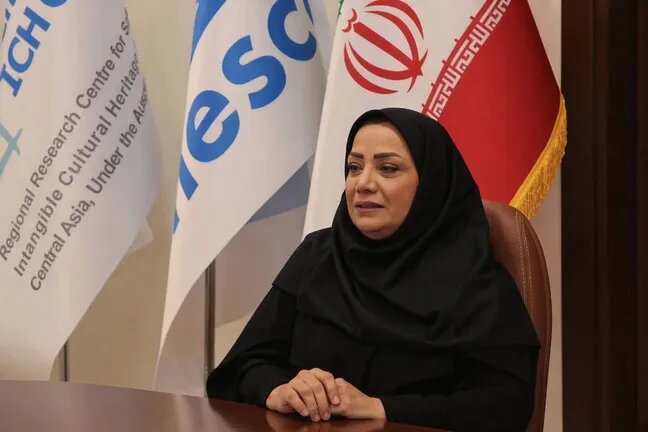
Atousa Momeni, head of a regional heritage research center in Tehran, is promoting the integration of traditional water-sharing and conservation practices to address modern climate challenges.
 ⚖️Law & Policy
Photo: Tehran Times
Key points
- Iran promotes traditional water management to address climate change.
- Three community-led water initiatives to receive national heritage awards.
- Official emphasizes that community participation is vital for cultural preservation.
Atousa Momeni, director of the Tehran-based regional center for safeguarding intangible cultural heritage, has called for a strategic pivot toward traditional Iranian water management to mitigate contemporary environmental crises. Ahead of the International Day of the Intangible Cultural Heritage, Momeni argued that ancient techniques—such as rainwater harvesting and community-managed reservoirs—offer essential lessons for regions grappling with long-term drought and climate instability.
The center has selected three initiatives from the Semnan, Hormozgan, and Fars provinces to receive the “Living Heritage and Water Award.” These projects represent diverse applications of historical knowledge, ranging from customary water-sharing rules in Semnan to the restoration of traditional storage facilities in the Larestan region. Momeni emphasized that these systems are not merely engineering feats but are fundamentally rooted in social organization and collective responsibility.
Momeni cautioned that merely documenting heritage is insufficient for long-term survival. She stressed that the preservation of such practices requires active community engagement, the transmission of skills to younger generations, and the maintenance of the social environments that allow these traditions to function. According to Momeni, the goal is not to abandon modern technology, but to synthesize historical wisdom with contemporary science to ensure future water security.
The stakes
If these traditional practices are successfully integrated into modern policy, local communities in arid regions may gain more resilient and sustainable water access. However, failure to secure the social and economic conditions necessary for these traditions to survive could lead to the permanent loss of indigenous knowledge, leaving governments with fewer tools to combat the accelerating pressures of climate change.
Two readings
- Supporters argue that traditional knowledge provides cost-effective, community-led solutions that are more socially sustainable than top-down, purely technical interventions.
- Critics suggest that historical methods may be insufficient to meet the scale of modern industrial and urban water demands without significant modernization and state investment.
Source Tehran Times — tehrantimes.com/news/531944/Iran-s-traditional-water-wisdom-could-h… ↗
Read next
 ✒️Opinion & Analysis
ICJ Rules Myanmar Military Committed Genocide Against Rohingya
The International Court of Justice has found Myanmar's military guilty of genocide against the Rohingya, a ruling that damages the international standing of both Aung San…
 🕯️Democracy & Rights
Chinese teachers face rising parental pressure over personal life choices
Chinese educators are encountering a surge in unreasonable demands from parents, including complaints regarding teachers' pregnancy and maternity leave.
 🛡️War & Security
Ukraine Restricts Media Coverage of Infrastructure Damage Amid Russian Strikes
President Volodymyr Zelenskyy has issued a decree prohibiting media outlets from reporting on the impact of Russian strikes against critical infrastructure and the status…
 🏮China & Taiwan
Beijing Reaffirms Reunification Stance Following Taiwan Local Election Results
China’s Taiwan Affairs Office declared that the island’s reunification with the mainland remains inevitable, despite recent shifts in Taiwan's local political landscape.
 🇪🇺Europe
US Air Force Repels Unauthorized Drone Incursion at RAF Lakenheath
U.S. security forces at a British air base successfully countered a group of unidentified drones, amid growing concerns over potential foreign state involvement.
 🕯️Democracy & Rights
Malaysia to Display Artworks Recovered in 1MDB Corruption Scandal
The Malaysian National Art Gallery will exhibit four pieces of art previously linked to the 1MDB financial scandal, following their successful repatriation to the country…