Supreme Court Heard Arguments in Landmark Commercial Speech Case in 1975
On November 11, 1975, the U.S. Supreme Court heard oral arguments in Virginia State Board of Pharmacy v. Virginia Citizens Consumer Council, Inc., a pivotal case regarding First Amendment protections for commercial speech.
 ⚖️Law & Policy
Photo: Reason
Key points
- Virginia State Board of Pharmacy v. Virginia Citizens Consumer Council, Inc. argued in 1975
- Case challenged state bans on prescription drug price advertising
- Significance of First Amendment protections for commercial speech
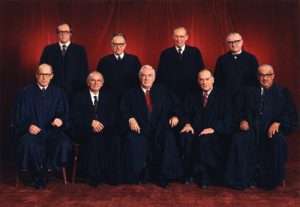
On November 11, 1975, the U.S. Supreme Court, then led by Chief Justice Warren Burger, heard oral arguments in the case of Virginia State Board of Pharmacy v. Virginia Citizens Consumer Council, Inc. The litigation centered on a Virginia state law that prohibited licensed pharmacists from advertising the prices of prescription drugs.
The legal challenge was brought by consumer groups who argued that the state’s restrictive policy violated the First Amendment rights of citizens to receive information. At the time, the state maintained that such advertising would undermine the professional standards of pharmacists and potentially lead to dangerous price competition that could compromise public health.
This case represented a significant moment in constitutional law, as the Court considered whether commercial speech—specifically price advertising—deserved protection under the free speech clause. The outcome of this case would eventually set a major precedent for how the judiciary evaluates government regulations that restrict truthful commercial information.
The stakes
The ruling in this case would determine the extent to which states can regulate professional advertising. A decision in favor of the consumers would limit the government's ability to suppress commercial information, thereby shifting the balance of power toward free-market transparency and consumer access, while potentially weakening the state’s traditional authority to police professional conduct.
Two readings
- Supporters of the challenge argued that the First Amendment protects the right of consumers to access truthful information, which is essential for a functioning market.
- Critics of the challenge maintained that allowing prescription drug advertising would devalue the pharmacist's role as a medical professional and prioritize commercial interests over patient safety.
Source Reason — reason.com/volokh/2026/11/11/today-in-supreme-court-history-november-11… ↗
Read next
 ✒️Opinion & Analysis
ICJ Rules Myanmar Military Committed Genocide Against Rohingya
The International Court of Justice has found Myanmar's military guilty of genocide against the Rohingya, a ruling that damages the international standing of both Aung San…
 🕯️Democracy & Rights
Chinese teachers face rising parental pressure over personal life choices
Chinese educators are encountering a surge in unreasonable demands from parents, including complaints regarding teachers' pregnancy and maternity leave.
 🛡️War & Security
Ukraine Restricts Media Coverage of Infrastructure Damage Amid Russian Strikes
President Volodymyr Zelenskyy has issued a decree prohibiting media outlets from reporting on the impact of Russian strikes against critical infrastructure and the status…
 🏮China & Taiwan
Beijing Reaffirms Reunification Stance Following Taiwan Local Election Results
China’s Taiwan Affairs Office declared that the island’s reunification with the mainland remains inevitable, despite recent shifts in Taiwan's local political landscape.
 🇪🇺Europe
US Air Force Repels Unauthorized Drone Incursion at RAF Lakenheath
U.S. security forces at a British air base successfully countered a group of unidentified drones, amid growing concerns over potential foreign state involvement.
 🕯️Democracy & Rights
Malaysia to Display Artworks Recovered in 1MDB Corruption Scandal
The Malaysian National Art Gallery will exhibit four pieces of art previously linked to the 1MDB financial scandal, following their successful repatriation to the country…