Putin Calls for Enhanced Security Cooperation Among CIS Member States
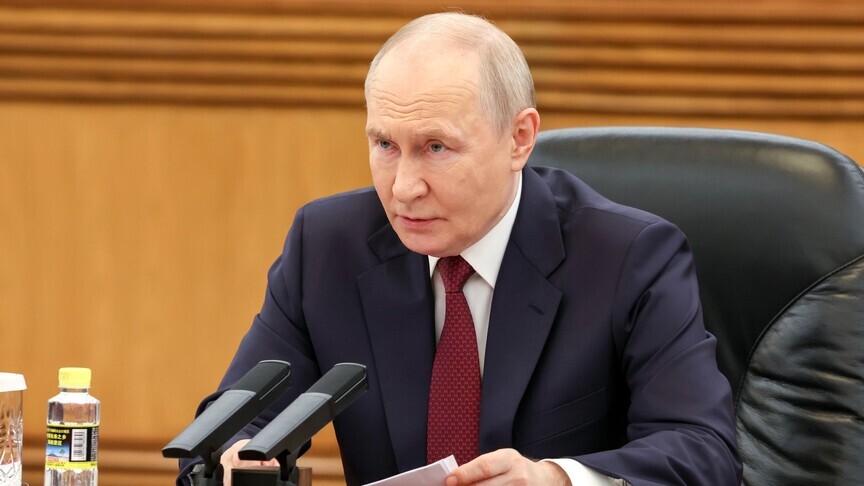
Russian President Vladimir Putin has urged security council secretaries from CIS nations to strengthen collaborative efforts to address internal and external threats. The call comes amidst heightened regional tensions and accusations of Western interference.
 🕊️Russia & Ukraine
Photo: Anadolu
Key points
- Putin calls for increased security cooperation among CIS member states.
- Sergey Shoygu accuses NATO and Europe of escalating regional tensions.
- The meeting focused on countering internal and external threats to sovereignty.
Russian President Vladimir Putin emphasized the necessity of leveraging the collective analytical and forecasting capabilities of Commonwealth of Independent States (CIS) security councils to maintain regional stability. Addressing the 14th meeting of CIS security secretaries in Moscow, Putin stated that utilizing these institutional resources is vital for protecting citizens and preserving the sovereignty of member states in an increasingly complex geopolitical landscape.
The meeting featured remarks from Sergey Shoygu, the secretary of Russia’s Security Council, who warned of growing international conflicts and alleged interference in the domestic affairs of sovereign nations. Shoygu characterized the current global climate as one defined by Western resistance to the rising influence of the Global South and East, which he argued seeks a more equitable, polycentric world order.
Shoygu further criticized European military expansion and NATO’s infrastructure developments in Poland and the Baltic states, describing these actions as provocations. While acknowledging efforts by U.S. President Donald Trump to address the conflict in Ukraine, Shoygu accused European partners of prioritizing continued warfare over diplomatic peace efforts.
The stakes
The push for deeper security integration within the CIS aims to consolidate a Russian-led sphere of influence against perceived Western encroachment. If successful, this alignment could result in more unified intelligence sharing and joint defense postures across the bloc, though it risks further isolating member states from Western security frameworks and escalating tensions with NATO.
Two readings
- Supporters view the initiative as a necessary defensive measure to safeguard regional sovereignty and counter destabilizing foreign interference.
- Critics interpret the move as a consolidation of authoritarian control and a pretext for Russia to exert greater influence over the domestic policies of its neighbors.
Source Anadolu — aa.com.tr/en/eurasia/putin-highlights-importance-of-using-cis-secur… ↗
Read next
 ✒️Opinion & Analysis
ICJ Rules Myanmar Military Committed Genocide Against Rohingya
The International Court of Justice has found Myanmar's military guilty of genocide against the Rohingya, a ruling that damages the international standing of both Aung San…
 🕯️Democracy & Rights
Chinese teachers face rising parental pressure over personal life choices
Chinese educators are encountering a surge in unreasonable demands from parents, including complaints regarding teachers' pregnancy and maternity leave.
 🛡️War & Security
Ukraine Restricts Media Coverage of Infrastructure Damage Amid Russian Strikes
President Volodymyr Zelenskyy has issued a decree prohibiting media outlets from reporting on the impact of Russian strikes against critical infrastructure and the status…
 🏮China & Taiwan
Beijing Reaffirms Reunification Stance Following Taiwan Local Election Results
China’s Taiwan Affairs Office declared that the island’s reunification with the mainland remains inevitable, despite recent shifts in Taiwan's local political landscape.
 🇪🇺Europe
US Air Force Repels Unauthorized Drone Incursion at RAF Lakenheath
U.S. security forces at a British air base successfully countered a group of unidentified drones, amid growing concerns over potential foreign state involvement.
 ⚖️Law & Policy
India Government Proposes 50% Increase in Parliamentary Seats and Women's Reservation
The Indian government plans to introduce legislation to expand the Lok Sabha to 850 seats and mandate a 33% reservation for women in legislative bodies.