Canada Imposes New Sanctions on Russian Missile and Cyber Operators
Canadian Foreign Minister Anita Anand announced a fresh package of sanctions targeting 38 entities and 24 individuals linked to Russia's military industrial base and cyber operations.
 🕊️Russia & Ukraine
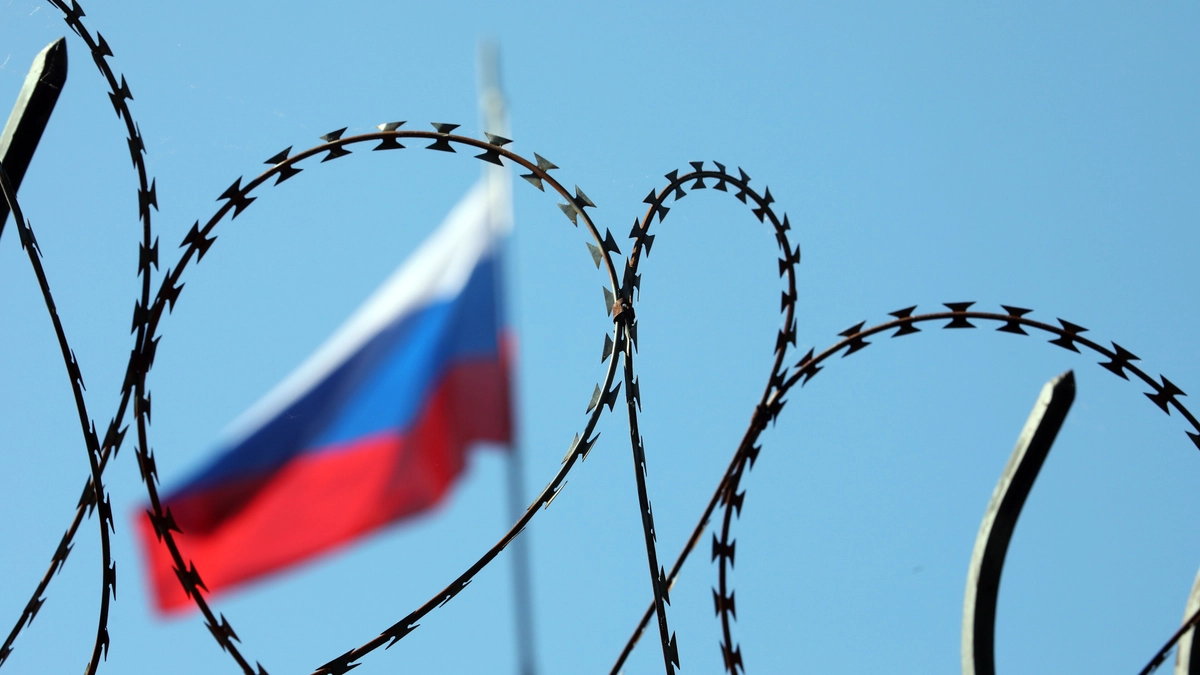
Photo: Ukrainska Pravda EN
Key points
- Canada targets 38 entities and 24 individuals
- Measures focus on ballistic missiles and cyber-sabotage
- Cryptocurrency exchanges are penalized to block war funding
Canadian Foreign Minister Anita Anand has unveiled a new round of restrictive measures aimed at weakening Russia's military capabilities and increasing the economic toll of its war in Ukraine. The latest package penalizes 38 entities and 24 individuals, focusing specifically on developers of ballistic missile technology and organizers of cyber-sabotage.
Ottawa's updated penalties also target financial intermediaries, including cryptocurrency exchanges accused of facilitating transactions that sustain the Russian war economy. By cutting off these financial channels, the government seeks to obstruct Moscow's access to external monetary support and advanced military infrastructure.
Foreign Minister Anand stated that the measures are designed to disrupt the capacity of the Russian leadership to launch missile attacks against Ukrainian urban areas. She reiterated that Canada maintains its commitment to supporting Ukraine until the conflict concludes and Ukrainian territorial integrity is restored.
The stakes
The sanctions directly threaten the financial stability of targeted technological and crypto entities, while incrementally raising procurement costs for Moscow's armed forces. Should these measures effectively choke off alternative payment routes, Russia's defense apparatus may face renewed logistical bottlenecks in sustaining its missile campaigns.
Two readings
- Supporters view the sanctions as an essential tightening of international pressure that closes critical financial loopholes exploited by Moscow.
- Critics argue that unilateral or middle-power sanctions have limited long-term impact on a heavily adapted wartime economy unless matched by broader global compliance.
Source Ukrainska Pravda EN — pravda.com.ua/eng/news/2026/11/09/8061961/ ↗
Read next
 ✒️Opinion & Analysis
ICJ Rules Myanmar Military Committed Genocide Against Rohingya
The International Court of Justice has found Myanmar's military guilty of genocide against the Rohingya, a ruling that damages the international standing of both Aung San…
 🕯️Democracy & Rights
Chinese teachers face rising parental pressure over personal life choices
Chinese educators are encountering a surge in unreasonable demands from parents, including complaints regarding teachers' pregnancy and maternity leave.
 🛡️War & Security
Ukraine Restricts Media Coverage of Infrastructure Damage Amid Russian Strikes
President Volodymyr Zelenskyy has issued a decree prohibiting media outlets from reporting on the impact of Russian strikes against critical infrastructure and the status…
 🏮China & Taiwan
Beijing Reaffirms Reunification Stance Following Taiwan Local Election Results
China’s Taiwan Affairs Office declared that the island’s reunification with the mainland remains inevitable, despite recent shifts in Taiwan's local political landscape.
 🇪🇺Europe
US Air Force Repels Unauthorized Drone Incursion at RAF Lakenheath
U.S. security forces at a British air base successfully countered a group of unidentified drones, amid growing concerns over potential foreign state involvement.
 ⚖️Law & Policy
India Government Proposes 50% Increase in Parliamentary Seats and Women's Reservation
The Indian government plans to introduce legislation to expand the Lok Sabha to 850 seats and mandate a 33% reservation for women in legislative bodies.