Independent Russian Newspaper Novaya Gazeta Shuts Moscow Newsroom Amid Pressure
The investigative newspaper Novaya Gazeta closed its Moscow office on Monday, citing unrelenting state pressure and wartime censorship in Russia.
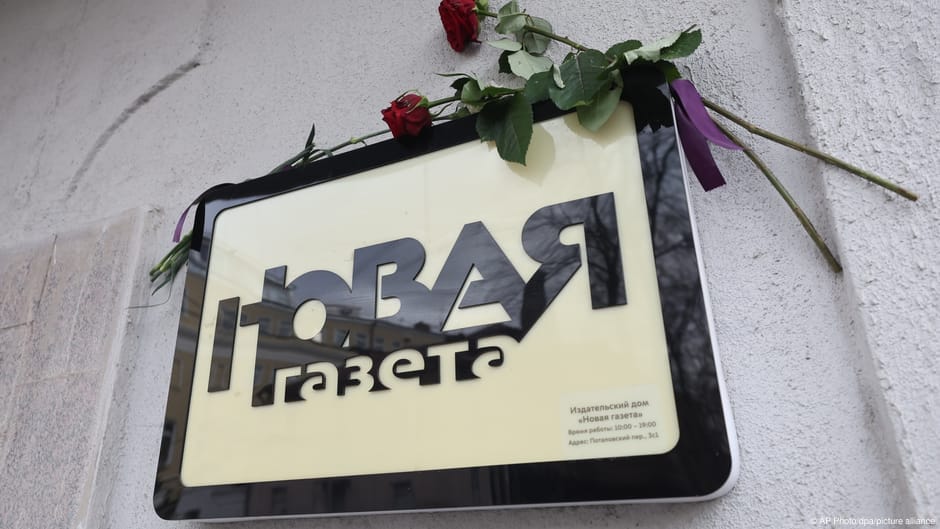 🕊️Russia & Ukraine
Photo: DW English
Key points
- Novaya Gazeta closes its Moscow newsroom due to state pressure
- Publication co-founded by Mikhail Gorbachev and led by Dmitry Muratov
- Six journalists killed since 1993 for their reporting
Independent Russian investigative newspaper Novaya Gazeta shuttered its Moscow newsroom on Monday following years of mounting state pressure and the implementation of strict wartime censorship laws. Co-founded by late Soviet leader Mikhail Gorbachev and led by 2021 Nobel Peace Prize laureate Dmitry Muratov, the publication had long challenged the Kremlin's policies, particularly through critical reporting on the ongoing invasion of Ukraine.
Authorities designated the outlet as a foreign agent and ordered it to vacate its premises, while domestic financial institutions were blocked from processing reader donations. The combination of legislative restrictions and financial strangulation forced the publication to abandon its physical headquarters. During the final gathering at the office, editor-in-chief Sergei Sokolov removed portraits of six journalists murdered since 1993 in connection with their reporting, including prominent investigative reporter Anna Politkovskaya.
Addressing assembled staff, Muratov declared that the constitutional guarantees protecting civil and political rights in Russia have ceased to function. Kremlin spokesman Dmitry Peskov dismissed the closure as a standard development within a competitive media environment. The publication's leadership has not yet confirmed whether the outlet will attempt to resume operations from exile.
The stakes
The closure of Novaya Gazeta removes one of the last major domestic platforms for independent journalism inside Russia, silencing a historic voice of democratic opposition. The state gains total information control over traditional domestic media channels, while independent journalists lose their physical base, leaving the future of investigative reporting in the country entirely underground or in exile.
Two readings
- Supporters read the closure as a tragic milestone in the systematic dismantling of press freedom and civil society by the Russian administration.
- Critics aligned with the government view the outlet's demise as a natural consequence of regulatory compliance and market competition in a wartime environment.
Source DW English — dw.com/en/russia-independent-novaya-gazeta-shuts-its-moscow-newsroo… ↗
Read next
 ✒️Opinion & Analysis
ICJ Rules Myanmar Military Committed Genocide Against Rohingya
The International Court of Justice has found Myanmar's military guilty of genocide against the Rohingya, a ruling that damages the international standing of both Aung San…
 🕯️Democracy & Rights
Chinese teachers face rising parental pressure over personal life choices
Chinese educators are encountering a surge in unreasonable demands from parents, including complaints regarding teachers' pregnancy and maternity leave.
 🛡️War & Security
Ukraine Restricts Media Coverage of Infrastructure Damage Amid Russian Strikes
President Volodymyr Zelenskyy has issued a decree prohibiting media outlets from reporting on the impact of Russian strikes against critical infrastructure and the status…
 🏮China & Taiwan
Beijing Reaffirms Reunification Stance Following Taiwan Local Election Results
China’s Taiwan Affairs Office declared that the island’s reunification with the mainland remains inevitable, despite recent shifts in Taiwan's local political landscape.
 🇪🇺Europe
US Air Force Repels Unauthorized Drone Incursion at RAF Lakenheath
U.S. security forces at a British air base successfully countered a group of unidentified drones, amid growing concerns over potential foreign state involvement.
 ⚖️Law & Policy
India Government Proposes 50% Increase in Parliamentary Seats and Women's Reservation
The Indian government plans to introduce legislation to expand the Lok Sabha to 850 seats and mandate a 33% reservation for women in legislative bodies.