Vladimir Putin Approves Long-Term Arctic Development and Security Strategy
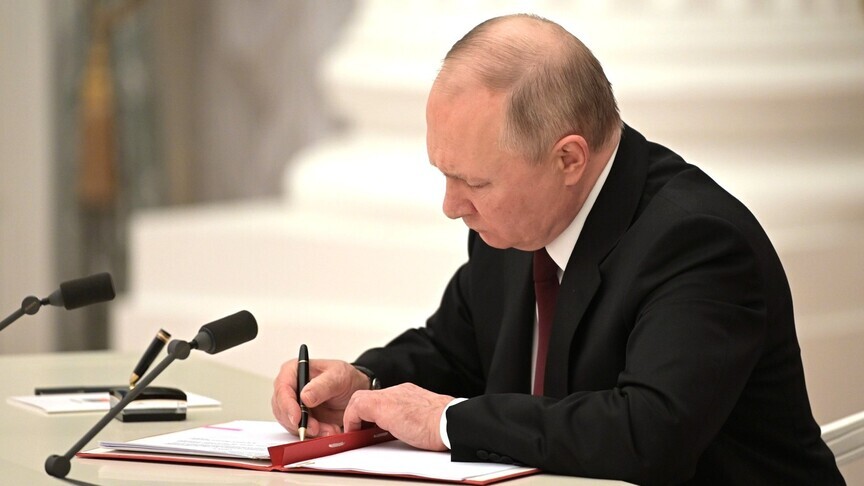
Russian President Vladimir Putin has signed a decree formalizing a new development strategy for the Arctic region extending through 2035. The plan emphasizes national security alongside economic infrastructure expansion.
 🕊️Russia & Ukraine
Photo: Anadolu
Key points
- President Putin signed a decree for Arctic development through 2035.
- Government must draft a comprehensive plan for the Transarctic Transport Corridor within six months.
- The strategy prioritizes both economic development and national security.
Russian President Vladimir Putin has officially signed a decree establishing a comprehensive development strategy for the Arctic zone, setting a policy roadmap that extends through 2035. The directive, published on the state’s legal information portal, mandates that the government formulate a detailed implementation plan for both regional development and the Transarctic Transport Corridor within the next six months.
The strategy is structured to be executed in distinct phases, with the initial stage spanning from 2026 to 2030, followed by a second phase covering 2031 to 2035. The document specifies that the framework will undergo periodic reviews every six years, though the president retains the authority to order adjustments at any time. The finalized plan must be submitted to the Presidential Council for Strategic Development and National Projects for formal review.
This initiative explicitly links regional infrastructure growth with the broader objective of ensuring national security in the high north. By formalizing these goals, the administration aims to solidify its influence over Arctic maritime routes and resource extraction capabilities over the next decade.
The stakes
The Russian government stands to gain increased control over emerging northern trade routes and untapped natural resources, potentially strengthening its geopolitical position. Conversely, international stakeholders and neighboring Arctic nations may view this expansion as a challenge to existing territorial balances, likely leading to heightened diplomatic friction and increased military posturing in the region.
Two readings
- Supporters argue the strategy is a necessary step to modernize infrastructure and secure Russia’s sovereign economic interests in a vital, resource-rich frontier.
- Critics contend the plan signals an aggressive move to militarize the Arctic, threatening regional stability and complicating international cooperation in the high north.
Source Anadolu — aa.com.tr/en/world/putin-signs-decree-approving-russia-s-arctic-dev… ↗
Read next
 ✒️Opinion & Analysis
ICJ Rules Myanmar Military Committed Genocide Against Rohingya
The International Court of Justice has found Myanmar's military guilty of genocide against the Rohingya, a ruling that damages the international standing of both Aung San…
 🕯️Democracy & Rights
Chinese teachers face rising parental pressure over personal life choices
Chinese educators are encountering a surge in unreasonable demands from parents, including complaints regarding teachers' pregnancy and maternity leave.
 🛡️War & Security
Ukraine Restricts Media Coverage of Infrastructure Damage Amid Russian Strikes
President Volodymyr Zelenskyy has issued a decree prohibiting media outlets from reporting on the impact of Russian strikes against critical infrastructure and the status…
 🏮China & Taiwan
Beijing Reaffirms Reunification Stance Following Taiwan Local Election Results
China’s Taiwan Affairs Office declared that the island’s reunification with the mainland remains inevitable, despite recent shifts in Taiwan's local political landscape.
 🇪🇺Europe
US Air Force Repels Unauthorized Drone Incursion at RAF Lakenheath
U.S. security forces at a British air base successfully countered a group of unidentified drones, amid growing concerns over potential foreign state involvement.
 ⚖️Law & Policy
India Government Proposes 50% Increase in Parliamentary Seats and Women's Reservation
The Indian government plans to introduce legislation to expand the Lok Sabha to 850 seats and mandate a 33% reservation for women in legislative bodies.