Japan Integrates AI to Enhance Typhoon Tracking and Government Forecasting
Japanese meteorological services are increasingly adopting artificial intelligence to improve the accuracy of typhoon path projections, outperforming traditional physics-based models.
 🛰️Tech & Power
Photo: SCMP Asia
Key points
- Japan is shifting toward AI for typhoon tracking
- AI models outperformed traditional physics-based systems
- Government agencies are researching AI integration for public safety
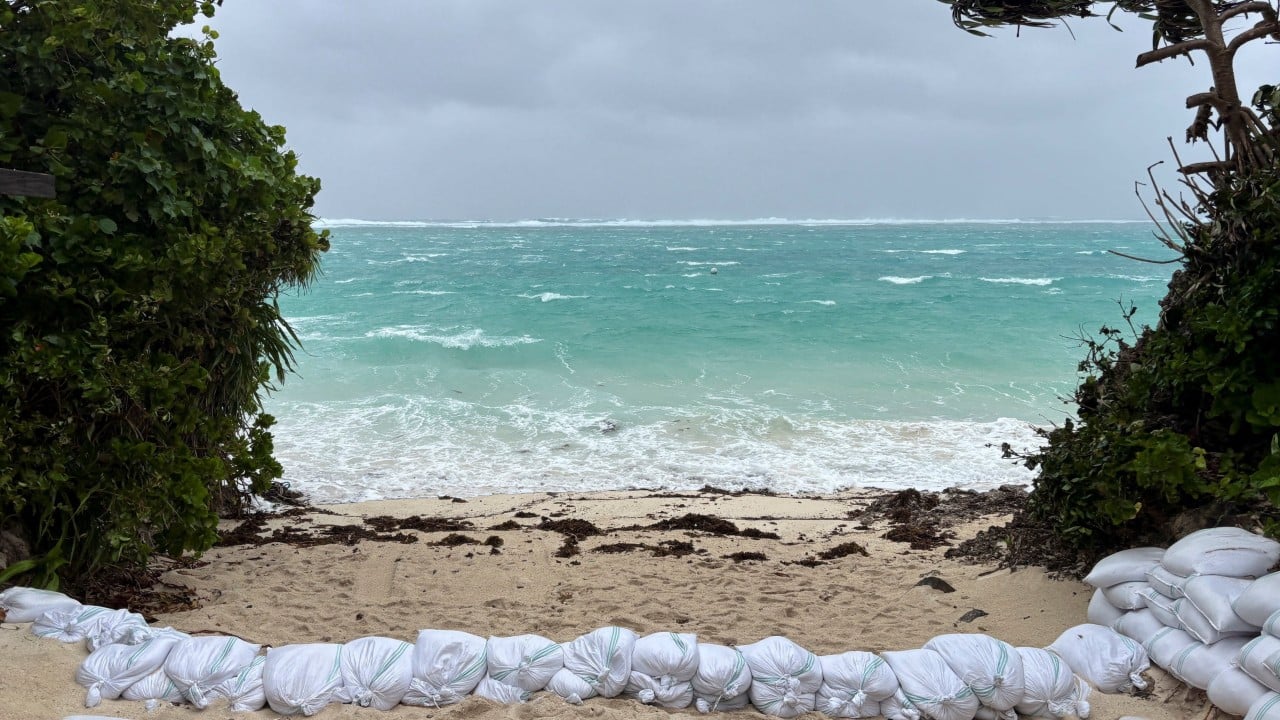
Japanese weather forecasting services have begun integrating artificial intelligence to track typhoons, with early results demonstrating superior accuracy compared to traditional physics-based models. Recent data from the private firm Weathernews Inc. showed that AI successfully predicted the trajectory of Typhoon Champi more effectively than established meteorological frameworks. As a result, the Japan Meteorological Agency has initiated research and development efforts to incorporate these machine-learning tools into national weather infrastructure.
While the transition toward AI-driven forecasting represents a significant technological shift, experts caution that the technology is still maturing. Current models remain highly proficient at mapping the physical path of storms, yet they struggle with the complex variables required to predict typhoon intensity accurately. Addressing these limitations is now a primary focus for researchers aiming to bolster disaster preparedness and government response protocols.
The integration of these systems is expected to influence how regional governments manage evacuations and emergency resource allocation during the typhoon season. By reducing uncertainty in storm paths, authorities hope to streamline decision-making processes and minimize the economic and social disruptions caused by extreme weather events.
The stakes
The government and public agencies stand to gain more precise early-warning capabilities, potentially saving lives and reducing infrastructure damage. Conversely, reliance on emerging AI models carries the risk of unforeseen errors in intensity estimation, which could complicate evacuation orders and emergency planning if the technology fails to account for rapid storm intensification.
Two readings
- Supporters argue that AI provides a necessary leap in precision, allowing for more efficient government planning and better protection of vulnerable coastal regions.
- Critics maintain that relying on black-box AI models for critical safety decisions is premature until the technology can consistently and reliably forecast storm intensity.
Source SCMP Asia — scmp.com/news/asia/east-asia/article/3374570/japanese-forecasters-f… ↗
Read next
 ✒️Opinion & Analysis
ICJ Rules Myanmar Military Committed Genocide Against Rohingya
The International Court of Justice has found Myanmar's military guilty of genocide against the Rohingya, a ruling that damages the international standing of both Aung San…
 🕯️Democracy & Rights
Chinese teachers face rising parental pressure over personal life choices
Chinese educators are encountering a surge in unreasonable demands from parents, including complaints regarding teachers' pregnancy and maternity leave.
 🛡️War & Security
Ukraine Restricts Media Coverage of Infrastructure Damage Amid Russian Strikes
President Volodymyr Zelenskyy has issued a decree prohibiting media outlets from reporting on the impact of Russian strikes against critical infrastructure and the status…
 🏮China & Taiwan
Beijing Reaffirms Reunification Stance Following Taiwan Local Election Results
China’s Taiwan Affairs Office declared that the island’s reunification with the mainland remains inevitable, despite recent shifts in Taiwan's local political landscape.
 🇪🇺Europe
US Air Force Repels Unauthorized Drone Incursion at RAF Lakenheath
U.S. security forces at a British air base successfully countered a group of unidentified drones, amid growing concerns over potential foreign state involvement.
 ⚖️Law & Policy
India Government Proposes 50% Increase in Parliamentary Seats and Women's Reservation
The Indian government plans to introduce legislation to expand the Lok Sabha to 850 seats and mandate a 33% reservation for women in legislative bodies.