Nvidia Board Rejects Return of Former CEO Jensen Huang Despite Political Pressure
Nvidia's board of directors confirmed it will not reinstate former CEO Jensen Huang following his resignation over a security scandal, even as high-profile figures called for his return.
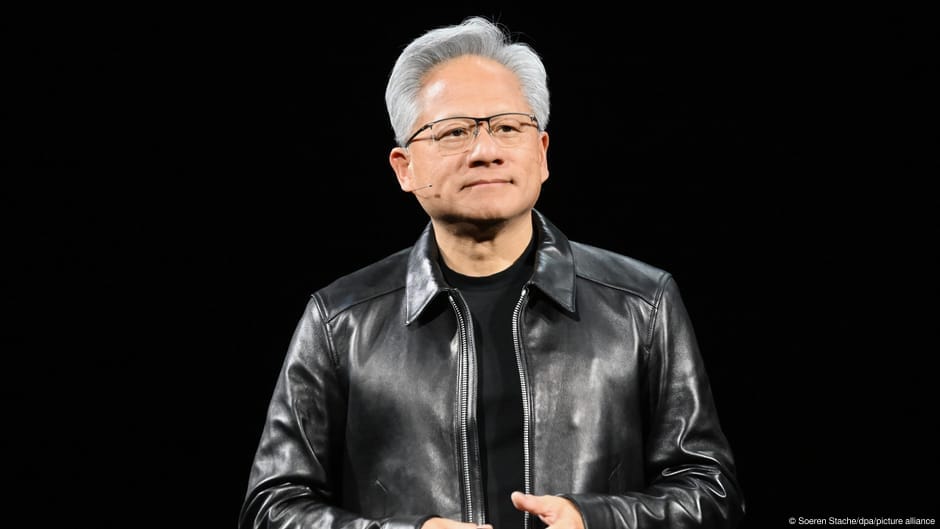 🛰️Tech & Power
Photo: DW English
Key points
- Nvidia board unanimously rejects return of former CEO Jensen Huang
- Interim CEO Colette Kress reports third-quarter revenues doubled past $115 billion
- US President Donald Trump and Elon Musk previously called for Huang's reinstatement
Nvidia Chairman Harvey Jones announced on Tuesday that the company's board has unanimously rejected any plans to bring back former Chief Executive Jensen Huang. Huang resigned last Thursday after admitting to extramarital affairs, including a relationship with a woman suspected of being a Chinese intelligence asset. Despite the leadership turmoil, interim CEO and CFO Colette Kress reported that third-quarter revenues doubled to over $115 billion, reassuring investors that operations remain stable.
The board's firm stance arrives amid a public campaign led by US President Donald Trump and tech entrepreneur Elon Musk urging Huang's reinstatement. Huang himself expressed willingness to return if invited, citing widespread backing from employees and business partners. However, Chairman Jones emphasized during the earnings call that the board considers the matter closed and intends to move forward under interim leadership.
As a dominant force supplying crucial processors for global artificial intelligence models, Nvidia's corporate stability holds immense strategic importance for international markets and defense applications. The political involvement of figures like President Trump elevates the corporate leadership dispute into a matter of broader economic and technological security.
The stakes
If the board's rejection holds, Nvidia avoids immediate governance instability while searching for a permanent leader in a vital sector. Supporters of the board's decision protect corporate governance standards, whereas critics and political allies pushing for Huang's reinstatement argue that losing his visionary leadership could hamper American technological dominance in artificial intelligence.
Two readings
- Supporters view the board's refusal to reinstate Huang as a necessary defense of institutional integrity and national security following serious personal misconduct.
- Critics argue that rejecting a vital industry pioneer under external political pressure risks destabilizing a company critical to global technological leadership.
Source DW English — dw.com/en/nvidia-beats-q3-expectations-in-first-report-post-jensen-… ↗
Read next
 ✒️Opinion & Analysis
ICJ Rules Myanmar Military Committed Genocide Against Rohingya
The International Court of Justice has found Myanmar's military guilty of genocide against the Rohingya, a ruling that damages the international standing of both Aung San…
 🕯️Democracy & Rights
Chinese teachers face rising parental pressure over personal life choices
Chinese educators are encountering a surge in unreasonable demands from parents, including complaints regarding teachers' pregnancy and maternity leave.
 🛡️War & Security
Ukraine Restricts Media Coverage of Infrastructure Damage Amid Russian Strikes
President Volodymyr Zelenskyy has issued a decree prohibiting media outlets from reporting on the impact of Russian strikes against critical infrastructure and the status…
 🏮China & Taiwan
Beijing Reaffirms Reunification Stance Following Taiwan Local Election Results
China’s Taiwan Affairs Office declared that the island’s reunification with the mainland remains inevitable, despite recent shifts in Taiwan's local political landscape.
 🇪🇺Europe
US Air Force Repels Unauthorized Drone Incursion at RAF Lakenheath
U.S. security forces at a British air base successfully countered a group of unidentified drones, amid growing concerns over potential foreign state involvement.
 ⚖️Law & Policy
India Government Proposes 50% Increase in Parliamentary Seats and Women's Reservation
The Indian government plans to introduce legislation to expand the Lok Sabha to 850 seats and mandate a 33% reservation for women in legislative bodies.