Skylark Labs Demonstrates Humanoid Robot for Explosive Hazard Detection
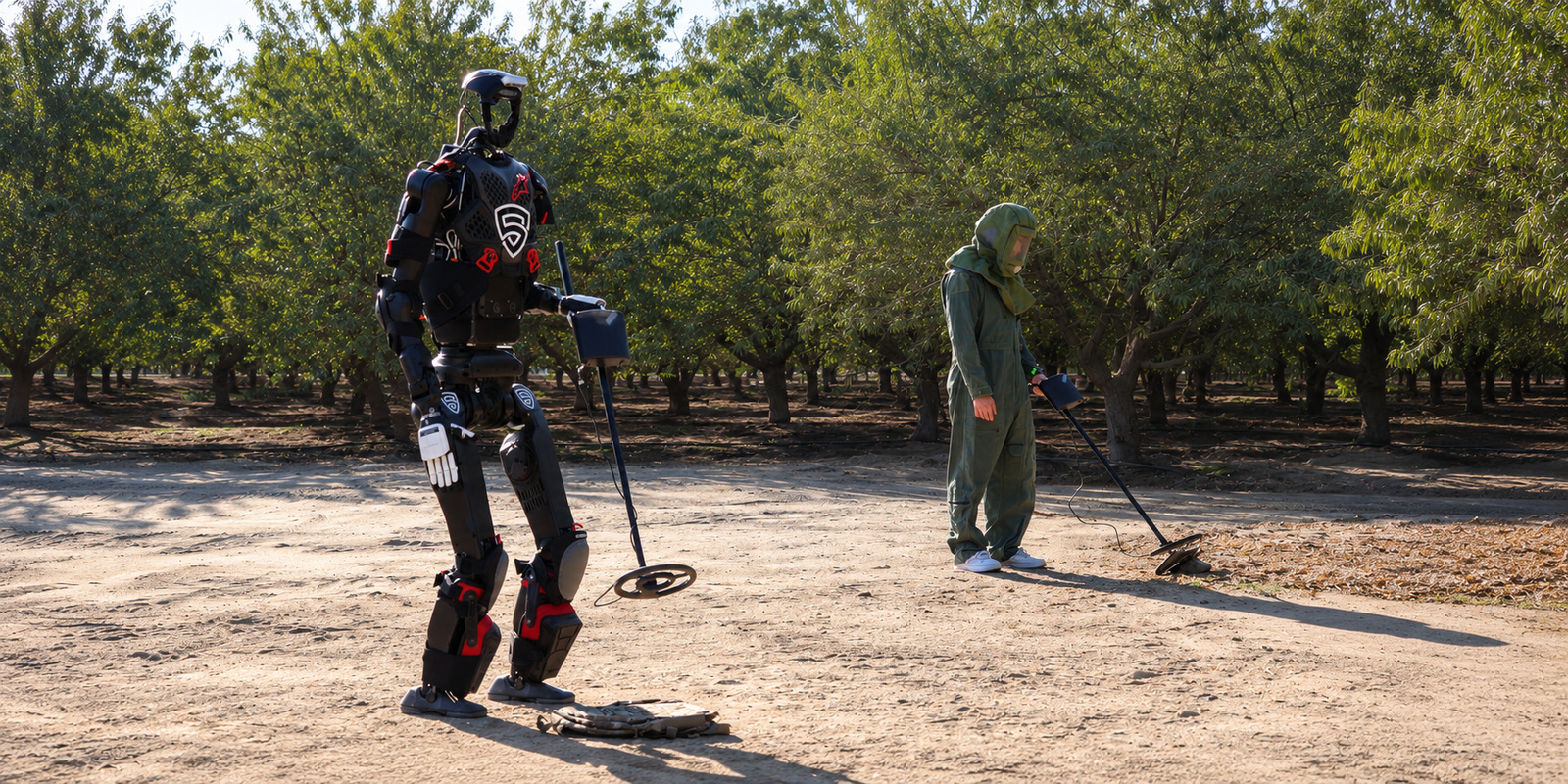
Skylark Labs has successfully demonstrated an autonomous humanoid robot designed to conduct explosive hazard searches using standard handheld metal detectors under human supervision.
 🛰️Tech & Power
Photo: Breaking Defense
Key points
- Skylark Labs demonstrated a humanoid robot using standard metal detectors for EOD tasks.
- The robot learns search patterns from brief human demonstrations using CFAM technology.
- Long-term goals include deploying coordinated multi-robot teams overseen by a single specialist.
Skylark Labs has publicly showcased a humanoid robot capable of performing dangerous explosive ordnance disposal (EOD) ground sweeps utilizing standard handheld metal detectors. During a recent experiment conducted for an EOD supplier, the bipedal machine independently picked up a detector, systematically scanned a designated zone, and halted and backed away when the device signaled an alert, all without requiring micro-managed directional commands for every step.
According to company representatives, the humanoid's core capability is powered by Continual Field-Adaptive Models (CFAMs), which allow the machine to learn search techniques from brief human demonstrations lasting only a few minutes. The system integrates visual and audio feedback, using the detector's audible beep directly to trigger subsequent actions. This approach leverages existing military equipment rather than requiring specialized, custom-built robotic tools.
Data compiled by Action on Armed Violence underscores the persistent global hazard, noting 10,376 improvised explosive device incidents across 94 countries between 2015 and 2024, resulting in over 83,000 casualties. While current military forces utilize tracked remote-controlled systems like the U.S. Air Force's L3Harris T7, developers argue that humanoid platforms provide unique advantages through human-like reach, posture, and manual dexterity. Skylark's longer-term objective involves deploying coordinated multi-robot teams capable of partitioning large search sectors under the supervision of a single remote specialist.
The stakes
Defense contractors, military engineering units, and EOD specialists stand to benefit from reduced battlefield exposure to lethal hazards, while safety advocates note that removing humans from initial sweeps could dramatically cut casualties. If fully realized, this technology changes frontline demining protocols by shifting human operators from direct physical risk to remote oversight, though ultimate physical disposal tasks remain under active development.
Two readings
- Supporters view the humanoid approach as a practical, cost-effective leap that utilizes existing tools and keeps specialists safely distant from unswept, high-risk terrain.
- Critics point out that robotic reliability in chaotic, real-world combat environments is still unproven, warning against premature reliance on autonomous systems for life-or-death tasks.
Source Breaking Defense — breakingdefense.com/2026/11/skylark-labs-demonstrates-humanoid-search-f… ↗
Read next
 ✒️Opinion & Analysis
ICJ Rules Myanmar Military Committed Genocide Against Rohingya
The International Court of Justice has found Myanmar's military guilty of genocide against the Rohingya, a ruling that damages the international standing of both Aung San…
 🕯️Democracy & Rights
Chinese teachers face rising parental pressure over personal life choices
Chinese educators are encountering a surge in unreasonable demands from parents, including complaints regarding teachers' pregnancy and maternity leave.
 🛡️War & Security
Ukraine Restricts Media Coverage of Infrastructure Damage Amid Russian Strikes
President Volodymyr Zelenskyy has issued a decree prohibiting media outlets from reporting on the impact of Russian strikes against critical infrastructure and the status…
 🏮China & Taiwan
Beijing Reaffirms Reunification Stance Following Taiwan Local Election Results
China’s Taiwan Affairs Office declared that the island’s reunification with the mainland remains inevitable, despite recent shifts in Taiwan's local political landscape.
 🇪🇺Europe
US Air Force Repels Unauthorized Drone Incursion at RAF Lakenheath
U.S. security forces at a British air base successfully countered a group of unidentified drones, amid growing concerns over potential foreign state involvement.
 ⚖️Law & Policy
India Government Proposes 50% Increase in Parliamentary Seats and Women's Reservation
The Indian government plans to introduce legislation to expand the Lok Sabha to 850 seats and mandate a 33% reservation for women in legislative bodies.