CACI International Unveils Long-Range Counter-Drone System for Border Security
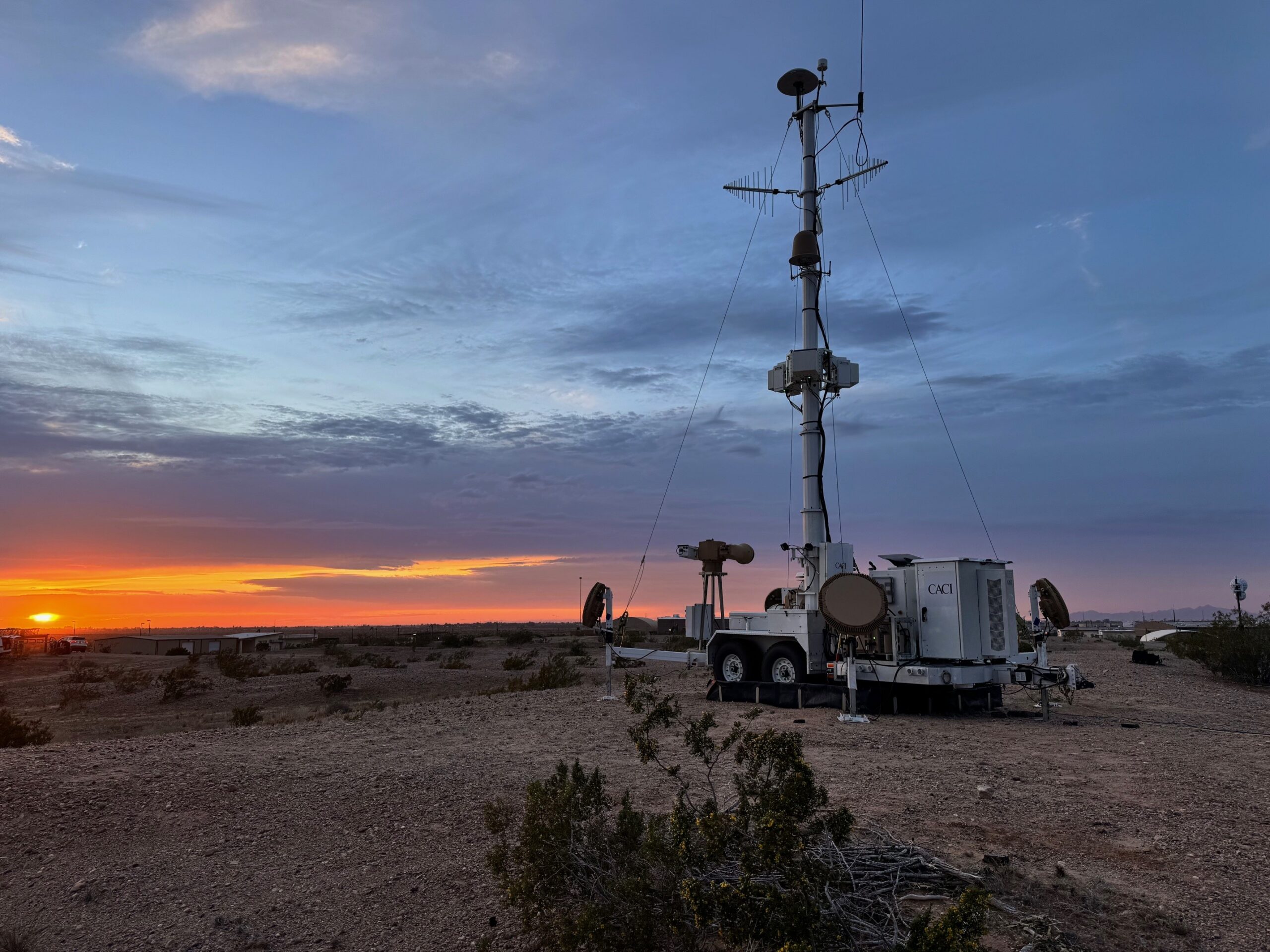
CACI International has introduced SkyValor, a software-defined counter-UAS system designed to detect and neutralize drones at ranges up to 75 kilometers.
 🛰️Tech & Power
Photo: Breaking Defense
Key points
- SkyValor provides detection ranges of up to 75 kilometers, significantly exceeding traditional 1-5 kilometer systems.
- The platform uses software-defined non-kinetic effects to neutralize drones, reducing the need for costly kinetic interceptors.
- Recent testing at the U.S. southern border demonstrated the system's ability to handle diverse and unpredictable drone flight patterns.
CACI International has launched SkyValor, a new counter-unmanned aircraft system (C-UAS) designed to enhance border security and protect critical infrastructure. According to CTO Jason Bales, the system utilizes a multi-layered architecture that integrates radio frequency sensing, radar, electronic warfare, and cellular detection to identify threats at distances up to 75 kilometers. This capacity significantly expands the operational decision window for security personnel, moving from a few seconds to nearly 20 minutes of reaction time.
The system is software-defined, allowing for real-time updates to counter evolving drone waveforms and behaviors. By prioritizing non-kinetic effects, such as signal hijacking or jamming, the platform aims to disable threats with minimal collateral damage. This approach is intended to reduce reliance on expensive kinetic interceptors, reserving them only for scenarios where non-kinetic measures are insufficient.
Recent field testing at Yuma and along the U.S. southern border served as a proving ground for the technology, exposing the system to various flight profiles including low-altitude skimming and long-range incursions. The platform is designed to integrate into broader security architectures, providing a scalable solution for national security missions.
The stakes
The deployment of long-range C-UAS technology shifts the balance of power in border and infrastructure defense by providing a significant tactical advantage over drone operators. If widely adopted, this technology could reduce the costs associated with traditional kinetic defense while increasing the precision of border monitoring, though it raises questions regarding the surveillance of neighboring territories and the potential for electronic interference.
Two readings
- Supporters argue that the system provides a necessary, cost-effective, and flexible response to the rapidly proliferating threat of low-cost, sophisticated drone incursions.
- Critics may express concern over the implications of using long-range sensing and electronic warfare capabilities that can reach deep into neighboring sovereign territory.
Source Breaking Defense — breakingdefense.com/2026/11/this-counter-uas-system-senses-deep-inside-… ↗
Read next
 ✒️Opinion & Analysis
ICJ Rules Myanmar Military Committed Genocide Against Rohingya
The International Court of Justice has found Myanmar's military guilty of genocide against the Rohingya, a ruling that damages the international standing of both Aung San…
 🕯️Democracy & Rights
Chinese teachers face rising parental pressure over personal life choices
Chinese educators are encountering a surge in unreasonable demands from parents, including complaints regarding teachers' pregnancy and maternity leave.
 🛡️War & Security
Ukraine Restricts Media Coverage of Infrastructure Damage Amid Russian Strikes
President Volodymyr Zelenskyy has issued a decree prohibiting media outlets from reporting on the impact of Russian strikes against critical infrastructure and the status…
 🏮China & Taiwan
Beijing Reaffirms Reunification Stance Following Taiwan Local Election Results
China’s Taiwan Affairs Office declared that the island’s reunification with the mainland remains inevitable, despite recent shifts in Taiwan's local political landscape.
 🇪🇺Europe
US Air Force Repels Unauthorized Drone Incursion at RAF Lakenheath
U.S. security forces at a British air base successfully countered a group of unidentified drones, amid growing concerns over potential foreign state involvement.
 ⚖️Law & Policy
India Government Proposes 50% Increase in Parliamentary Seats and Women's Reservation
The Indian government plans to introduce legislation to expand the Lok Sabha to 850 seats and mandate a 33% reservation for women in legislative bodies.