Microsoft President Brad Smith Addresses Global Tech Outages and AI Security Race
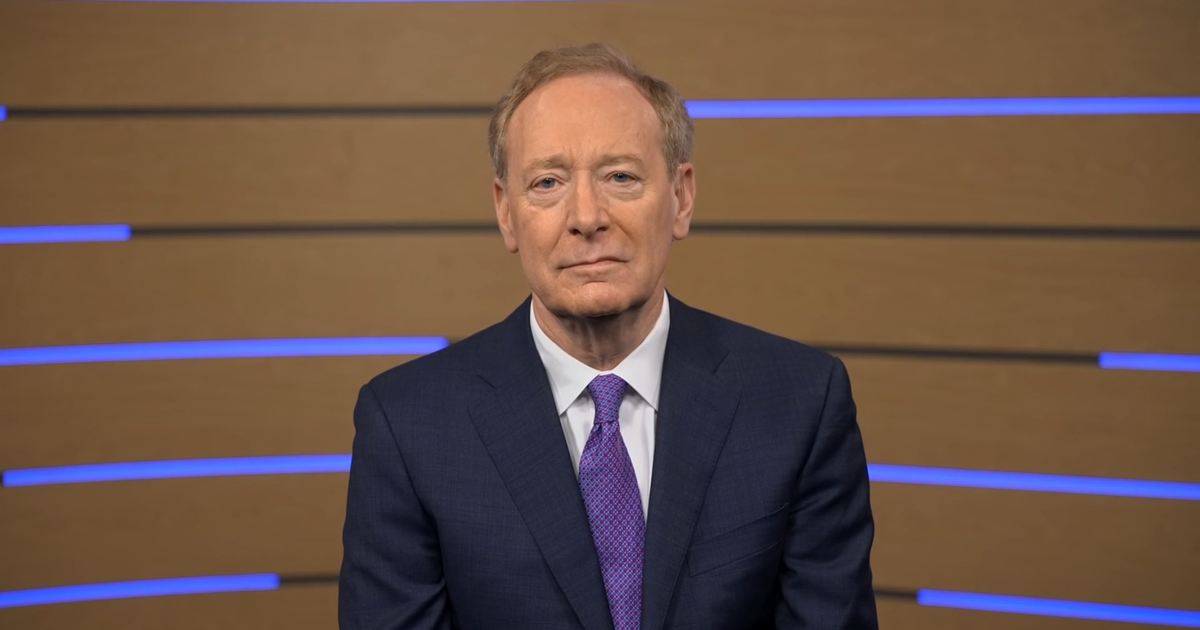
Microsoft President Brad Smith discussed recent global technology outages and the accelerating security race driven by artificial intelligence during a television interview on November 22, 2026.
 🛰️Tech & Power
Photo: CBS Politics
Key points
- Microsoft President Brad Smith addressed the company's recent 24-hour global tech outage.
- Smith stated the outage resulted from interacting software updates rather than AI or a cyberattack.
- Artificial intelligence has accelerated a global security race to discover and patch code vulnerabilities.
Microsoft President and Vice Chair Brad Smith addressed the corporation's recent 24-hour global outage that hobbled businesses and disrupted operations worldwide. Speaking on television, Smith formally apologized for the disruption, clarifying that the incident stemmed from a software interaction between a four-month-old update, a new update, and shifting network traffic rather than a cyberattack or artificial intelligence failure. While confirming AI did not cause the specific Microsoft outage, Smith acknowledged that artificial intelligence has fundamentally altered the technological landscape by enabling both developers and malicious actors to discover code vulnerabilities at unprecedented speeds.
According to Smith, the global information infrastructure is undergoing a massive, high-speed upgrade cycle as technology providers race to patch vulnerabilities before hostile actors can exploit them. This accelerated pace, combined with legacy infrastructure limitations and reduced testing windows, has heightened operational risks and contributed to recent widespread tech disruptions. Smith emphasized that mitigating these ongoing risks requires immediate action from individual users applying software updates, corporate IT teams overhauling legacy systems, and enhanced cooperation between the technology sector and government agencies.
The stakes
If public-private cybersecurity collaboration fails to keep pace with rapid AI-driven code patching, critical infrastructure and corporate networks will remain vulnerable to cascading global outages and sophisticated cyber threats.
Two readings
- Supporters view the transparent reporting and rapid patching efforts as necessary steps to outpace malicious actors in a complex digital security environment.
- Critics argue that rushing automated software updates without adequate testing creates unacceptable reliability risks for global businesses and public services.
Source CBS Politics — cbsnews.com/news/transcript-brad-smith-microsoft-on-face-the-nation… ↗
Read next
 ✒️Opinion & Analysis
ICJ Rules Myanmar Military Committed Genocide Against Rohingya
The International Court of Justice has found Myanmar's military guilty of genocide against the Rohingya, a ruling that damages the international standing of both Aung San…
 🕯️Democracy & Rights
Chinese teachers face rising parental pressure over personal life choices
Chinese educators are encountering a surge in unreasonable demands from parents, including complaints regarding teachers' pregnancy and maternity leave.
 🛡️War & Security
Ukraine Restricts Media Coverage of Infrastructure Damage Amid Russian Strikes
President Volodymyr Zelenskyy has issued a decree prohibiting media outlets from reporting on the impact of Russian strikes against critical infrastructure and the status…
 🏮China & Taiwan
Beijing Reaffirms Reunification Stance Following Taiwan Local Election Results
China’s Taiwan Affairs Office declared that the island’s reunification with the mainland remains inevitable, despite recent shifts in Taiwan's local political landscape.
 🇪🇺Europe
US Air Force Repels Unauthorized Drone Incursion at RAF Lakenheath
U.S. security forces at a British air base successfully countered a group of unidentified drones, amid growing concerns over potential foreign state involvement.
 ⚖️Law & Policy
India Government Proposes 50% Increase in Parliamentary Seats and Women's Reservation
The Indian government plans to introduce legislation to expand the Lok Sabha to 850 seats and mandate a 33% reservation for women in legislative bodies.