Former UK CTO warns Department for Work and Pensions portal outage stems from likely cyber attack
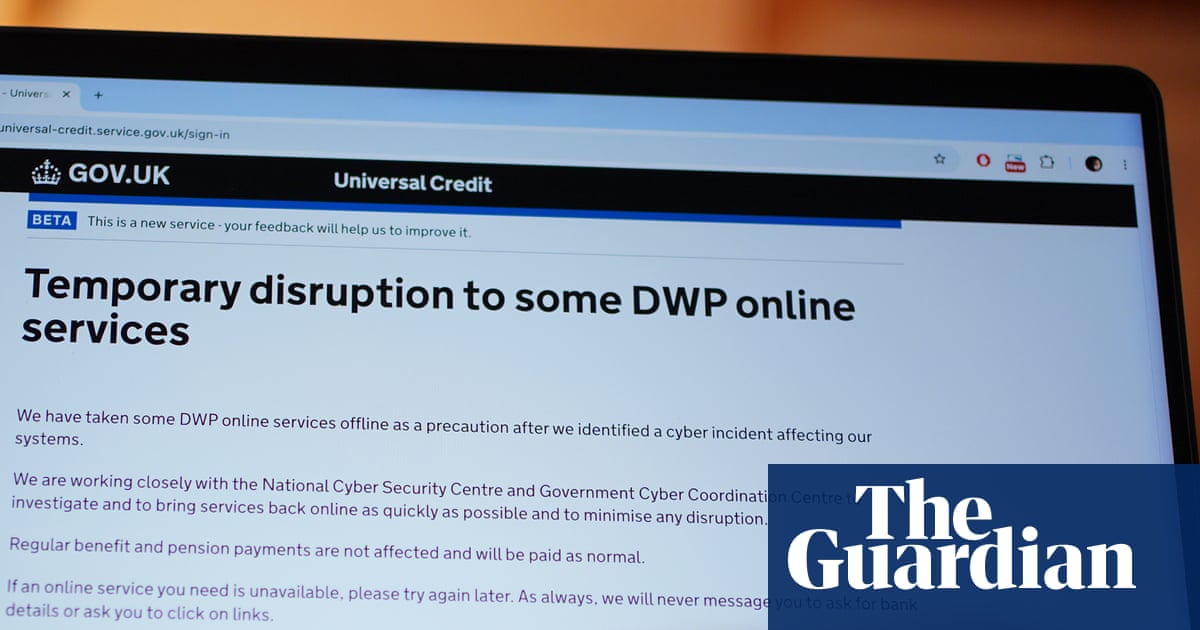
The UK government's pensions and benefits portal was taken offline following a cyber incident that former officials describe as a probable targeted attack on outdated infrastructure.
 🛰️Tech & Power
Photo: Guardian World
Key points
- DWP took citizen-facing benefit portals offline following unusual network activity.
- Former CTO David Knott stated the incident bears the hallmarks of a probable cyber attack.
- Regular pension and benefit payments remain unaffected while security agencies investigate.
A severe technical disruption that compelled British ministers to shutter online pension and benefits platforms this week was likely a deliberate cyber attack, according to the government's former chief technology officer. The Department for Work and Pensions (DWP) disabled several online channels late Thursday after identifying suspicious network activity, leaving citizens temporarily unable to manage universal credit claims, state pensions, or disability applications.
David Knott, who departed his role leading government technology in December 2025, stated publicly that the terminology used by officials strongly pointed toward a hostile digital intrusion. Speaking to broadcasters, Knott highlighted that systemic underinvestment and aging digital architecture have left state systems increasingly vulnerable to automated and sophisticated threats, noting that government networks face relentless probing.
Downing Street confirmed that no other government departments appeared targeted by malicious actors during the incident, and routine financial disbursements remain protected. While internal operational systems were brought back online on Friday, public-facing portals stayed suspended as investigators from the National Cyber Security Centre and the Government Cyber Coordination Centre examine the breach.
The stakes
Millions of welfare recipients face temporary administrative hurdles while the digital infrastructure remains partially offline, testing public trust in government cybersecurity. If systemic vulnerabilities in outdated state portals are not decisively fixed, the government risks recurring operational paralysis and potential compromises of sensitive citizen data.
Two readings
- Supporters of the government response argue that swift preventive shutdowns and transparent communication successfully protected citizen financial data and prevented wider disruption.
- Critics contend that persistent underinvestment and failing to modernize legacy software left vital public infrastructure unnecessarily exposed to preventable cyber threats.
Source Guardian World — theguardian.com/technology/2026/nov/28/dwp-cyber-incident-probably-… ↗
Read next
 ✒️Opinion & Analysis
ICJ Rules Myanmar Military Committed Genocide Against Rohingya
The International Court of Justice has found Myanmar's military guilty of genocide against the Rohingya, a ruling that damages the international standing of both Aung San…
 🕯️Democracy & Rights
Chinese teachers face rising parental pressure over personal life choices
Chinese educators are encountering a surge in unreasonable demands from parents, including complaints regarding teachers' pregnancy and maternity leave.
 🛡️War & Security
Ukraine Restricts Media Coverage of Infrastructure Damage Amid Russian Strikes
President Volodymyr Zelenskyy has issued a decree prohibiting media outlets from reporting on the impact of Russian strikes against critical infrastructure and the status…
 🏮China & Taiwan
Beijing Reaffirms Reunification Stance Following Taiwan Local Election Results
China’s Taiwan Affairs Office declared that the island’s reunification with the mainland remains inevitable, despite recent shifts in Taiwan's local political landscape.
 🇪🇺Europe
US Air Force Repels Unauthorized Drone Incursion at RAF Lakenheath
U.S. security forces at a British air base successfully countered a group of unidentified drones, amid growing concerns over potential foreign state involvement.
 ⚖️Law & Policy
India Government Proposes 50% Increase in Parliamentary Seats and Women's Reservation
The Indian government plans to introduce legislation to expand the Lok Sabha to 850 seats and mandate a 33% reservation for women in legislative bodies.