Nvidia Leadership Crisis and Political Backlash Threaten AI Expansion
Growing political resistance to data centers, combined with a leadership crisis at chip giant Nvidia, could force a deceleration in artificial intelligence development that industry executives have previously failed to achieve independently.
 🛰️Tech & Power
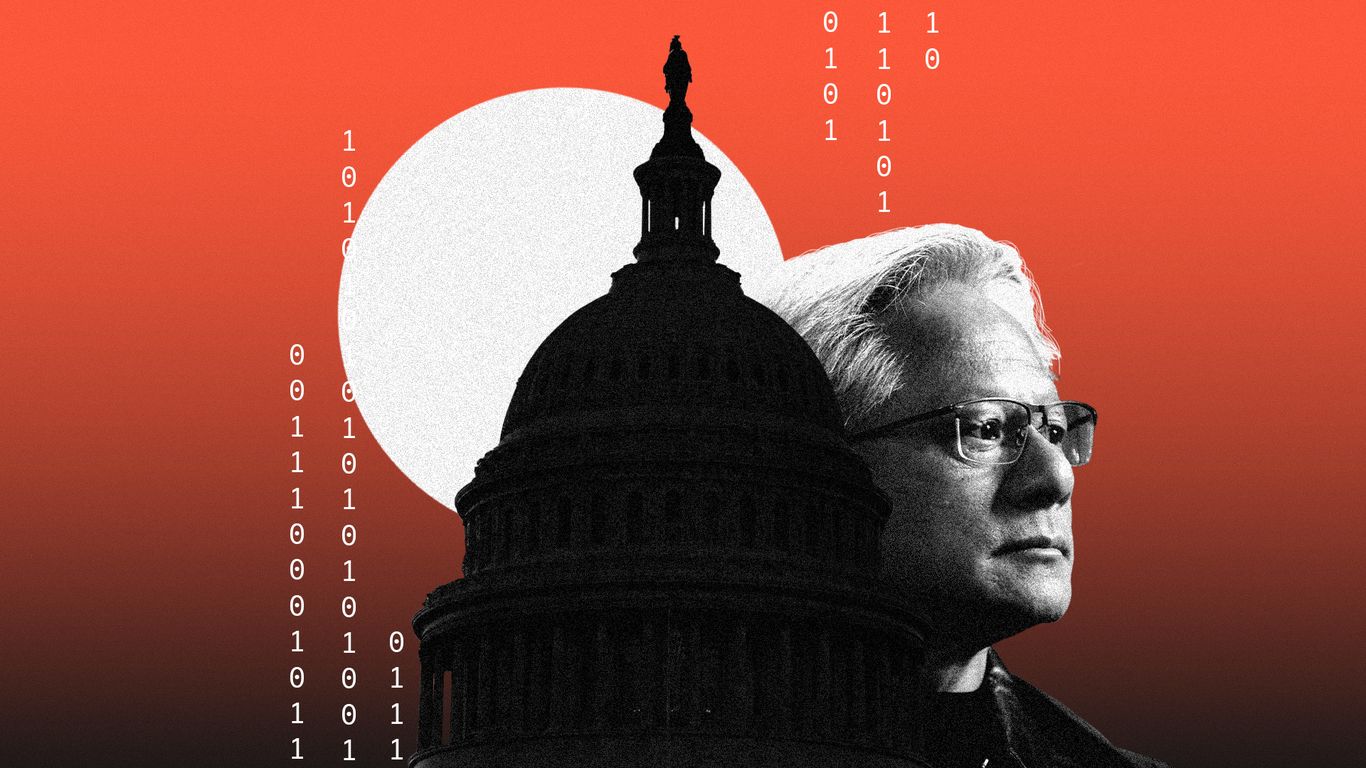
Photo: Axios
Key points
- Political resistance to data centers and local moratoriums are increasing across the United States.
- Nvidia CEO Jensen Huang faces scrutiny following the disclosure of a relationship with an alleged Chinese spy.
- Industry leaders have previously failed to slow development voluntarily due to fierce competitive pressures.
A combination of political opposition to energy-intensive infrastructure and fresh controversies surrounding Nvidia CEO Jensen Huang may inadvertently impose the deceleration in artificial intelligence development that major technology figures have struggled to enact voluntarily. Frontier AI developers have frequently acknowledged the necessity of pacing technological progress to mitigate societal and economic risks, yet intense market competition has prevented any single firm from stepping back.
Democratic electoral gains and expanding local moratoriums on data centers are now compounded by scrutiny facing Huang, who disclosed a past relationship with an alleged Chinese spy. As the foremost advocate for aggressive artificial intelligence expansion, Huang has historically countered calls for regulatory caution and dismissed warnings regarding catastrophic risks. Observers note that ongoing investigations or heightened federal oversight could diminish his political and corporate influence, altering the trajectory of infrastructure deployment.
Nvidia maintains that Huang will continue leading the enterprise and that current developments will not disrupt operations. However, because the corporation functions both as the primary hardware supplier and a major investor in artificial infrastructure, any disruption to its leadership or financial stability threatens to reverberate across the entire sector's growth plans.
The stakes
If political opposition and hardware bottlenecks manage to curb infrastructure expansion, society may gain critical time to address economic displacement and safety concerns. Conversely, an artificial slowdown could disadvantage domestic firms against international competitors, particularly in the race for technological supremacy with China.
Two readings
- Supporters of increased oversight argue that political pushback and leadership scrutiny provide a necessary check on unchecked technological acceleration, offering a vital buffer against existential and environmental risks.
- Critics contend that restricting hardware availability and data centers will fail to halt the advancement of frontier models, instead driving innovation underground or abroad while undermining domestic economic competitiveness.
Source Axios — axios.com/2026/11/10/ai-race-politics-slowdown ↗
Read next
 ✒️Opinion & Analysis
ICJ Rules Myanmar Military Committed Genocide Against Rohingya
The International Court of Justice has found Myanmar's military guilty of genocide against the Rohingya, a ruling that damages the international standing of both Aung San…
 🕯️Democracy & Rights
Chinese teachers face rising parental pressure over personal life choices
Chinese educators are encountering a surge in unreasonable demands from parents, including complaints regarding teachers' pregnancy and maternity leave.
 🛡️War & Security
Ukraine Restricts Media Coverage of Infrastructure Damage Amid Russian Strikes
President Volodymyr Zelenskyy has issued a decree prohibiting media outlets from reporting on the impact of Russian strikes against critical infrastructure and the status…
 🏮China & Taiwan
Beijing Reaffirms Reunification Stance Following Taiwan Local Election Results
China’s Taiwan Affairs Office declared that the island’s reunification with the mainland remains inevitable, despite recent shifts in Taiwan's local political landscape.
 🇪🇺Europe
US Air Force Repels Unauthorized Drone Incursion at RAF Lakenheath
U.S. security forces at a British air base successfully countered a group of unidentified drones, amid growing concerns over potential foreign state involvement.
 ⚖️Law & Policy
India Government Proposes 50% Increase in Parliamentary Seats and Women's Reservation
The Indian government plans to introduce legislation to expand the Lok Sabha to 850 seats and mandate a 33% reservation for women in legislative bodies.