President Erdogan Praises International Political Commitment at COP31 Climate Summit
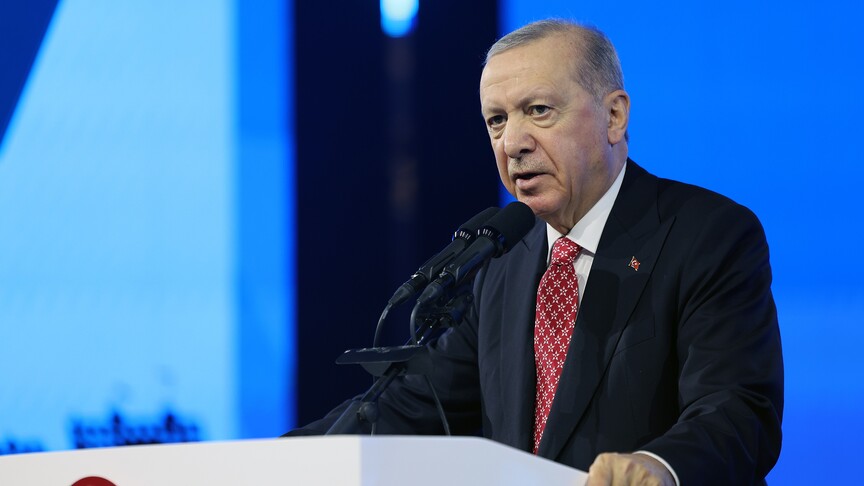
Turkish President Recep Tayyip Erdogan has hailed the collaborative spirit at the COP31 summit, emphasizing a renewed global commitment to the Paris Agreement's 1.5-degree target.
 🌡️Energy & Climate
Photo: Anadolu
Key points
- President Erdogan emphasizes the 1.5-degree target as a moral and scientific imperative.
- The COP31 summit prioritized electrification, green industrialization, and climate finance.
- Türkiye advocated for an implementation-focused approach to bridge the gap between national priorities and global climate goals.
Turkish President Recep Tayyip Erdogan has lauded the political unity displayed by world leaders at the COP31 summit in Antalya, describing the event as a pivotal moment for international climate cooperation. In a formal statement, the president emphasized that the gathering reinforced the necessity of adhering to the Paris Agreement, particularly as the initiative enters its second decade of implementation.
The summit focused heavily on shifting from broad pledges to actionable outcomes, with a specific emphasis on the "35x35 Global Electrification Pledge" and the Climate Implementation Bridge. Erdogan noted that while nations arrived with varying national priorities and economic circumstances, the consensus reached during the proceedings provides a robust foundation for future dialogue regarding green industrialization and climate finance.
Addressing the humanitarian impact of recent natural disasters, the president stressed that adaptation and resilience must remain central to global policy. He highlighted the importance of tailoring electrification strategies to meet the specific development needs of diverse regions, including Africa and the Pacific, to ensure energy security alongside environmental goals.
The stakes
The success of the COP31 implementation agenda hinges on the ability of developed and developing nations to bridge financing gaps and integrate electrification into national industrial policies. If these commitments hold, vulnerable regions stand to gain improved early warning systems and sustainable infrastructure, though failure to secure consistent funding could stall progress toward the 1.5-degree global warming limit.
Two readings
- Supporters view the summit as a successful pivot toward practical, implementation-focused diplomacy that respects the diverse developmental needs of individual nations.
- Critics argue that despite the diplomatic rhetoric, the lack of binding enforcement mechanisms for climate finance leaves the most vulnerable countries at risk of empty promises.
Source Anadolu — aa.com.tr/en/world/turkish-president-says-political-commitment-at-c… ↗
Read next
 ✒️Opinion & Analysis
ICJ Rules Myanmar Military Committed Genocide Against Rohingya
The International Court of Justice has found Myanmar's military guilty of genocide against the Rohingya, a ruling that damages the international standing of both Aung San…
 🕯️Democracy & Rights
Chinese teachers face rising parental pressure over personal life choices
Chinese educators are encountering a surge in unreasonable demands from parents, including complaints regarding teachers' pregnancy and maternity leave.
 🛡️War & Security
Ukraine Restricts Media Coverage of Infrastructure Damage Amid Russian Strikes
President Volodymyr Zelenskyy has issued a decree prohibiting media outlets from reporting on the impact of Russian strikes against critical infrastructure and the status…
 🏮China & Taiwan
Beijing Reaffirms Reunification Stance Following Taiwan Local Election Results
China’s Taiwan Affairs Office declared that the island’s reunification with the mainland remains inevitable, despite recent shifts in Taiwan's local political landscape.
 🇪🇺Europe
US Air Force Repels Unauthorized Drone Incursion at RAF Lakenheath
U.S. security forces at a British air base successfully countered a group of unidentified drones, amid growing concerns over potential foreign state involvement.
 ⚖️Law & Policy
India Government Proposes 50% Increase in Parliamentary Seats and Women's Reservation
The Indian government plans to introduce legislation to expand the Lok Sabha to 850 seats and mandate a 33% reservation for women in legislative bodies.