Panama Minister Criticizes Fossil Fuel Influence at COP31 Climate Summit
As the COP31 summit approaches its conclusion, Panama’s environment minister has condemned the influence of the oil industry while 30 nations pursue an independent fossil fuel treaty.
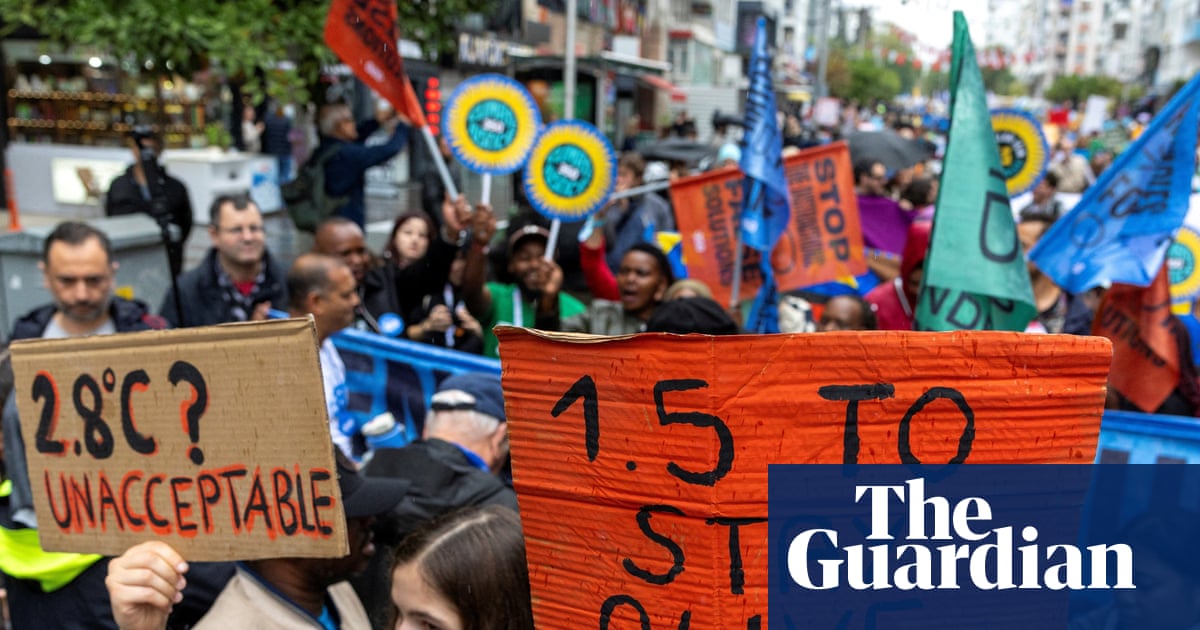 🌡️Energy & Climate
Photo: Guardian Climate
Key points
- Panama minister calls for independence from fossil fuel industry influence.
- 30 nations move to draft a separate fossil fuel treaty outside UN process.
- Negotiations remain stalled over climate finance and transition definitions.
Panama’s environment minister, Juan Carlos Navarro, has sharply criticized the influence of the oil industry on global climate negotiations, describing the world as being held hostage by a "petroleum mafia." Speaking during the final days of the COP31 summit, Navarro expressed frustration over the perceived inability of nations to break free from fossil fuel dependencies, noting that 30 countries have now committed to drafting a separate treaty outside the formal UN process.
Negotiators are currently racing to address critical sticking points, including the necessity of transitioning away from fossil fuels and managing global temperature increases. Australian and Turkish officials recently convened a "divan" meeting—a traditional council assembly—in an attempt to bridge deep divisions regarding climate finance and the "just transition" for workers in high-carbon sectors. A draft decision released earlier in the week contained over 140 items, leaving many participants concerned that the broad scope could lead to gridlock.
The summit has also faced intense scrutiny from civil society groups and developing nations regarding financial commitments. Critics have highlighted a significant shortfall in funding for climate adaptation, noting that pledges have dropped to $50 million compared to $135 million the previous year. Furthermore, concerns persist that proposed energy targets lack explicit requirements for renewable sources, potentially locking nations into future reliance on gas and coal.
The stakes
The outcome of these negotiations will determine whether the international community can establish a concrete path toward phasing out fossil fuels. Failure to reach a consensus on adaptation funding and transition mechanisms risks marginalizing developing nations, whereas a successful agreement could create a binding framework that bypasses traditional UN deadlock.
Two readings
- Supporters of the independent treaty effort argue that the current UN process is too slow and heavily influenced by fossil fuel interests, necessitating a new, more aggressive approach.
- Critics of the current trajectory, including some EU representatives and negotiators, caution that bypassing established UN channels could undermine global unity and lead to fragmented climate policy.
Source Guardian Climate — theguardian.com/environment/2026/nov/18/world-held-hostage-by-oil-m… ↗
Read next
 ✒️Opinion & Analysis
ICJ Rules Myanmar Military Committed Genocide Against Rohingya
The International Court of Justice has found Myanmar's military guilty of genocide against the Rohingya, a ruling that damages the international standing of both Aung San…
 🕯️Democracy & Rights
Chinese teachers face rising parental pressure over personal life choices
Chinese educators are encountering a surge in unreasonable demands from parents, including complaints regarding teachers' pregnancy and maternity leave.
 🛡️War & Security
Ukraine Restricts Media Coverage of Infrastructure Damage Amid Russian Strikes
President Volodymyr Zelenskyy has issued a decree prohibiting media outlets from reporting on the impact of Russian strikes against critical infrastructure and the status…
 🏮China & Taiwan
Beijing Reaffirms Reunification Stance Following Taiwan Local Election Results
China’s Taiwan Affairs Office declared that the island’s reunification with the mainland remains inevitable, despite recent shifts in Taiwan's local political landscape.
 🇪🇺Europe
US Air Force Repels Unauthorized Drone Incursion at RAF Lakenheath
U.S. security forces at a British air base successfully countered a group of unidentified drones, amid growing concerns over potential foreign state involvement.
 ⚖️Law & Policy
India Government Proposes 50% Increase in Parliamentary Seats and Women's Reservation
The Indian government plans to introduce legislation to expand the Lok Sabha to 850 seats and mandate a 33% reservation for women in legislative bodies.