UN COP31 Climate Summit Ends Without Agreement Following Fossil Fuel Dispute
The UN climate conference in Turkey concluded without a final deal after delegates rejected a draft that failed to adequately address the role of fossil fuels.
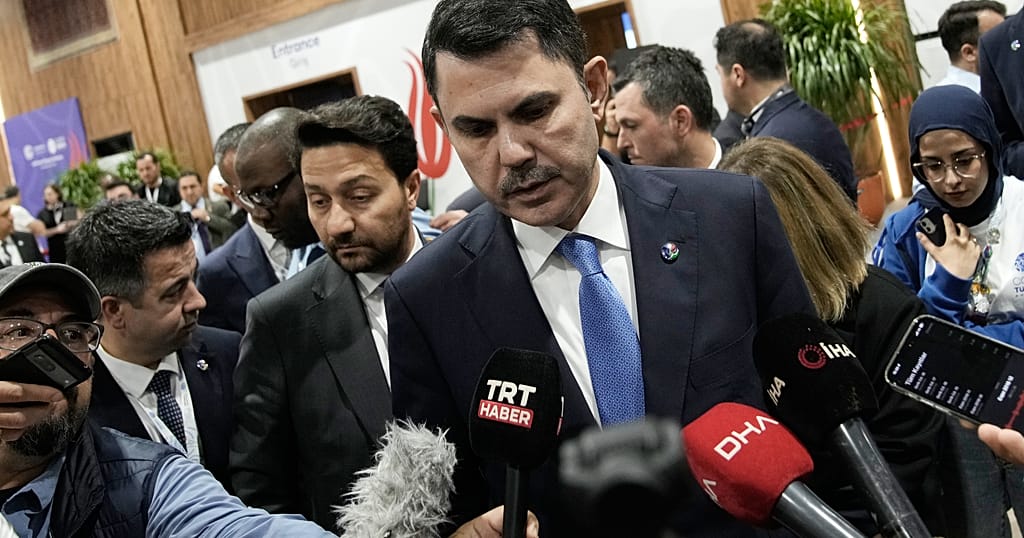 🌡️Energy & Climate
Photo: Africanews
Key points
- COP31 talks in Turkey ended without a final agreement.
- European and climate-vulnerable nations blocked the draft over fossil fuel language.
- Global climate action will revert to existing frameworks like the Paris Agreement.
The United Nations COP31 climate summit in Antalya, Turkey, concluded on Sunday without a final agreement after delegates failed to reach a consensus on a draft proposal. The negotiations, which extended two days beyond their original schedule, ended in a stalemate as a coalition of European nations and climate-vulnerable countries rejected the proposed text.
Critics of the draft argued that it significantly weakened environmental protections and disproportionately favored fossil fuel-exporting nations. The rejected document notably omitted explicit language regarding the phase-out of oil, gas, and coal, which are recognized as the primary drivers of global warming. Despite efforts by the Turkish presidency to bridge the divide, no alternative proposal was presented.
Turkish Environment Minister and COP31 President Murat Kurum confirmed the collapse of the talks, stating that no consensus was reached and that no further documents would be issued. Consequently, international climate efforts will continue to rely on existing frameworks, including the Paris Agreement and previous commitments. The failure to secure a new, more ambitious mandate marks a significant setback for the UN climate process, which had previously seen progress in explicitly addressing the transition away from fossil fuels during the summit in the United Arab Emirates three years ago.
The stakes
The collapse of COP31 leaves global climate policy in a state of uncertainty, effectively stalling momentum for more aggressive decarbonization targets. Fossil fuel-exporting nations maintain their current economic leverage, while climate-vulnerable countries lose the opportunity for stronger international safeguards, forcing the global community to rely on older, less stringent agreements.
Two readings
- Supporters of the rejection argue that the draft was a regressive step that would have undermined the progress made in recent years by failing to address the root cause of climate change.
- Critics of the outcome contend that the impasse prevents any immediate progress, leaving the world without a unified, updated roadmap to address rising temperatures and environmental instability.
Source Africanews — africanews.com/2026/11/22/united-nations-cop31-climate-talks-collaps… ↗
Read next
 ✒️Opinion & Analysis
ICJ Rules Myanmar Military Committed Genocide Against Rohingya
The International Court of Justice has found Myanmar's military guilty of genocide against the Rohingya, a ruling that damages the international standing of both Aung San…
 🕯️Democracy & Rights
Chinese teachers face rising parental pressure over personal life choices
Chinese educators are encountering a surge in unreasonable demands from parents, including complaints regarding teachers' pregnancy and maternity leave.
 🛡️War & Security
Ukraine Restricts Media Coverage of Infrastructure Damage Amid Russian Strikes
President Volodymyr Zelenskyy has issued a decree prohibiting media outlets from reporting on the impact of Russian strikes against critical infrastructure and the status…
 🏮China & Taiwan
Beijing Reaffirms Reunification Stance Following Taiwan Local Election Results
China’s Taiwan Affairs Office declared that the island’s reunification with the mainland remains inevitable, despite recent shifts in Taiwan's local political landscape.
 🇪🇺Europe
US Air Force Repels Unauthorized Drone Incursion at RAF Lakenheath
U.S. security forces at a British air base successfully countered a group of unidentified drones, amid growing concerns over potential foreign state involvement.
 ⚖️Law & Policy
India Government Proposes 50% Increase in Parliamentary Seats and Women's Reservation
The Indian government plans to introduce legislation to expand the Lok Sabha to 850 seats and mandate a 33% reservation for women in legislative bodies.