Emmanuel Macron Launches Strategic Reserves of Rare Earths to Counter Supply Threats
President Emmanuel Macron has initiated a plan to establish French strategic reserves of rare earths and critical metals to shield key industries from global trade tensions and geopolitical coercion.
 🌡️Energy & Climate
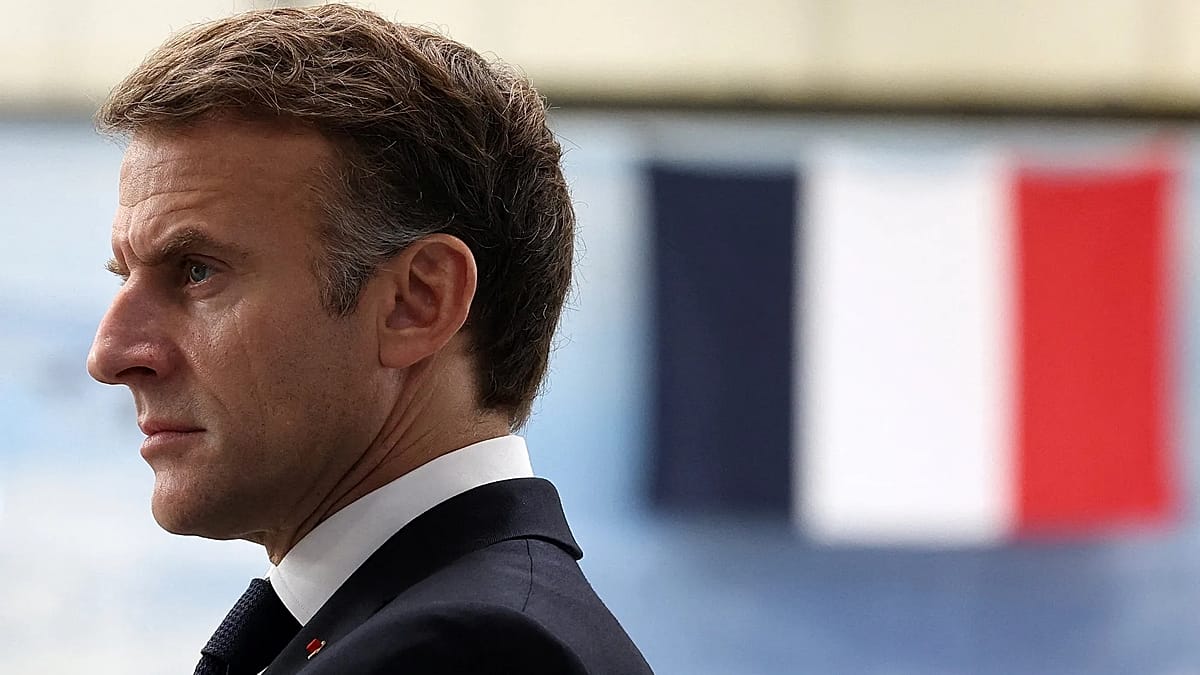
Photo: Euronews
Key points
- France is establishing strategic reserves for rare earths and critical metals.
- The initiative targets the defence, automotive, and aerospace sectors.
- Caisse des dépôts will manage the stockpiling and joint purchasing mechanism.
President Emmanuel Macron announced the creation of national reserves for rare earths and critical metals during a meeting at the Élysée dubbed "Protect France," which convened roughly fifteen industry executives. Designed to insulate the defence, automotive, and aerospace sectors against supply shocks, the mechanism will be overseen by the state financial institution Caisse des dépôts to manage strategic stockpiles and joint purchasing.
Under the new framework, private firms will be mandated to diversify their supply chains or face cuts to public subsidies, while the state introduces price guarantees to support producers. Frédéric Jeannin, co-head of the Energy and raw materials programme at the IRIS think tank, noted that the initiative serves as an insurance policy against both market volatility and security threats, specifically highlighting China's dominance in refining capacity and export controls, alongside potential supply disruptions stemming from an open conflict with Russia.
While the Élysée has mobilized nearly 7 billion euros in related investments, experts emphasize that crucial operational details remain unresolved. Defining precise storage scenarios, identifying the most urgent mineral needs, and establishing transparent criteria for beneficiaries are immediate challenges that policymakers must address as Western nations move to emulate American stockpiling efforts.
The stakes
French defence and manufacturing industries stand to gain long-term security against foreign coercion, while taxpayers and corporations absorb the substantial financial cost of maintaining physical and virtual reserves.
Two readings
- Supporters read the reserves as a vital shield against aggressive trade curbs from dominant suppliers like Beijing and a necessary deterrent during international crises.
- Critics argue that the initial funding may prove insufficient and warn that complex bureaucratic criteria could disadvantage smaller industrial players.
Source Euronews — euronews.com/2026/11/28/france-to-build-strategic-rare-earths-and-c… ↗
Read next
 ✒️Opinion & Analysis
ICJ Rules Myanmar Military Committed Genocide Against Rohingya
The International Court of Justice has found Myanmar's military guilty of genocide against the Rohingya, a ruling that damages the international standing of both Aung San…
 🕯️Democracy & Rights
Chinese teachers face rising parental pressure over personal life choices
Chinese educators are encountering a surge in unreasonable demands from parents, including complaints regarding teachers' pregnancy and maternity leave.
 🛡️War & Security
Ukraine Restricts Media Coverage of Infrastructure Damage Amid Russian Strikes
President Volodymyr Zelenskyy has issued a decree prohibiting media outlets from reporting on the impact of Russian strikes against critical infrastructure and the status…
 🏮China & Taiwan
Beijing Reaffirms Reunification Stance Following Taiwan Local Election Results
China’s Taiwan Affairs Office declared that the island’s reunification with the mainland remains inevitable, despite recent shifts in Taiwan's local political landscape.
 🇪🇺Europe
US Air Force Repels Unauthorized Drone Incursion at RAF Lakenheath
U.S. security forces at a British air base successfully countered a group of unidentified drones, amid growing concerns over potential foreign state involvement.
 ⚖️Law & Policy
India Government Proposes 50% Increase in Parliamentary Seats and Women's Reservation
The Indian government plans to introduce legislation to expand the Lok Sabha to 850 seats and mandate a 33% reservation for women in legislative bodies.