Pakistani Prime Minister Shehbaz Sharif to Demand Climate Finance at COP31
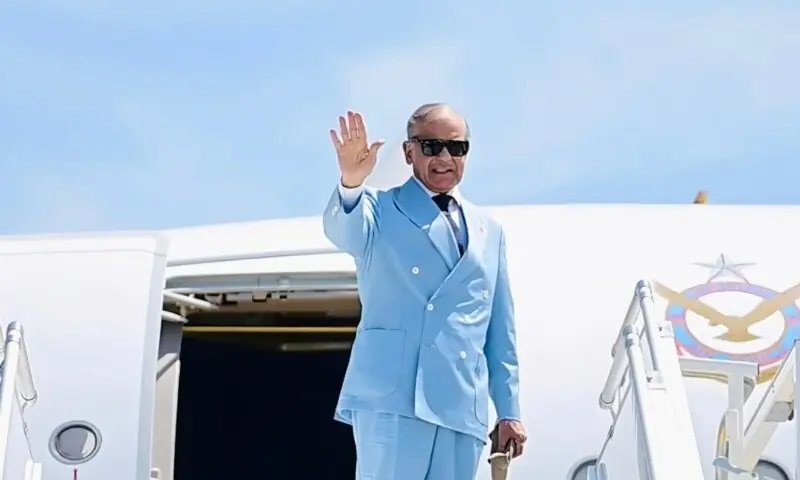
Pakistani Prime Minister Shehbaz Sharif travels to Turkiye for the COP31 summit to urge developed nations to provide accessible climate financing.
 🌡️Energy & Climate
Photo: Dawn
Key points
- Prime Minister Shehbaz Sharif visits Antalya from Nov 10-12 for the COP31 summit.
- Sharif will address the summit on Nov 11 to advocate for predictable climate finance for developing nations.
- COP31 talks opened with disputes over climate adaptation funding and agenda priorities.
Pakistani Prime Minister Shehbaz Sharif will address the COP31 Leaders’ Summit in Antalya on November 11, calling on wealthy nations to deliver accessible climate financing while detailing his government's renewable energy targets, according to Pakistan's Foreign Office. Sharif's three-day visit to Turkiye comes as global climate talks face early procedural disputes over funding mechanisms for developing countries.
During the summit, Sharif is scheduled to present Pakistan's initiatives on rapid solar energy expansion, early-warning systems, and disaster preparedness. Islamabad maintains that vulnerable nations require predictable financial assistance to build climate resilience and transition toward cleaner infrastructure. On the sidelines of the summit, the prime minister will also hold bilateral discussions with Turkish leaders and participating heads of state.
The Antalya negotiations commenced amid sharp disagreements between industrialised and developing nations regarding agenda items on climate adaptation funds. While representatives from developing countries and African nations are advocating for expanded financial commitments, European Union officials have signaled limited political appetite for new funding pledges amidst broader geopolitical tensions and economic headwinds.
The stakes
For climate-vulnerable nations like Pakistan, securing firm commitments on climate finance is essential for funding adaptation projects and emergency infrastructure. However, resistance from major donors risks leaving developing states without the necessary resources to withstand mounting climate-driven natural disasters.
Two readings
- Supporters argue that Sharif's diplomatic push highlights the urgent necessity of global climate equity and ensures developing nations remain central to international policy decisions.
- Critics contend that high-level summit addresses yield minimal concrete economic results when wealthy nations refuse to commit binding funding targets.
Source Dawn — dawn.com/news/2043486/pm-shehbaz-to-leave-for-antalya-today-will-ad… ↗
Read next
 ✒️Opinion & Analysis
ICJ Rules Myanmar Military Committed Genocide Against Rohingya
The International Court of Justice has found Myanmar's military guilty of genocide against the Rohingya, a ruling that damages the international standing of both Aung San…
 🕯️Democracy & Rights
Chinese teachers face rising parental pressure over personal life choices
Chinese educators are encountering a surge in unreasonable demands from parents, including complaints regarding teachers' pregnancy and maternity leave.
 🛡️War & Security
Ukraine Restricts Media Coverage of Infrastructure Damage Amid Russian Strikes
President Volodymyr Zelenskyy has issued a decree prohibiting media outlets from reporting on the impact of Russian strikes against critical infrastructure and the status…
 🏮China & Taiwan
Beijing Reaffirms Reunification Stance Following Taiwan Local Election Results
China’s Taiwan Affairs Office declared that the island’s reunification with the mainland remains inevitable, despite recent shifts in Taiwan's local political landscape.
 🇪🇺Europe
US Air Force Repels Unauthorized Drone Incursion at RAF Lakenheath
U.S. security forces at a British air base successfully countered a group of unidentified drones, amid growing concerns over potential foreign state involvement.
 ⚖️Law & Policy
India Government Proposes 50% Increase in Parliamentary Seats and Women's Reservation
The Indian government plans to introduce legislation to expand the Lok Sabha to 850 seats and mandate a 33% reservation for women in legislative bodies.