Global Carbon Project Expects Geopolitical Shocks to Lower 2026 Fossil Emissions
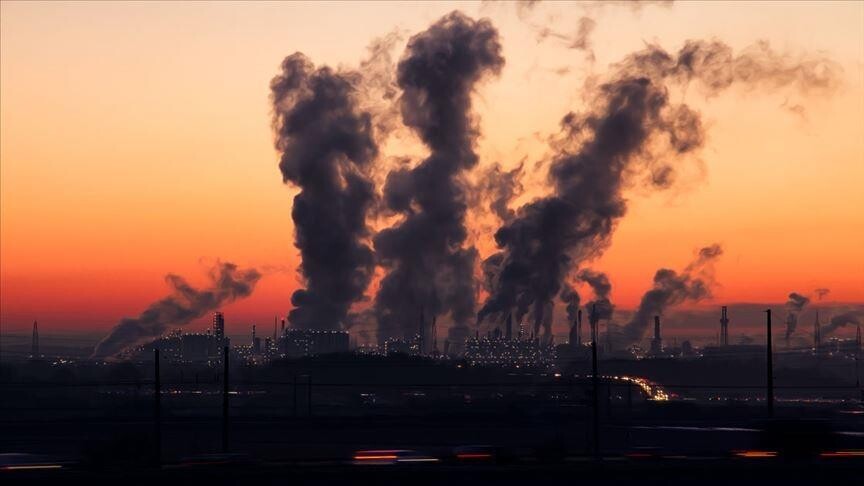
Market disruptions stemming from the Iran conflict and renewable growth are expected to reduce global fossil fuel emissions by 0.4 percent in 2026, according to researchers.
 🌡️Energy & Climate
Photo: Anadolu
Key points
- Global fossil fuel emissions are projected to fall 0.4% in 2026 due to market shocks and clean energy expansion.
- Emissions are expected to drop in the EU, US, and China, but increase by 4.4% in India.
- Researchers emphasize that reductions caused by war disruptions offer no permanent climate solution.
Disruptions to international energy markets caused by the conflict involving Iran, alongside the continued expansion of renewable energy, are expected to reduce global fossil fuel emissions by 0.4 percent in 2026, according to the annual report released by the Global Carbon Project.
The study projects that emissions tied to oil will decrease by 1.9 percent and natural gas emissions will drop by 0.3 percent over the year, while coal-related emissions are set to rise by 0.6 percent. Regional forecasts indicate reductions of 1.5 percent in the European Union, 1.3 percent in the United States, and 0.9 percent in China. Conversely, emissions in India are projected to increase by 4.4 percent, even as solar power, wind energy, and electric vehicles satisfy approximately two-thirds of new global energy demand.
Researchers cautioned against interpreting the temporary decline as a structural transition away from fossil fuels.
“A decline in fossil CO2 emissions is encouraging, but a reduction driven partly by geopolitical shocks is not a sustainable climate solution,”said Pierre Friedlingstein, who led the study.
The stakes
Clean energy sectors and nations curbing fossil reliance gain short-term momentum, while rapidly developing economies facing higher energy demand encounter continued pressure. However, temporary emission dips caused by war-driven market disruptions do not guarantee permanent decarbonization once supply lines normalize.
Two readings
- Environmental advocates emphasize that clean energy expansion is successfully meeting the majority of new global power demand despite geopolitical instability.
- Policy analysts caution that relying on conflict-driven market shocks to curb emissions reflects systemic fragility rather than deliberate environmental governance.
Source Anadolu — aa.com.tr/en/world/iran-war-disruption-expected-to-curb-global-foss… ↗
Read next
 ✒️Opinion & Analysis
ICJ Rules Myanmar Military Committed Genocide Against Rohingya
The International Court of Justice has found Myanmar's military guilty of genocide against the Rohingya, a ruling that damages the international standing of both Aung San…
 🕯️Democracy & Rights
Chinese teachers face rising parental pressure over personal life choices
Chinese educators are encountering a surge in unreasonable demands from parents, including complaints regarding teachers' pregnancy and maternity leave.
 🛡️War & Security
Ukraine Restricts Media Coverage of Infrastructure Damage Amid Russian Strikes
President Volodymyr Zelenskyy has issued a decree prohibiting media outlets from reporting on the impact of Russian strikes against critical infrastructure and the status…
 🏮China & Taiwan
Beijing Reaffirms Reunification Stance Following Taiwan Local Election Results
China’s Taiwan Affairs Office declared that the island’s reunification with the mainland remains inevitable, despite recent shifts in Taiwan's local political landscape.
 🇪🇺Europe
US Air Force Repels Unauthorized Drone Incursion at RAF Lakenheath
U.S. security forces at a British air base successfully countered a group of unidentified drones, amid growing concerns over potential foreign state involvement.
 ⚖️Law & Policy
India Government Proposes 50% Increase in Parliamentary Seats and Women's Reservation
The Indian government plans to introduce legislation to expand the Lok Sabha to 850 seats and mandate a 33% reservation for women in legislative bodies.