Unmanned Aerial Vehicles Become Primary Driver of Civilian Casualties in Sudan
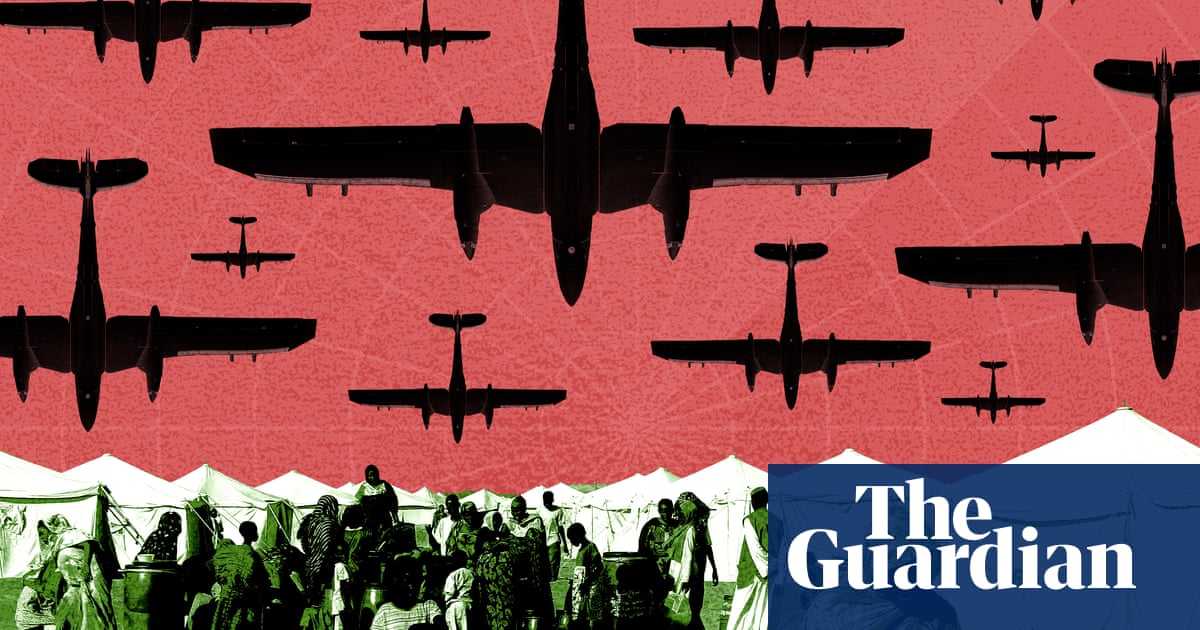
The use of weaponized drones has surged in Sudan's ongoing civil war, with recent strikes causing hundreds of civilian deaths in markets and residential areas.
 🛡️War & Security
Photo: Guardian Middle East
Key points
- Drones have become the leading cause of civilian deaths in the Sudanese civil war.
- At least 21 different UAV models from various international sources are currently in use.
- Recent 'double-tap' strikes have intentionally targeted emergency responders and civilians.
The conflict in Sudan has entered a lethal new phase as both the Sudanese Armed Forces and the paramilitary Rapid Support Forces (RSF) increasingly rely on unmanned aerial vehicles (UAVs) to conduct strikes. Recent incidents, including a double-tap attack in Al-Dibab that killed at least 139 people and a subsequent strike in Nyala resulting in over 100 deaths, highlight the devastating impact of these munitions on non-combatants. According to the United Nations, drones were responsible for over 80% of conflict-related civilian deaths between January and April of this year.
Investigations by the Centre for Information Resilience have identified 21 unique drone models currently deployed in the theater. The Sudanese military reportedly utilizes equipment sourced from Iran, Turkey, and domestic production, while the RSF relies on technology linked to Russia, China, and Belarus. Analysts note that these systems have shifted from small kamikaze quadcopters to larger, long-range platforms capable of delivering precision-guided munitions.
The strategic application of these weapons varies by side, with the army targeting supply lines and RSF positions, while the paramilitary forces frequently strike critical infrastructure such as water and power stations. As the war continues, the reliance on aerial technology has effectively expanded the reach of the conflict into previously secure regions, forcing civilians to live under the constant threat of strikes on daily hubs like markets and transport centers.
The stakes
The escalation in drone warfare significantly raises the human cost of the conflict, as the ability to strike deep behind frontlines undermines any remaining safe zones for the civilian population. If the trend continues, the death toll—already estimated to be in the hundreds of thousands—will likely climb further, while the destruction of essential infrastructure threatens to deepen the existing humanitarian catastrophe.
Two readings
- Supporters of the technology argue that precision-guided drones allow for more effective targeting of enemy supply routes and military assets, potentially shortening the duration of the conflict.
- Critics and human rights monitors contend that the frequent use of drones in densely populated areas constitutes a disregard for civilian life and violates international humanitarian standards.
Source Guardian Middle East — theguardian.com/world/2026/nov/14/drones-redefining-warfare-sudan-m… ↗
Read next
 ✒️Opinion & Analysis
ICJ Rules Myanmar Military Committed Genocide Against Rohingya
The International Court of Justice has found Myanmar's military guilty of genocide against the Rohingya, a ruling that damages the international standing of both Aung San…
 🕯️Democracy & Rights
Chinese teachers face rising parental pressure over personal life choices
Chinese educators are encountering a surge in unreasonable demands from parents, including complaints regarding teachers' pregnancy and maternity leave.
 🏮China & Taiwan
Beijing Reaffirms Reunification Stance Following Taiwan Local Election Results
China’s Taiwan Affairs Office declared that the island’s reunification with the mainland remains inevitable, despite recent shifts in Taiwan's local political landscape.
 🇪🇺Europe
US Air Force Repels Unauthorized Drone Incursion at RAF Lakenheath
U.S. security forces at a British air base successfully countered a group of unidentified drones, amid growing concerns over potential foreign state involvement.
 ⚖️Law & Policy
India Government Proposes 50% Increase in Parliamentary Seats and Women's Reservation
The Indian government plans to introduce legislation to expand the Lok Sabha to 850 seats and mandate a 33% reservation for women in legislative bodies.
 ⚖️Law & Policy
India’s ruling alliance nears two-thirds majority for sweeping parliamentary expansion and delimitation bills
The National Democratic Alliance is nearing a two-thirds majority in Parliament to pass landmark legislation expanding the Lok Sabha by 50 percent and implementing a 33 p…