Defense Secretary Pete Hegseth Pushes to Elevate Special Operations Civilian Oversight
Defense Secretary Pete Hegseth has outlined a plan to elevate the civilian special operations chief to an under secretary role backed by $45 million and 100 staffers, though the initiative requires congressional approval.
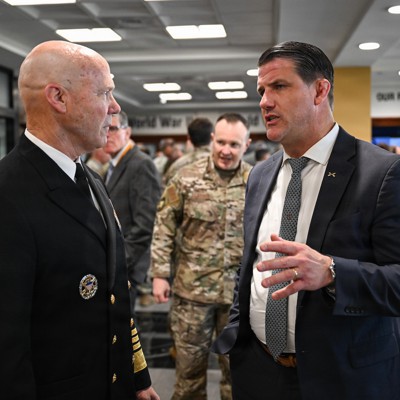 🛡️War & Security
Photo: Defense One
Key points
- Defense Secretary Pete Hegseth proposes elevating the civilian special operations chief to an under secretary role.
- The initiative requires congressional legislation to take permanent effect amid a shifting political landscape in Washington.
- Experts debate whether the structural changes will improve oversight or dilute administrative focus.
Defense Secretary Pete Hegseth is advancing a major restructuring plan to elevate the civilian office overseeing special operations forces, proposing an under secretary position backed by a $45 million budget and 100 personnel. According to a November 2 memorandum, the initiative aims to transform the current assistant secretary of defense for special operations/low-intensity conflict office and bestow a historic secondary title inspired by the World War II-era Office of Strategic Services.
The proposed changes fulfill a mandate outlined in the 2025 National Defense Authorization Act to ensure the office possesses the administrative capacity to manage special operations forces similarly to military departments. While experts have long argued that U.S. Special Operations Command requires robust civilian oversight matching its unique combatant command and service-like functions, past efforts have frequently encountered administrative resistance and bureaucratic delays within the Pentagon.
Implementing these reforms permanently requires legislative action from Congress, arriving at a delicate moment marked by existing friction between the Pentagon and lawmakers, alongside an upcoming shift in congressional majorities. Former officials have cautioned that while elevation could normalize participation in budgetary and readiness decisions, ambiguous naming choices risk adding extraneous responsibilities that might dilute oversight effectiveness.
The stakes
If the legislation passes, the special operations civilian leadership will gain permanent parity with military departments in budget and acquisition decisions, significantly altering internal Pentagon power dynamics. However, failure to secure congressional buy-in leaves the framework vulnerable, potentially stalling years of defense reform efforts.
Two readings
- Supporters read the reform as a vital modernization that grants special operations forces the dedicated institutional backing and civilian accountability necessary for an era of strategic competition.
- Critics read the sweeping structural changes and ambiguous historical branding as a potential vector for mission creep that could ultimately weaken direct oversight of special operations command.
Source Defense One — defenseone.com/policy/2026/11/civilian-office-overseeing-special-op… ↗
Read next
 ✒️Opinion & Analysis
ICJ Rules Myanmar Military Committed Genocide Against Rohingya
The International Court of Justice has found Myanmar's military guilty of genocide against the Rohingya, a ruling that damages the international standing of both Aung San…
 🕯️Democracy & Rights
Chinese teachers face rising parental pressure over personal life choices
Chinese educators are encountering a surge in unreasonable demands from parents, including complaints regarding teachers' pregnancy and maternity leave.
 🏮China & Taiwan
Beijing Reaffirms Reunification Stance Following Taiwan Local Election Results
China’s Taiwan Affairs Office declared that the island’s reunification with the mainland remains inevitable, despite recent shifts in Taiwan's local political landscape.
 🇪🇺Europe
US Air Force Repels Unauthorized Drone Incursion at RAF Lakenheath
U.S. security forces at a British air base successfully countered a group of unidentified drones, amid growing concerns over potential foreign state involvement.
 ⚖️Law & Policy
India Government Proposes 50% Increase in Parliamentary Seats and Women's Reservation
The Indian government plans to introduce legislation to expand the Lok Sabha to 850 seats and mandate a 33% reservation for women in legislative bodies.
 ⚖️Law & Policy
India’s ruling alliance nears two-thirds majority for sweeping parliamentary expansion and delimitation bills
The National Democratic Alliance is nearing a two-thirds majority in Parliament to pass landmark legislation expanding the Lok Sabha by 50 percent and implementing a 33 p…