Trump, Putin, and Xi Convene for High-Stakes Shenzhen Summit Amid Global Crises
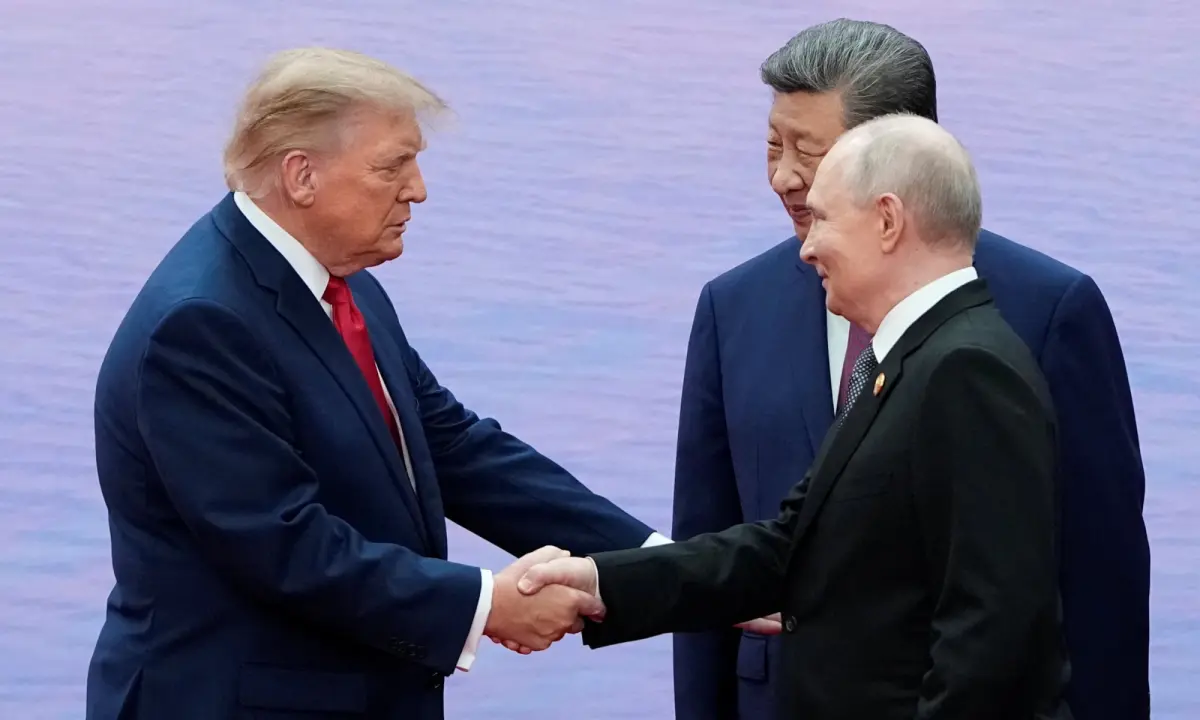
US President Donald Trump, Russian President Vladimir Putin, and Chinese President Xi Jinping are gathering in Shenzhen during the APEC summit to discuss pressing global security and nuclear proliferation challenges.
 🛡️War & Security
Photo: Dawn
Key points
- Trump, Putin, and Xi meet in Shenzhen during APEC
- Agenda includes Ukraine, Middle East, AI, and nuclear non-proliferation
- All three leaders face domestic political and economic pressures
US President Donald Trump, Russian President Vladimir Putin, and Chinese President Xi Jinping are holding a high-stakes three-way meeting in Shenzhen on the sidelines of the Asia-Pacific Economic Cooperation gathering. The summit brings together the leaders of three global powers to address ongoing conflicts in Ukraine and the Middle East, nuclear non-proliferation, and artificial intelligence governance.
Despite the diplomatic platform, analysts remain skeptical about substantive breakthroughs given deep geopolitical divisions and conflicting national interests. On nuclear proliferation, experts note that bilateral arms control pacts have expired, China's nuclear arsenal is expanding without restraint, and neither Beijing nor Moscow has acted to curb North Korea's military programs. Furthermore, critics point out that Russia and China derive strategic benefits from prolonged US involvement in Middle Eastern conflicts and the ongoing war in Ukraine.
Compounding these challenges, all three leaders arrive at the summit facing domestic political pressures. President Trump is dealing with the fallout from the Republican Party's losses in the recent midterm elections and scrutiny over advanced chip exports to China. Meanwhile, President Putin faces setbacks on the battlefield in Ukraine, and President Xi is navigating domestic economic headwinds alongside ongoing military purges.
The stakes
Global security architecture and arms control frameworks hang in the balance, with smaller nations watching closely to see if major powers respect international norms or carve up spheres of influence reminiscent of historical summits like Yalta.
Two readings
- Supporters view the direct dialogue as an essential channel to prevent misunderstandings, manage technological competition, and explore diplomatic off-ramps for active conflicts.
- Critics argue that such summits serve primarily for propaganda purposes, rewarding aggressive behavior while yielding few tangible concessions on security or human rights.
Source Dawn — dawn.com/news/2045656/yalta-in-shenzhen ↗
Read next
 ✒️Opinion & Analysis
ICJ Rules Myanmar Military Committed Genocide Against Rohingya
The International Court of Justice has found Myanmar's military guilty of genocide against the Rohingya, a ruling that damages the international standing of both Aung San…
 🕯️Democracy & Rights
Chinese teachers face rising parental pressure over personal life choices
Chinese educators are encountering a surge in unreasonable demands from parents, including complaints regarding teachers' pregnancy and maternity leave.
 🏮China & Taiwan
Beijing Reaffirms Reunification Stance Following Taiwan Local Election Results
China’s Taiwan Affairs Office declared that the island’s reunification with the mainland remains inevitable, despite recent shifts in Taiwan's local political landscape.
 🇪🇺Europe
US Air Force Repels Unauthorized Drone Incursion at RAF Lakenheath
U.S. security forces at a British air base successfully countered a group of unidentified drones, amid growing concerns over potential foreign state involvement.
 ⚖️Law & Policy
India Government Proposes 50% Increase in Parliamentary Seats and Women's Reservation
The Indian government plans to introduce legislation to expand the Lok Sabha to 850 seats and mandate a 33% reservation for women in legislative bodies.
 ⚖️Law & Policy
India’s ruling alliance nears two-thirds majority for sweeping parliamentary expansion and delimitation bills
The National Democratic Alliance is nearing a two-thirds majority in Parliament to pass landmark legislation expanding the Lok Sabha by 50 percent and implementing a 33 p…