Zaporizhzhia Nuclear Plant Switches to Backup Power Following Line Failure
Europe's largest nuclear facility has lost its external power connection, forcing a reliance on emergency diesel generators to maintain essential reactor cooling systems.
 🛡️War & Security
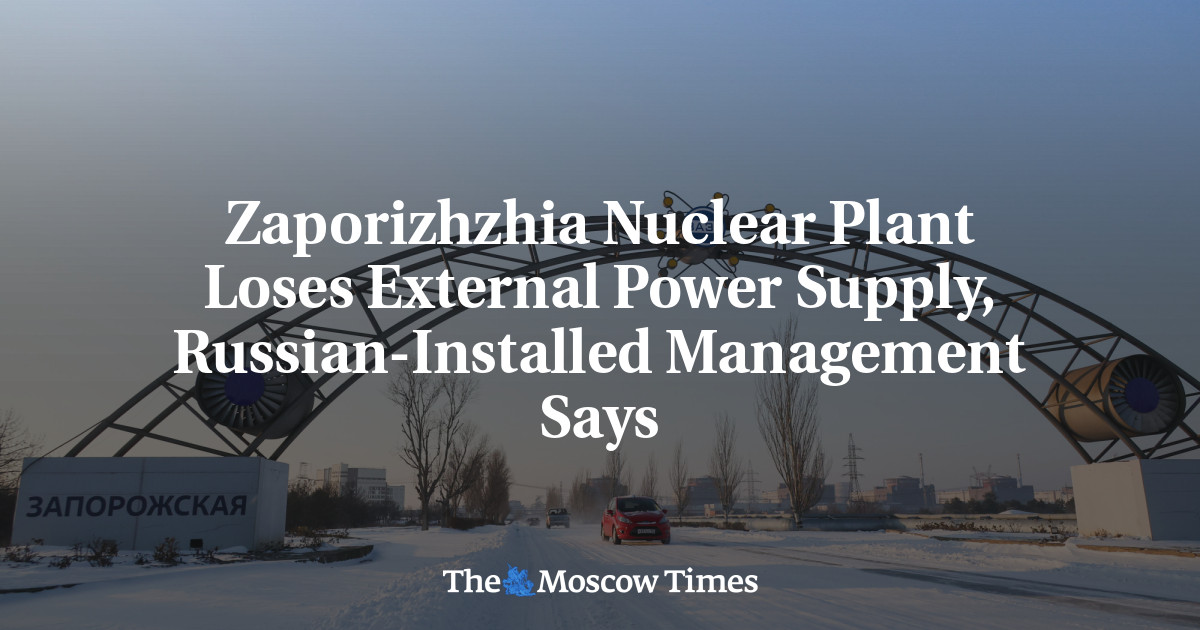
Photo: Moscow Times
Key points
- Zaporizhzhia nuclear plant loses external power via Ferosplavna line
- Emergency diesel generators deployed for reactor cooling
- IAEA monitors situation as regional energy infrastructure remains under fire
The Russian-controlled Zaporizhzhia nuclear power plant in southeastern Ukraine has lost its external electricity supply, necessitating a shift to backup diesel generators to ensure the cooling of nuclear fuel. According to reports from the International Atomic Energy Agency (IAEA) and local management, the disconnection of the Ferosplavna power line occurred on Sunday, leaving the facility without its primary external connection. While the specific cause of the failure remains under investigation, the plant currently maintains sufficient fuel reserves to operate these emergency systems for approximately two weeks.
This incident marks another critical moment for the facility, which has been under Russian control since the early stages of the 2022 invasion. Although the plant is not currently generating electricity, it requires a stable external power supply to prevent catastrophic overheating of its six reactors. Russian-installed management at the site confirmed the shutdown of the power line due to automatic safety protocols and stated that radiation levels remain within normal parameters.
The loss of power at the plant coincides with broader strikes on energy infrastructure across the region. Ukrainian energy provider DTEK reported that recent Russian attacks in the Dnipropetrovsk region left over 600,000 residents without electricity, while the Russian Defense Ministry claimed to have targeted facilities supporting Ukraine's defense industry. Both Kyiv and Moscow continue to trade blame for military maneuvers that jeopardize the safety of the nuclear site.
The stakes
The continued instability of the Zaporizhzhia plant poses a persistent risk of a nuclear accident that could affect a wide geographic area. If external power cannot be restored before backup fuel reserves are exhausted, the facility faces a potential cooling failure. The ongoing conflict ensures that the plant remains a high-stakes bargaining chip and a flashpoint for international safety concerns.
Two readings
- Supporters of the current management argue that safety protocols are functioning as intended and that the facility remains under secure, professional oversight despite the surrounding hostilities.
- Critics and international observers contend that the militarization of the nuclear site by Russian forces is the primary cause of the recurring safety crises and that the plant must be demilitarized to avoid a disaster.
Source Moscow Times — themoscowtimes.com/2026/11/08/zaporizhzhia-nuclear-plant-relying-on… ↗
Read next
 ✒️Opinion & Analysis
ICJ Rules Myanmar Military Committed Genocide Against Rohingya
The International Court of Justice has found Myanmar's military guilty of genocide against the Rohingya, a ruling that damages the international standing of both Aung San…
 🕯️Democracy & Rights
Chinese teachers face rising parental pressure over personal life choices
Chinese educators are encountering a surge in unreasonable demands from parents, including complaints regarding teachers' pregnancy and maternity leave.
 🏮China & Taiwan
Beijing Reaffirms Reunification Stance Following Taiwan Local Election Results
China’s Taiwan Affairs Office declared that the island’s reunification with the mainland remains inevitable, despite recent shifts in Taiwan's local political landscape.
 🇪🇺Europe
US Air Force Repels Unauthorized Drone Incursion at RAF Lakenheath
U.S. security forces at a British air base successfully countered a group of unidentified drones, amid growing concerns over potential foreign state involvement.
 ⚖️Law & Policy
India Government Proposes 50% Increase in Parliamentary Seats and Women's Reservation
The Indian government plans to introduce legislation to expand the Lok Sabha to 850 seats and mandate a 33% reservation for women in legislative bodies.
 ⚖️Law & Policy
India’s ruling alliance nears two-thirds majority for sweeping parliamentary expansion and delimitation bills
The National Democratic Alliance is nearing a two-thirds majority in Parliament to pass landmark legislation expanding the Lok Sabha by 50 percent and implementing a 33 p…