US Army Issues New Guidance for Community Coordination During National Crises
The US Army has released a new coordination guide to help military installations strengthen partnerships with local governments and utility providers to ensure mission readiness during emergencies.
 🛡️War & Security
Photo: Defense One
Key points
- New DCI coordination guide released for 288 Army installations.
- Focus on shared infrastructure like power, water, and transport.
- Increased emphasis on countering drone threats through local partnerships.
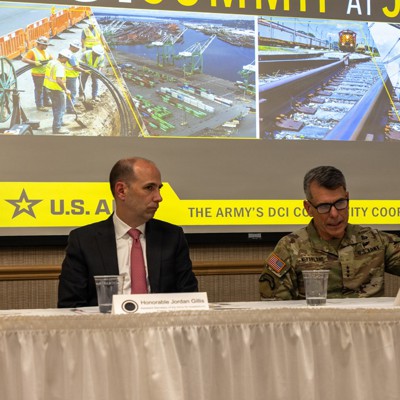
The US Army has launched a new guide aimed at enhancing coordination between military installations and local civilian agencies to secure essential infrastructure. The "Defense Critical Infrastructure" (DCI) community coordination guide, released following a summit at Joint Base Lewis-McChord, provides a framework for base commanders to integrate their operations with local power, water, and transportation networks.
Officials emphasize that modern military readiness is intrinsically linked to civilian systems. Brandon Pugh, chief of staff to the acting Army secretary, noted that the service's ability to deploy troops and maintain operations depends heavily on shared infrastructure, such as communication lines and regional transit corridors. The initiative encourages commanders to establish baseline protocols with local stakeholders to ensure continuity during natural disasters or security threats.
A significant portion of the new strategy focuses on the threat posed by unmanned aerial systems (UAS). Sgt. Maj. Kellen Rowley of the Joint Interagency Task Force 401 highlighted that the Army is prioritizing the protection of installations through the "Domestic Shield" program. This includes developing training ecosystems that allow military personnel and local law enforcement to conduct joint drills to counter drone threats effectively.
The stakes
The success of this initiative will determine the resilience of US military power projection during domestic emergencies. If fully implemented, the policy ensures that military bases are not isolated entities but integrated components of regional infrastructure, potentially saving critical time during a crisis. However, the plan relies heavily on the willingness of local municipalities to synchronize their resources with federal defense priorities.
Two readings
- Supporters argue that formalizing these relationships is a necessary evolution in national security, as it acknowledges that military readiness is inseparable from the stability of local civilian infrastructure.
- Critics may raise concerns regarding the potential for over-militarization of local utility management and the logistical complexities of integrating diverse civilian jurisdictions into federal defense protocols.
Source Defense One — defenseone.com/threats/2026/11/new-guide-lays-out-how-army-installa… ↗
Read next
 ✒️Opinion & Analysis
ICJ Rules Myanmar Military Committed Genocide Against Rohingya
The International Court of Justice has found Myanmar's military guilty of genocide against the Rohingya, a ruling that damages the international standing of both Aung San…
 🕯️Democracy & Rights
Chinese teachers face rising parental pressure over personal life choices
Chinese educators are encountering a surge in unreasonable demands from parents, including complaints regarding teachers' pregnancy and maternity leave.
 🏮China & Taiwan
Beijing Reaffirms Reunification Stance Following Taiwan Local Election Results
China’s Taiwan Affairs Office declared that the island’s reunification with the mainland remains inevitable, despite recent shifts in Taiwan's local political landscape.
 🇪🇺Europe
US Air Force Repels Unauthorized Drone Incursion at RAF Lakenheath
U.S. security forces at a British air base successfully countered a group of unidentified drones, amid growing concerns over potential foreign state involvement.
 ⚖️Law & Policy
India Government Proposes 50% Increase in Parliamentary Seats and Women's Reservation
The Indian government plans to introduce legislation to expand the Lok Sabha to 850 seats and mandate a 33% reservation for women in legislative bodies.
 ⚖️Law & Policy
India’s ruling alliance nears two-thirds majority for sweeping parliamentary expansion and delimitation bills
The National Democratic Alliance is nearing a two-thirds majority in Parliament to pass landmark legislation expanding the Lok Sabha by 50 percent and implementing a 33 p…