Zelenskyy Reports Major Power Outages Following Russian Infrastructure Strikes
Ukrainian President Volodymyr Zelenskyy reported that recent Russian aerial attacks have left over 600,000 residents in the Dnipro region without electricity. The strikes are part of a broader campaign involving thousands of missiles and drones launched over the past week.
 🛡️War & Security
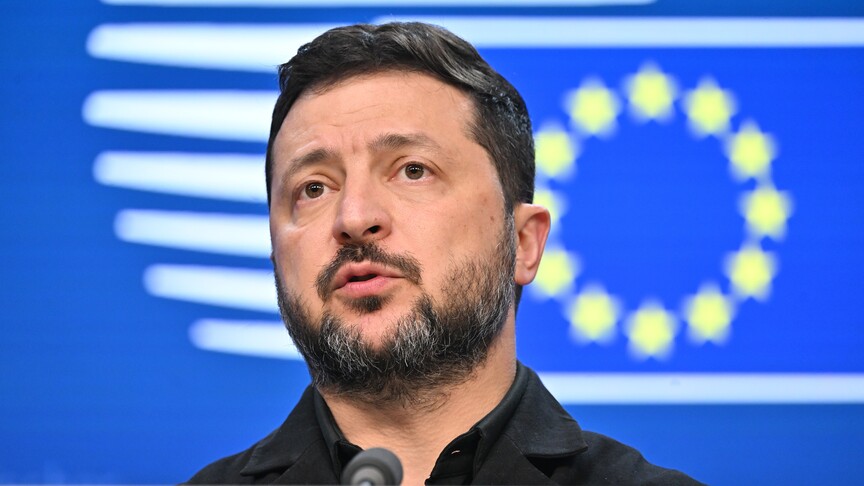
Photo: Anadolu
Key points
- Over 600,000 residents in Dnipro left without power due to Russian strikes.
- Ukraine reports over 4,000 aerial weapons launched by Russia in the past week.
- Zelenskyy urges Western allies to target Russian missile production lines via sanctions.
Ukrainian President Volodymyr Zelenskyy announced on Sunday that extensive Russian strikes on energy infrastructure have cut power to more than 600,000 people in the city of Dnipro and its surrounding region. The attacks are part of an intensified aerial campaign that, according to the president, included 115 missiles, approximately 1,900 guided aerial bombs, and over 3,000 attack drones launched across Ukraine within the last seven days.
Beyond the power outages in Dnipro, the president highlighted critical infrastructure damage in the Kharkiv region and the Zhytomyr region, where shelling has left 140 apartment buildings without heating. Rescue efforts also persist in Komyshuvakha following a recent strike that resulted in 55 fatalities. Zelenskyy noted that repair crews are currently deployed in nearly all affected communities to restore essential services.
In response to the continued use of advanced weaponry, Zelenskyy emphasized the need for international cooperation to disrupt Russia's supply chain. He stated that many of the missiles used in recent strikes were manufactured this year, prompting Kyiv to share intelligence on Russian production entities with global partners. The Ukrainian government is now advocating for stricter international sanctions, including a forthcoming 22nd package of EU measures, to target the industrial sources of these weapons.
The stakes
The systematic targeting of energy infrastructure places immense pressure on Ukraine's ability to maintain public services during the winter months. If Russia continues to successfully bypass current export controls to procure components for new missiles, Ukraine’s defensive capabilities will remain strained, potentially forcing a shift in Western strategy toward targeting Russian military production facilities directly.
Two readings
- Supporters view the call for intensified sanctions as a necessary step to cripple the Russian military-industrial complex and prevent the further destruction of civilian infrastructure.
- Critics or skeptics of the current strategy may argue that existing sanctions have failed to halt production, suggesting that without direct military intervention or advanced anti-ballistic systems, infrastructure damage will continue regardless of economic measures.
Source Anadolu — aa.com.tr/en/eurasia/zelenskyy-says-russian-strikes-leave-over-600-… ↗
Read next
 ✒️Opinion & Analysis
ICJ Rules Myanmar Military Committed Genocide Against Rohingya
The International Court of Justice has found Myanmar's military guilty of genocide against the Rohingya, a ruling that damages the international standing of both Aung San…
 🕯️Democracy & Rights
Chinese teachers face rising parental pressure over personal life choices
Chinese educators are encountering a surge in unreasonable demands from parents, including complaints regarding teachers' pregnancy and maternity leave.
 🏮China & Taiwan
Beijing Reaffirms Reunification Stance Following Taiwan Local Election Results
China’s Taiwan Affairs Office declared that the island’s reunification with the mainland remains inevitable, despite recent shifts in Taiwan's local political landscape.
 🇪🇺Europe
US Air Force Repels Unauthorized Drone Incursion at RAF Lakenheath
U.S. security forces at a British air base successfully countered a group of unidentified drones, amid growing concerns over potential foreign state involvement.
 ⚖️Law & Policy
India Government Proposes 50% Increase in Parliamentary Seats and Women's Reservation
The Indian government plans to introduce legislation to expand the Lok Sabha to 850 seats and mandate a 33% reservation for women in legislative bodies.
 ⚖️Law & Policy
India’s ruling alliance nears two-thirds majority for sweeping parliamentary expansion and delimitation bills
The National Democratic Alliance is nearing a two-thirds majority in Parliament to pass landmark legislation expanding the Lok Sabha by 50 percent and implementing a 33 p…