US Marine Corps Officers Warn of Pacific Vulnerabilities in Potential Conflict With China
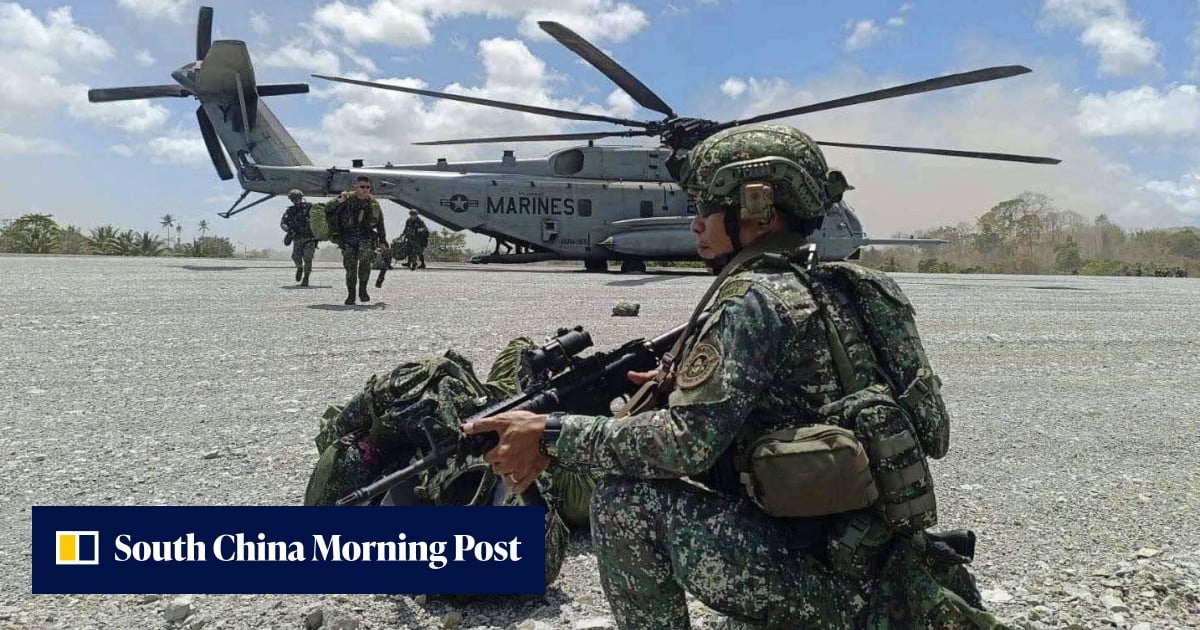
Military officers have raised concerns regarding the readiness and operational constraints of US Marines stationed in the Pacific in the event of a conflict with China.
 🛡️War & Security
Photo: SCMP China
Key points
- US Marine officers warn of Pacific vulnerabilities
- Japan and the Philippines impose operational restrictions
- Concerns over Chinese strikes isolating forward-deployed units
Military officials have highlighted significant operational vulnerabilities facing US Marines in the Pacific, pointing to potential restrictions from regional allies and the threat of Chinese strikes on critical supply lines. During recent discussions, officers including Sklenka and Mitchell cautioned that host-nation limitations imposed by allies such as Japan and the Philippines could severely complicate wartime operations and hinder the launch of counter-strikes from allied territories.
The assessments emphasize the complex strategic hurdles confronting forward-deployed forces in the Indo-Pacific theater. According to the warnings, sustained Chinese assaults on American bases and logistical routes risk completely isolating units stationed near potential flashpoints, leaving them vulnerable to overwhelming regional firepower.
Furthermore, analysts questioned the feasibility of rapidly relocating dispersed marine units to evade incoming fire while simultaneously securing the requisite diplomatic and political clearance from host governments to execute combat maneuvers from foreign soil during an active engagement.
The stakes
If these operational bottlenecks persist, the United States risks losing strategic flexibility in the Indo-Pacific, weakening deterrence against potential Chinese aggression. Advocates of regional repositioning stand to lose credibility if units cannot move effectively, while regional allies asserting sovereign operational controls gain greater leverage over American military planning.
Two readings
- Supporters of the current dispersed posture argue that spreading forces reduces vulnerability to single-strike devastation and strengthens defense cooperation with key allies like Japan and the Philippines.
- Critics contend that strict host-nation limitations and fragile supply lines render the strategy impractical for sustaining high-intensity combat operations against a peer adversary.
Source SCMP China — scmp.com/news/china/military/article/3373938/could-us-marines-susta… ↗
Read next
 ✒️Opinion & Analysis
ICJ Rules Myanmar Military Committed Genocide Against Rohingya
The International Court of Justice has found Myanmar's military guilty of genocide against the Rohingya, a ruling that damages the international standing of both Aung San…
 🕯️Democracy & Rights
Chinese teachers face rising parental pressure over personal life choices
Chinese educators are encountering a surge in unreasonable demands from parents, including complaints regarding teachers' pregnancy and maternity leave.
 🏮China & Taiwan
Beijing Reaffirms Reunification Stance Following Taiwan Local Election Results
China’s Taiwan Affairs Office declared that the island’s reunification with the mainland remains inevitable, despite recent shifts in Taiwan's local political landscape.
 🇪🇺Europe
US Air Force Repels Unauthorized Drone Incursion at RAF Lakenheath
U.S. security forces at a British air base successfully countered a group of unidentified drones, amid growing concerns over potential foreign state involvement.
 ⚖️Law & Policy
India Government Proposes 50% Increase in Parliamentary Seats and Women's Reservation
The Indian government plans to introduce legislation to expand the Lok Sabha to 850 seats and mandate a 33% reservation for women in legislative bodies.
 ⚖️Law & Policy
India’s ruling alliance nears two-thirds majority for sweeping parliamentary expansion and delimitation bills
The National Democratic Alliance is nearing a two-thirds majority in Parliament to pass landmark legislation expanding the Lok Sabha by 50 percent and implementing a 33 p…