Khyber Pakhtunkhwa Announces Major Counterterrorism Overhaul and Faceless Courts
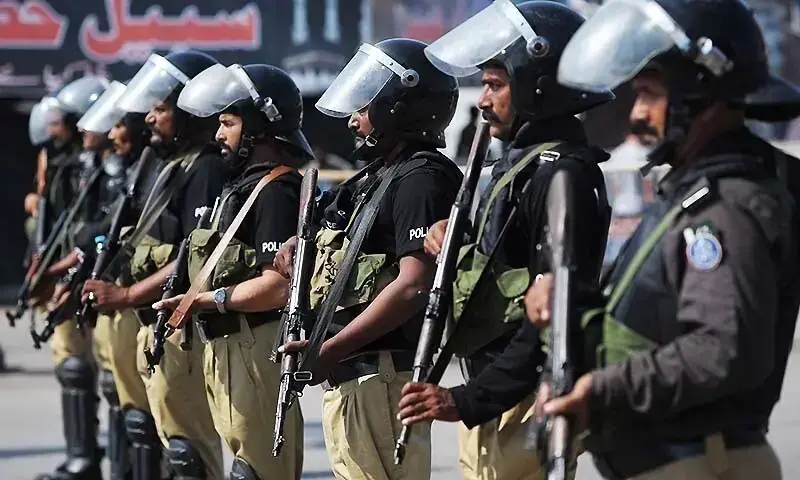
The administration in Khyber Pakhtunkhwa has unveiled a Rs70 billion investment plan to bolster police and counter-terrorism infrastructure, including the introduction of 'faceless' courts to protect legal participants.
 🛡️War & Security
Photo: Dawn
Key points
- Introduction of faceless courts to protect judicial participants
- Rs70 billion budget allocation for police and counter-terrorism
- Focus on anti-drone technology and intelligence-based operations
The provincial administration of Khyber Pakhtunkhwa has announced a comprehensive strategy to combat rising militancy, headlined by the creation of "faceless" anti-terrorism courts. Home Secretary Amjad Ali Khan stated that these courts are designed to safeguard the identities of witnesses, prosecutors, and judges, who currently face significant security risks when participating in terrorism-related trials.
The initiative includes a substantial financial commitment of Rs70 billion over the next year, specifically allocated to the Counter-Terrorism Department and provincial police. These funds are earmarked for infrastructure upgrades, including the expansion of the Safe City project, the deployment of anti-drone technology, and the establishment of District Nerve Centres to improve intelligence coordination. The government aims to significantly increase surveillance capabilities and address critical personnel shortages, particularly in the province's merged districts.
This policy shift follows the imposition of governor's rule in October, which was prompted by federal concerns regarding the previous provincial government's perceived lack of engagement in national counter-terrorism efforts. Officials emphasized that the current strategy seeks to align provincial actions with federal security policies, improve public outreach through tribal liaison committees, and enhance kinetic operations against militant facilitators.
The stakes
The success of this initiative will determine the stability of a region currently grappling with significant security losses, including the deaths of over 2,400 security and civilian personnel in recent years. If effectively implemented, the plan could restore state authority and public safety in conflict-prone areas; however, failure risks further alienating local populations and deepening the security vacuum that has allowed militant groups to exploit technological and tactical gaps.
Two readings
- Supporters view the measures as a necessary, long-overdue professionalization of local law enforcement that provides essential legal protections and technical parity with militant groups.
- Critics argue that the reliance on centralized, governor-led governance and increased surveillance could exacerbate local tensions and fail to address the underlying political grievances driving regional instability.
Source Dawn — dawn.com/news/2043052/kp-plans-to-set-up-faceless-atcs-spend-rs70bn… ↗
Read next
 ✒️Opinion & Analysis
ICJ Rules Myanmar Military Committed Genocide Against Rohingya
The International Court of Justice has found Myanmar's military guilty of genocide against the Rohingya, a ruling that damages the international standing of both Aung San…
 🕯️Democracy & Rights
Chinese teachers face rising parental pressure over personal life choices
Chinese educators are encountering a surge in unreasonable demands from parents, including complaints regarding teachers' pregnancy and maternity leave.
 🏮China & Taiwan
Beijing Reaffirms Reunification Stance Following Taiwan Local Election Results
China’s Taiwan Affairs Office declared that the island’s reunification with the mainland remains inevitable, despite recent shifts in Taiwan's local political landscape.
 🇪🇺Europe
US Air Force Repels Unauthorized Drone Incursion at RAF Lakenheath
U.S. security forces at a British air base successfully countered a group of unidentified drones, amid growing concerns over potential foreign state involvement.
 ⚖️Law & Policy
India Government Proposes 50% Increase in Parliamentary Seats and Women's Reservation
The Indian government plans to introduce legislation to expand the Lok Sabha to 850 seats and mandate a 33% reservation for women in legislative bodies.
 ⚖️Law & Policy
India’s ruling alliance nears two-thirds majority for sweeping parliamentary expansion and delimitation bills
The National Democratic Alliance is nearing a two-thirds majority in Parliament to pass landmark legislation expanding the Lok Sabha by 50 percent and implementing a 33 p…