Russia, Ukraine, and US representatives conclude two-day talks in Abu Dhabi
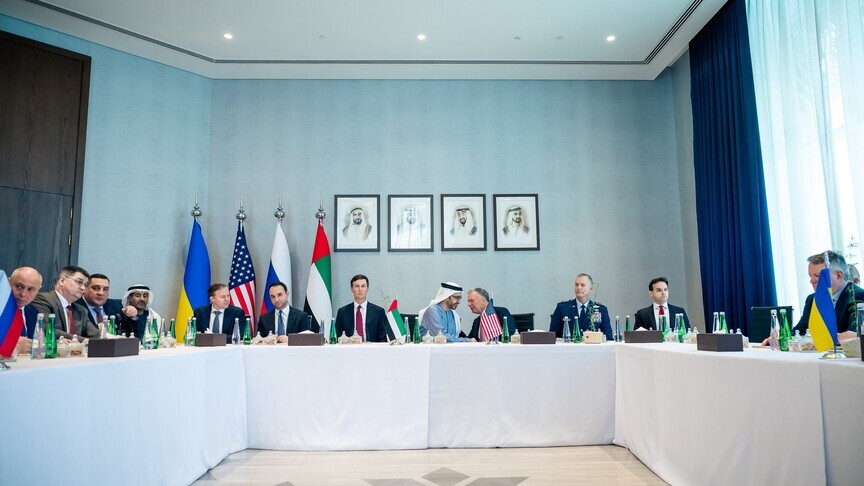
Delegations from Russia, Ukraine, and the United States have wrapped up two days of trilateral discussions in the United Arab Emirates. The meetings focused on diplomatic channels amid the ongoing conflict.
 🛡️War & Security
Photo: Anadolu
Key points
- Trilateral talks held in Abu Dhabi between Russia, Ukraine, and the US.
- Delegations led by Vladimir Medinsky and Rustem Umerov.
- Discussions included separate meetings with European partners.
Diplomatic representatives from Russia, Ukraine, and the United States concluded a two-day series of meetings in Abu Dhabi on Wednesday. The trilateral discussions, which spanned approximately two hours on the final day, represent a rare instance of direct engagement between the warring parties alongside American officials.
The Russian delegation was led by presidential aide Vladimir Medinsky, while the Ukrainian team was headed by Rustem Umerov, the chief of Ukraine's Foreign Intelligence Service. According to Umerov, the proceedings included intensive trilateral dialogue followed by a separate session between the Ukrainian delegation and their European partners to coordinate positions.
While the Russian delegation indicated that a formal statement would be released at a later time, specific details regarding the agenda or potential breakthroughs remain undisclosed. The meeting site in the United Arab Emirates continues to serve as a neutral ground for various international stakeholders seeking to manage the diplomatic fallout of the conflict.
The stakes
The primary outcome of these talks hinges on whether they can establish a sustainable framework for communication that prevents further escalation. If successful, these channels could eventually lead to humanitarian agreements or prisoner exchanges; however, if the talks stall, the parties remain locked in a high-intensity conflict with no immediate political resolution in sight.
Two readings
- Supporters view the meeting as a vital diplomatic necessity that maintains open lines of communication, potentially preventing miscalculations that could expand the scope of the war.
- Critics argue that such talks may provide a veneer of legitimacy to the aggressor while failing to address the fundamental territorial and sovereignty issues that drive the conflict.
Source Anadolu — aa.com.tr/en/world/2nd-day-of-russia-ukraine-us-talks-in-abu-dhabi-… ↗
Read next
 ✒️Opinion & Analysis
ICJ Rules Myanmar Military Committed Genocide Against Rohingya
The International Court of Justice has found Myanmar's military guilty of genocide against the Rohingya, a ruling that damages the international standing of both Aung San…
 🕯️Democracy & Rights
Chinese teachers face rising parental pressure over personal life choices
Chinese educators are encountering a surge in unreasonable demands from parents, including complaints regarding teachers' pregnancy and maternity leave.
 🏮China & Taiwan
Beijing Reaffirms Reunification Stance Following Taiwan Local Election Results
China’s Taiwan Affairs Office declared that the island’s reunification with the mainland remains inevitable, despite recent shifts in Taiwan's local political landscape.
 🇪🇺Europe
US Air Force Repels Unauthorized Drone Incursion at RAF Lakenheath
U.S. security forces at a British air base successfully countered a group of unidentified drones, amid growing concerns over potential foreign state involvement.
 ⚖️Law & Policy
India Government Proposes 50% Increase in Parliamentary Seats and Women's Reservation
The Indian government plans to introduce legislation to expand the Lok Sabha to 850 seats and mandate a 33% reservation for women in legislative bodies.
 ⚖️Law & Policy
India’s ruling alliance nears two-thirds majority for sweeping parliamentary expansion and delimitation bills
The National Democratic Alliance is nearing a two-thirds majority in Parliament to pass landmark legislation expanding the Lok Sabha by 50 percent and implementing a 33 p…