European Leaders Reject Moscow's Demands on Continent's Security Architecture
European leaders firmly asserted that the continent's security framework must be decided with European and Ukrainian participation, rejecting Moscow's efforts to bypass them in peace talks.
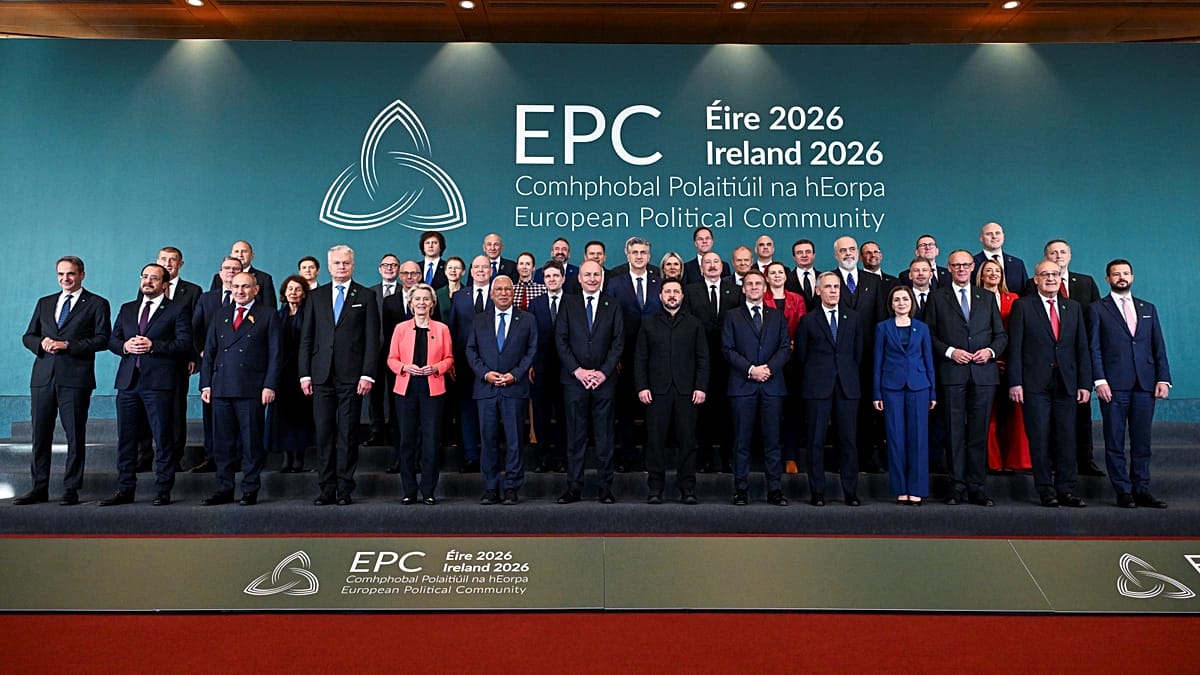 🤝Diplomacy
Photo: Euronews
Key points
- European leaders insist on participating in security architecture talks
- Russia rejects multilateral format involving European officials in Abu Dhabi
- EU officials emphasize ceasefire sequencing before broader security discussions
European leaders rejected attempts by Moscow to unilaterally shape the continent's security architecture during a recent summit in Dublin, insisting that any diplomatic resolution must include Europeans and Ukraine at the negotiating table. French President Emmanuel Macron stated that Europeans will ultimately define their own security future, while German Chancellor Friedrich Merz called on Russian representatives to engage in direct face-to-face discussions rather than avoiding European delegates.
The pushback follows peace talks in Abu Dhabi where Russia's chief negotiator, Vladimir Medinsky, refused to interact with European officials due to their support for Ukraine, arguing that broader systemic changes to the security order are required. Meanwhile, EU High Representative Kaja Kallas emphasized that a proper diplomatic sequence requires a ceasefire and peace settlement in Ukraine before any discussions on security frameworks, noting that existing agreements like the Helsinki Accords remain valid.
Several regional leaders warned that Moscow's focus on continental security is a strategic trap designed to roll back NATO expansion and divert attention from the war in Ukraine. Estonian Prime Minister Kristen Michal and Lithuanian President Gitanas Nausėda both stressed that negotiations must occur under fair conditions, avoiding any decisions made behind the backs of Ukrainians or the European Union.
The stakes
If European leaders maintain their collective stance, Moscow's efforts to fracture Western unity and negotiate exclusively with the United States will stall, keeping Ukraine and the EU central to any future diplomatic settlement. Conversely, sidelining European actors risks creating a fractured post-war security framework that could destabilize the region and undermine long-term deterrence.
Two readings
- Supporters view the unified European stance as an essential defense of sovereignty, ensuring that continental security cannot be dictated by the Kremlin through bilateral deals with Washington.
- Critics argue that outright refusal to engage on Moscow's preferred terms risks prolonging the conflict by ignoring the structural security grievances driving Russian policy.
Source Euronews — euronews.com/2026/11/12/europe-tells-russia-our-security-architectu… ↗
Read next
 ✒️Opinion & Analysis
ICJ Rules Myanmar Military Committed Genocide Against Rohingya
The International Court of Justice has found Myanmar's military guilty of genocide against the Rohingya, a ruling that damages the international standing of both Aung San…
 🕯️Democracy & Rights
Chinese teachers face rising parental pressure over personal life choices
Chinese educators are encountering a surge in unreasonable demands from parents, including complaints regarding teachers' pregnancy and maternity leave.
 🛡️War & Security
Ukraine Restricts Media Coverage of Infrastructure Damage Amid Russian Strikes
President Volodymyr Zelenskyy has issued a decree prohibiting media outlets from reporting on the impact of Russian strikes against critical infrastructure and the status…
 🏮China & Taiwan
Beijing Reaffirms Reunification Stance Following Taiwan Local Election Results
China’s Taiwan Affairs Office declared that the island’s reunification with the mainland remains inevitable, despite recent shifts in Taiwan's local political landscape.
 🇪🇺Europe
US Air Force Repels Unauthorized Drone Incursion at RAF Lakenheath
U.S. security forces at a British air base successfully countered a group of unidentified drones, amid growing concerns over potential foreign state involvement.
 ⚖️Law & Policy
India Government Proposes 50% Increase in Parliamentary Seats and Women's Reservation
The Indian government plans to introduce legislation to expand the Lok Sabha to 850 seats and mandate a 33% reservation for women in legislative bodies.