UN Climate Chief Urges Overhaul of Global Finance to Break Debt Loop
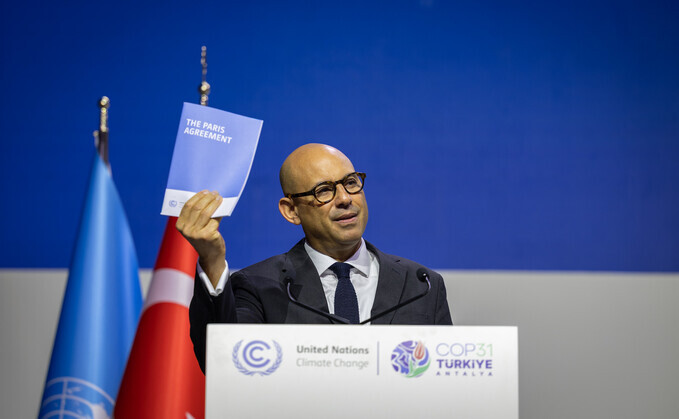
UN Climate Change Executive Secretary Simon Stiell told ministers in Antalya that climate finance must be fundamentally redesigned to lift developing nations out of cycles of debt and disaster.
 🤝Diplomacy
Photo: Premium Times
Key points
- UN climate chief calls for restructuring global climate finance to combat debt.
- Developing nations warn against mortgaging their futures through loan-heavy funding.
- Discussions in Antalya feed into preparations for COP32 in Ethiopia.
Speaking at the opening of a high-level ministerial dialogue in Antalya, Turkey, UN Climate Change Executive Secretary Simon Stiell declared that meeting headline financial targets alone will fail to rescue developing nations from overlapping economic and environmental crises. Mr Stiell emphasized that the terms, delivery mechanisms, and accessibility of climate funds matter equally to the raw monetary sums being promised.
The remarks follow the agreement reached at COP29, where developed nations committed to spearhead an effort to provide $300 billion annually by 2035, aiming for a broader mobilization of $1.3 trillion per year. However, Mr Stiell warned that many vulnerable states remain imprisoned in a destructive feedback loop of climate disasters, prohibitive capital costs, and skyrocketing debt obligations that drive up borrowing expenses even before a crisis hits.
While acknowledging the necessity of private investments, loans, and guarantees, the UN climate chief stressed that grant-based and highly concessional funds remain vital for the most vulnerable economies, including Least Developed Countries and Small Island Developing States. Nana Antwi-Boasiako Amoah, chair of the African Group of Negotiators, echoed these concerns, stating that poorer countries should not be forced to compromise their long-term futures to afford ecological transitions.
The stakes
If these proposed structural reforms are adopted, developing economies could gain relief from crippling debt repayments and secure fairer terms for green investments. Conversely, failure to alter how funds are distributed risks pushing vulnerable states deeper into insolvency, ultimately stalling global climate targets and forcing governments to choose between debt servicing and environmental survival.
Two readings
- Supporters read the push for concessional funding and debt relief as a vital course correction to ensure climate justice for impoverished nations facing crises they did not create.
- Critics and donor-nation representatives argue that shifting away from loans toward grants places an unrealistic burden on public treasuries in developed countries.
Source Premium Times — premiumtimesng.com/business/business-news/925050-finance-must-break… ↗
Read next
 ✒️Opinion & Analysis
ICJ Rules Myanmar Military Committed Genocide Against Rohingya
The International Court of Justice has found Myanmar's military guilty of genocide against the Rohingya, a ruling that damages the international standing of both Aung San…
 🕯️Democracy & Rights
Chinese teachers face rising parental pressure over personal life choices
Chinese educators are encountering a surge in unreasonable demands from parents, including complaints regarding teachers' pregnancy and maternity leave.
 🛡️War & Security
Ukraine Restricts Media Coverage of Infrastructure Damage Amid Russian Strikes
President Volodymyr Zelenskyy has issued a decree prohibiting media outlets from reporting on the impact of Russian strikes against critical infrastructure and the status…
 🏮China & Taiwan
Beijing Reaffirms Reunification Stance Following Taiwan Local Election Results
China’s Taiwan Affairs Office declared that the island’s reunification with the mainland remains inevitable, despite recent shifts in Taiwan's local political landscape.
 🇪🇺Europe
US Air Force Repels Unauthorized Drone Incursion at RAF Lakenheath
U.S. security forces at a British air base successfully countered a group of unidentified drones, amid growing concerns over potential foreign state involvement.
 ⚖️Law & Policy
India Government Proposes 50% Increase in Parliamentary Seats and Women's Reservation
The Indian government plans to introduce legislation to expand the Lok Sabha to 850 seats and mandate a 33% reservation for women in legislative bodies.