Pakistan Military Chief Discusses Defence Ties with British and Turkish Leaders
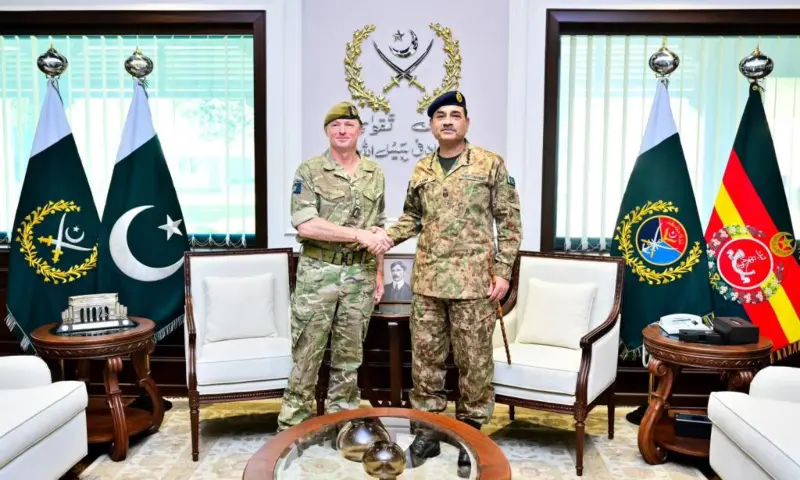
Field Marshal Asim Munir held separate talks in Rawalpindi with senior British and Turkish military officials to discuss expanding bilateral defense cooperation and regional security.
 🤝Diplomacy
Photo: Dawn
Key points
- Field Marshal Asim Munir met with British and Turkish military chiefs in Rawalpindi.
- Discussions focused on bilateral defense cooperation and regional security.
- The meetings follow recent counterterrorism dialogues and multilateral defense agreements.
Chief of Defence Forces and Army Staff Field Marshal Asim Munir hosted British Chief of General Staff General Sir Charles Roland Vincent Walker and Turkish Air Force Commander General Rafet Dalkıran during separate meetings at the General Headquarters in Rawalpindi, according to military statements. The discussions centered on strengthening military-to-military ties, exploring new avenues for security collaboration, and evaluating the broader regional security environment.
During the diplomatic engagements, the Pakistani commander emphasized the nation's dedication to deepening strategic partnerships with both London and Ankara. The visiting British delegation commended the operational readiness and professionalism of the local armed forces, acknowledging their role in maintaining regional stability. Similarly, the Turkish air chief reviewed longstanding historical and strategic ties, reinforcing the growing defense alignment between the participating nations.
These high-level military meetings follow a series of recent bilateral and multilateral security dialogues involving Pakistan, the United Kingdom, Turkey, and other regional allies. Earlier this month, interior ministries from Pakistan and Britain convened to address counterterrorism, border security, and cybercrime. Meanwhile, Pakistan and Turkey maintain active joint military frameworks alongside partners such as Saudi Arabia, Qatar, and Egypt.
The stakes
Closer military alignment alters regional security dynamics by institutionalizing joint counterterrorism efforts and intelligence sharing among middle powers. While participating governments gain enhanced operational synergy and diplomatic leverage, critics warn that expanding formal defense pacts could entrench regional rivalries and strain external diplomatic balances.
Two readings
- Supporters read the agreements as vital steps toward regional stability, improved counterterrorism capabilities, and modernized defense interoperability.
- Critics read the expanding alliances as opaque security pacts that risk entangling regional actors in broader geopolitical flashpoints.
Source Dawn — dawn.com/news/2045178/cdf-munir-discusses-avenues-for-enhancing-bil… ↗
Read next
 ✒️Opinion & Analysis
ICJ Rules Myanmar Military Committed Genocide Against Rohingya
The International Court of Justice has found Myanmar's military guilty of genocide against the Rohingya, a ruling that damages the international standing of both Aung San…
 🕯️Democracy & Rights
Chinese teachers face rising parental pressure over personal life choices
Chinese educators are encountering a surge in unreasonable demands from parents, including complaints regarding teachers' pregnancy and maternity leave.
 🛡️War & Security
Ukraine Restricts Media Coverage of Infrastructure Damage Amid Russian Strikes
President Volodymyr Zelenskyy has issued a decree prohibiting media outlets from reporting on the impact of Russian strikes against critical infrastructure and the status…
 🏮China & Taiwan
Beijing Reaffirms Reunification Stance Following Taiwan Local Election Results
China’s Taiwan Affairs Office declared that the island’s reunification with the mainland remains inevitable, despite recent shifts in Taiwan's local political landscape.
 🇪🇺Europe
US Air Force Repels Unauthorized Drone Incursion at RAF Lakenheath
U.S. security forces at a British air base successfully countered a group of unidentified drones, amid growing concerns over potential foreign state involvement.
 ⚖️Law & Policy
India Government Proposes 50% Increase in Parliamentary Seats and Women's Reservation
The Indian government plans to introduce legislation to expand the Lok Sabha to 850 seats and mandate a 33% reservation for women in legislative bodies.