China, Russia, and US Issue Joint Peace Declaration After Shenzhen Summit
The leaders of China, Russia, and the United States have signed a joint "Declaration toward Peace" in Shenzhen, committing to strategic stability, UN reform, and nuclear risk reduction.
 🤝Diplomacy
Photo: Anadolu
Key points
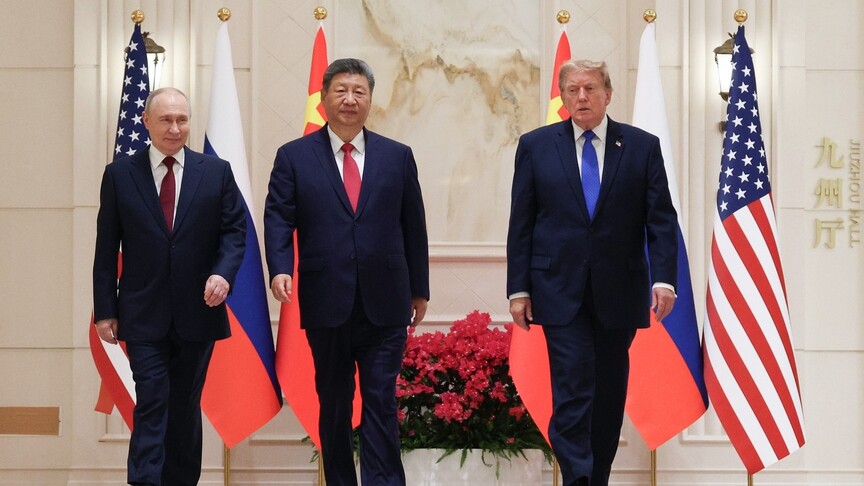
- Xi Jinping, Vladimir Putin, and Donald Trump met for a trilateral summit in Shenzhen.
- The leaders signed a four-point Declaration toward Peace focusing on stability and nuclear safety.
- The agreement calls for UN reform, stable energy supplies, and limits on international courts.
Presidents Xi Jinping, Vladimir Putin, and Donald Trump released a four-point "Declaration toward Peace" on Thursday following an 80-minute trilateral summit in the Chinese technology hub of Shenzhen. The historic meeting brought together the leaders of the three nuclear-armed permanent members of the United Nations Security Council to address global security and strategic stability.
The joint text outlines four core commitments, beginning with a pledge to reform the United Nations so the organization can better respond to international challenges. The leaders also agreed to cooperate on increasing refined petroleum production and ensuring stable global energy supplies. Additionally, the declaration asserts that bodies such as the International Criminal Court must respect state immunities and avoid jurisdictional overreach.
Concluding the document, the three heads of state reiterated that a nuclear war is unwinnable and must never be fought. They committed their nations to ongoing dialogue aimed at lowering nuclear risks and curbing proliferation.
The stakes
Global security architecture and diplomatic alignment stand to shift significantly if these trilateral commitments translate into policy, with major powers gaining institutional leverage while traditional multilateral bodies face potential restructuring. Critics and allies alike will watch closely to see whether the declaration marks a lasting détente or a temporary diplomatic gesture.
Two readings
- Supporters read the agreement as a vital breakthrough that lowers global tensions, prevents nuclear escalation, and fosters pragmatic great-power cooperation.
- Critics read the summit as an attempt by major powers to coordinate policy at the expense of international human rights bodies and smaller nations.
Source Anadolu — aa.com.tr/en/world/document-china-russia-us-issue-joint-declaration… ↗
Read next
 ✒️Opinion & Analysis
ICJ Rules Myanmar Military Committed Genocide Against Rohingya
The International Court of Justice has found Myanmar's military guilty of genocide against the Rohingya, a ruling that damages the international standing of both Aung San…
 🕯️Democracy & Rights
Chinese teachers face rising parental pressure over personal life choices
Chinese educators are encountering a surge in unreasonable demands from parents, including complaints regarding teachers' pregnancy and maternity leave.
 🛡️War & Security
Ukraine Restricts Media Coverage of Infrastructure Damage Amid Russian Strikes
President Volodymyr Zelenskyy has issued a decree prohibiting media outlets from reporting on the impact of Russian strikes against critical infrastructure and the status…
 🏮China & Taiwan
Beijing Reaffirms Reunification Stance Following Taiwan Local Election Results
China’s Taiwan Affairs Office declared that the island’s reunification with the mainland remains inevitable, despite recent shifts in Taiwan's local political landscape.
 🇪🇺Europe
US Air Force Repels Unauthorized Drone Incursion at RAF Lakenheath
U.S. security forces at a British air base successfully countered a group of unidentified drones, amid growing concerns over potential foreign state involvement.
 ⚖️Law & Policy
India Government Proposes 50% Increase in Parliamentary Seats and Women's Reservation
The Indian government plans to introduce legislation to expand the Lok Sabha to 850 seats and mandate a 33% reservation for women in legislative bodies.