Bangladesh Deploys Paramilitary Forces Amid Unrest Over Hasina’s Planned Return
Bangladesh has deployed hundreds of paramilitary troops following a wave of arson attacks and political violence sparked by the ousted leader's announced return from India.
 🤝Diplomacy
Photo: Straits Times Asia
Key points
- Bangladesh deploys 90 additional paramilitary platoons
- Arson and clashes follow Sheikh Hasina's vowed December return
- At least four killed in political violence since November 14
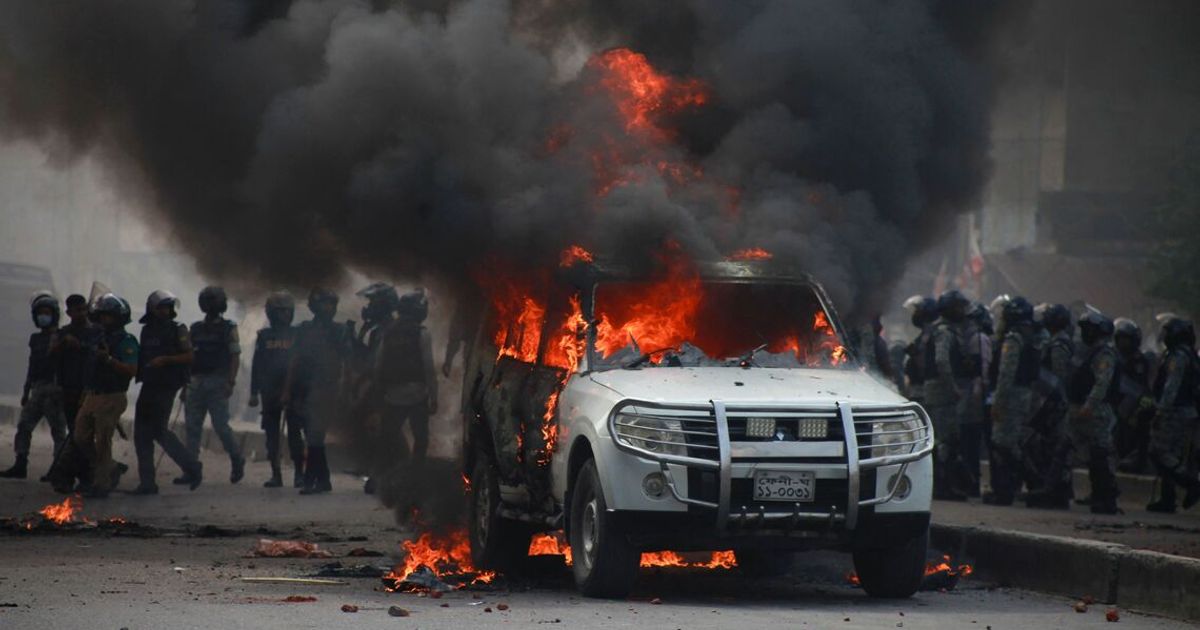
Authorities in Bangladesh deployed ninety additional platoons of the Border Guard Bangladesh nationwide on November 21 to suppress a growing wave of political violence and arson. The security surge follows weeks of unrest that has seen police stations targeted, banks attacked, and numerous residential properties set ablaze across multiple districts.
The current instability has intensified as seventy-nine-year-old former leader Sheikh Hasina stated her intention to return from India in December. Hasina remains under a death sentence issued in absentia for crimes against humanity, stemming from a violent government crackdown during the uprising that forced her removal from power in 2024. Clashes have escalated between supporters of her banned Awami League party and rival factions, including the ruling Bangladesh Nationalist Party.
Local law enforcement confirmed that retaliatory attacks in the south-western district of Narail destroyed over a dozen homes linked to Awami League affiliates following the deaths of two ruling party activists. Nationwide, political clashes and vehicle arson have claimed at least four lives since November 14. National police leadership reported that order was successfully restored in Hasina's home district of Gopalganj, while security has also been heightened around key industrial sectors to manage separate wage protests by garment workers.
The stakes
The unfolding security crisis directly impacts the stability of Bangladesh's interim political structure, testing the government's ability to maintain public order ahead of a high-stakes return by a deposed leader. If the deployment fails to contain the violence, the nation risks descending into deeper factional chaos, potentially derailing democratic transition efforts and severely disrupting vital economic sectors like garment manufacturing.
Two readings
- Supporters view the enhanced security deployment as a necessary measure to protect citizens from partisan lawlessness and safeguard public infrastructure against politically motivated sabotage.
- Critics argue that heavy-handed security tactics and suppressed political opposition risk inflaming tensions further rather than addressing the root causes of civil unrest.
Source Straits Times Asia — straitstimes.com/asia/south-asia/bangladesh-boosts-security-in-bid-… ↗
Read next
 ✒️Opinion & Analysis
ICJ Rules Myanmar Military Committed Genocide Against Rohingya
The International Court of Justice has found Myanmar's military guilty of genocide against the Rohingya, a ruling that damages the international standing of both Aung San…
 🕯️Democracy & Rights
Chinese teachers face rising parental pressure over personal life choices
Chinese educators are encountering a surge in unreasonable demands from parents, including complaints regarding teachers' pregnancy and maternity leave.
 🛡️War & Security
Ukraine Restricts Media Coverage of Infrastructure Damage Amid Russian Strikes
President Volodymyr Zelenskyy has issued a decree prohibiting media outlets from reporting on the impact of Russian strikes against critical infrastructure and the status…
 🏮China & Taiwan
Beijing Reaffirms Reunification Stance Following Taiwan Local Election Results
China’s Taiwan Affairs Office declared that the island’s reunification with the mainland remains inevitable, despite recent shifts in Taiwan's local political landscape.
 🇪🇺Europe
US Air Force Repels Unauthorized Drone Incursion at RAF Lakenheath
U.S. security forces at a British air base successfully countered a group of unidentified drones, amid growing concerns over potential foreign state involvement.
 ⚖️Law & Policy
India Government Proposes 50% Increase in Parliamentary Seats and Women's Reservation
The Indian government plans to introduce legislation to expand the Lok Sabha to 850 seats and mandate a 33% reservation for women in legislative bodies.