Iranian Officials Condemn Western Media Reports Linking Civilian Infrastructure to Military Facilities
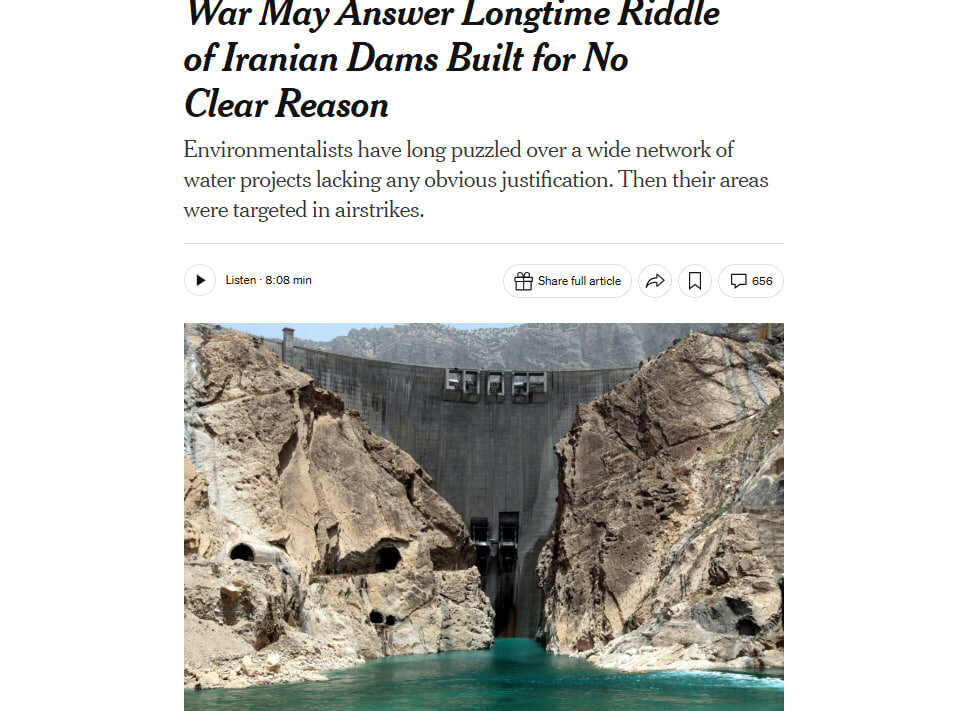
Top Iranian officials have sharply criticized a recent foreign media report suggesting a connection between the country's dams and its missile program, warning it could be used to justify attacks on civilian sites.
 🤝Diplomacy
Photo: Tehran Times
Key points
- Iranian officials condemn media report linking dams to military sites
- Foreign Minister Araghchi dismisses allegations as baseless
- Parliament speaker Qalibaf warns of potential retaliatory logic
Iranian leadership has strongly denounced a prominent international newspaper report linking the nation's hydraulic infrastructure and dams to its missile network, with Foreign Minister Abbas Araghchi dismissing the allegations as unfounded. The disputed publication, which cited military analysts speculating that the Islamic Revolution Guard Corps might draw electricity from dams for underground facilities, has sparked widespread official and public outrage in Tehran.
Iranian parliament speaker Mohammed Bagher Qalibaf issued a stern warning following the publication, asserting that if foreign logic brands civilian infrastructure as dual-use, Tehran could reciprocate by applying the same standard to facilities near adversary bases. The article's authors acknowledged that the claimed connection remains speculative due to the secrecy surrounding Iran's defense projects, yet maintained that the questions warranted raising.
Environmental experts and international specialists have also challenged the reasoning, arguing that spatial proximity does not prove causation and warning that framing civilian assets as military targets threatens vital water supplies. Critics inside and outside the country have drawn parallels to pre-war reporting preceding the 2003 invasion of Iraq, accusing major media outlets of laying the groundwork for military escalation.
The stakes
If such media narratives shape foreign policy decisions, the threshold for targeting civilian infrastructure in future conflicts could be dangerously lowered. Tehran gains a rallying point to denounce external pressure, while regional stability loses another layer of diplomatic restraint as mutual threats escalate.
Two readings
- Supporters of the scrutiny argue that exploring potential dual-use capabilities of state-managed infrastructure is a necessary part of analyzing opaque military programs in hostile states.
- Critics contend that publishing unverified hypotheses about civilian water systems manufactures consent for unlawful attacks and endangers basic humanitarian infrastructure.
Source Tehran Times — tehrantimes.com/news/532389/The-NYT-builds-the-case-for-US-strikes-… ↗
Read next
 ✒️Opinion & Analysis
ICJ Rules Myanmar Military Committed Genocide Against Rohingya
The International Court of Justice has found Myanmar's military guilty of genocide against the Rohingya, a ruling that damages the international standing of both Aung San…
 🕯️Democracy & Rights
Chinese teachers face rising parental pressure over personal life choices
Chinese educators are encountering a surge in unreasonable demands from parents, including complaints regarding teachers' pregnancy and maternity leave.
 🛡️War & Security
Ukraine Restricts Media Coverage of Infrastructure Damage Amid Russian Strikes
President Volodymyr Zelenskyy has issued a decree prohibiting media outlets from reporting on the impact of Russian strikes against critical infrastructure and the status…
 🏮China & Taiwan
Beijing Reaffirms Reunification Stance Following Taiwan Local Election Results
China’s Taiwan Affairs Office declared that the island’s reunification with the mainland remains inevitable, despite recent shifts in Taiwan's local political landscape.
 🇪🇺Europe
US Air Force Repels Unauthorized Drone Incursion at RAF Lakenheath
U.S. security forces at a British air base successfully countered a group of unidentified drones, amid growing concerns over potential foreign state involvement.
 ⚖️Law & Policy
India Government Proposes 50% Increase in Parliamentary Seats and Women's Reservation
The Indian government plans to introduce legislation to expand the Lok Sabha to 850 seats and mandate a 33% reservation for women in legislative bodies.