Australia’s Climate Minister Fails to Broker Consensus at COP31 Summit
Australian Climate Change Minister Chris Bowen failed to secure a landmark climate agreement in Antalya after negotiations stalled over the inclusion of fossil fuel terminology.
 🤝Diplomacy
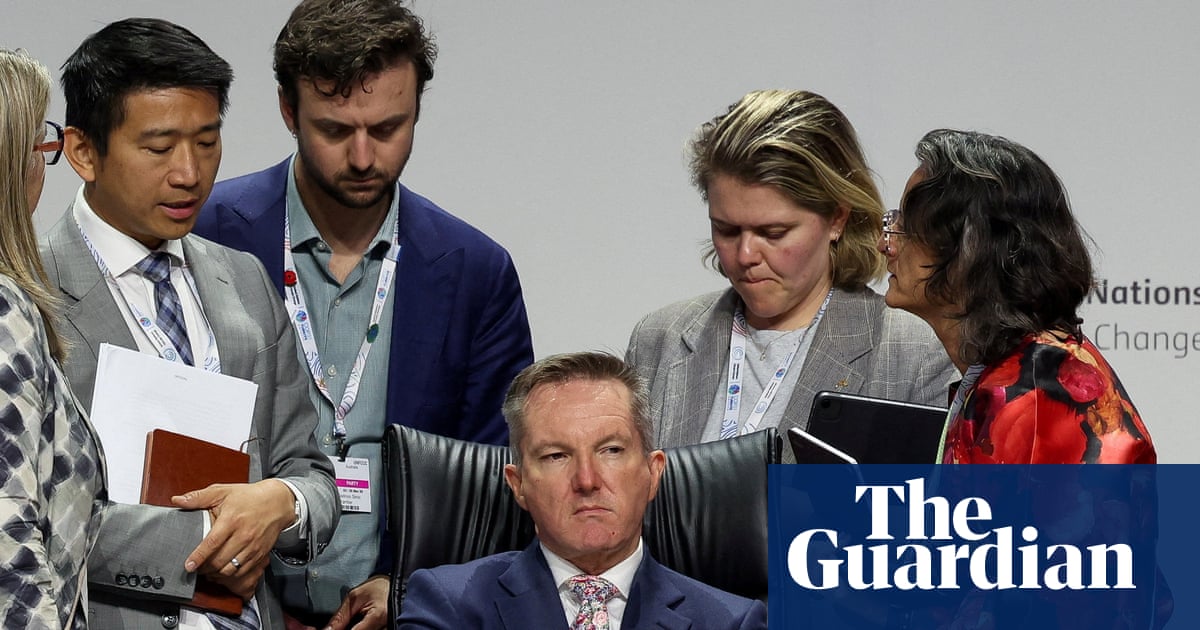
Photo: Guardian Australia Politics
Key points
- COP31 summit concludes without a central agreement after disputes over fossil fuel language.
- Minister Chris Bowen fails to bridge the gap between petrostates and climate-conscious nations.
- The breakdown suggests a potential shift toward voluntary climate pacts outside of formal UN negotiations.
Australian Climate Change Minister Chris Bowen concluded the COP31 summit in Turkey without reaching a consensus on an overarching "Antalya pact." The proposed agreement, which aimed to accelerate global investment in renewable energy and electrification, ultimately collapsed after negotiators failed to bridge a divide regarding the explicit mention of fossil fuels.
The negotiations reached an impasse when several nations, including Saudi Arabia, reportedly threatened to veto any text that explicitly named fossil fuels. In an attempt to find a middle ground, Bowen and his Turkish counterpart, Murat Kurum, drafted a compromise that referenced previous climate agreements without directly naming the energy source. This approach was rejected by a coalition of countries including the European Union, Norway, and several island nations, who deemed the omission unacceptable.
Bowen, who served as the president of the negotiations, stated that his team exhausted all diplomatic avenues to secure a deal. Despite the failure to finalize the pact, he maintained that the global transition away from fossil fuels remains inevitable. While the summit did not result in a total collapse of all proceedings, the inability to finalize the primary agreement leaves a significant gap in international climate policy coordination.
The stakes
The failure to reach an agreement leaves climate-vulnerable nations without a unified path forward for financial aid and emissions targets. For Australia, the outcome places Minister Bowen under significant domestic pressure, while internationally, it signals a growing rift between petrostates and nations pushing for aggressive decarbonization, potentially leading to a shift toward voluntary, smaller-scale climate alliances outside of the UN framework.
Two readings
- Supporters of the outcome argue that rejecting the watered-down text was a necessary stand against the influence of fossil fuel interests and a refusal to accept inadequate climate commitments.
- Critics contend that the failure to secure a compromise represents a diplomatic setback that leaves the global community without a clear, unified strategy to meet critical temperature targets.
Source Guardian Australia Politics — theguardian.com/environment/2026/nov/23/cop31-left-chris-bowen-stuc… ↗
Read next
 ✒️Opinion & Analysis
ICJ Rules Myanmar Military Committed Genocide Against Rohingya
The International Court of Justice has found Myanmar's military guilty of genocide against the Rohingya, a ruling that damages the international standing of both Aung San…
 🕯️Democracy & Rights
Chinese teachers face rising parental pressure over personal life choices
Chinese educators are encountering a surge in unreasonable demands from parents, including complaints regarding teachers' pregnancy and maternity leave.
 🛡️War & Security
Ukraine Restricts Media Coverage of Infrastructure Damage Amid Russian Strikes
President Volodymyr Zelenskyy has issued a decree prohibiting media outlets from reporting on the impact of Russian strikes against critical infrastructure and the status…
 🏮China & Taiwan
Beijing Reaffirms Reunification Stance Following Taiwan Local Election Results
China’s Taiwan Affairs Office declared that the island’s reunification with the mainland remains inevitable, despite recent shifts in Taiwan's local political landscape.
 🇪🇺Europe
US Air Force Repels Unauthorized Drone Incursion at RAF Lakenheath
U.S. security forces at a British air base successfully countered a group of unidentified drones, amid growing concerns over potential foreign state involvement.
 ⚖️Law & Policy
India Government Proposes 50% Increase in Parliamentary Seats and Women's Reservation
The Indian government plans to introduce legislation to expand the Lok Sabha to 850 seats and mandate a 33% reservation for women in legislative bodies.