Japan to provide coastal radar and drones to Philippine military
Japan has agreed to supply the Philippine military with a coastal radar system and surveillance drones through a 4.3 billion yen grant, drawing criticism from Beijing amid ongoing territorial disputes in the South China Sea.
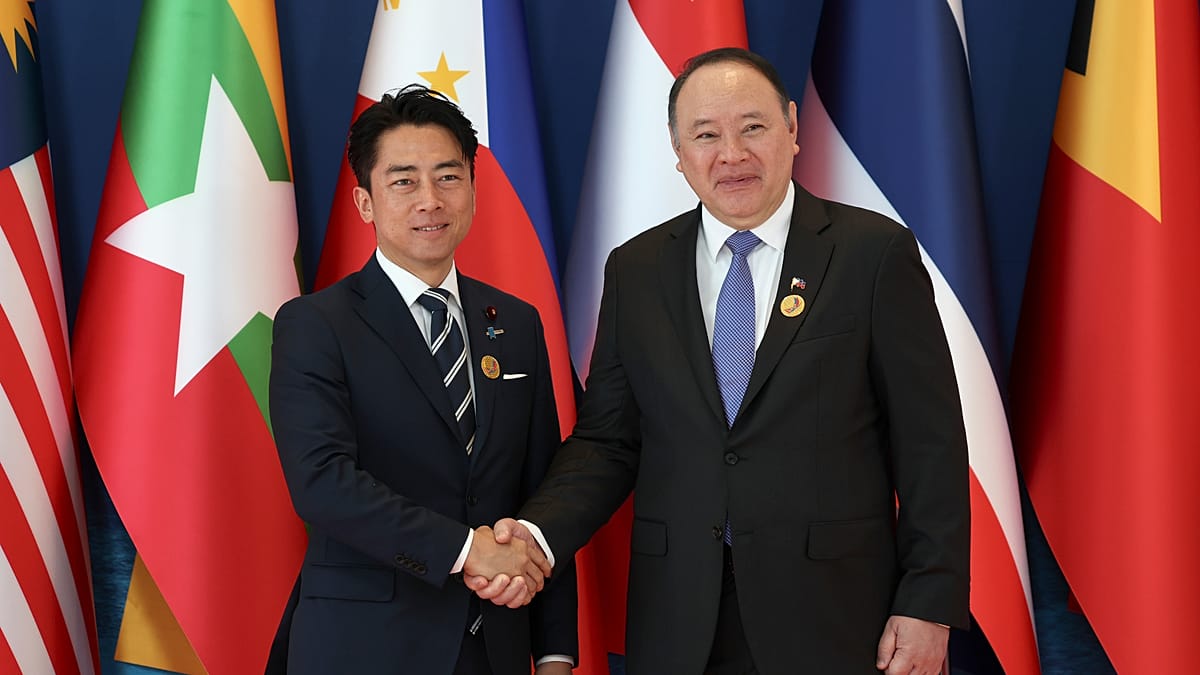 🤝Diplomacy
Photo: Euronews
Key points
- Japan provides 4.3 billion yen grant for radar and drones
- Equipment targets South China Sea and Luzon Strait security
- Beijing criticizes Tokyo's expanding regional security role
Japan and the Philippines formalized an agreement on Monday for Tokyo to provide a coastal radar system and surveillance drones valued at 4.3 billion Japanese yen, approximately 24 million euros. The accord was signed in Manila by Philippine Foreign Secretary Maria Theresa Lazaro and Japanese Ambassador Katsuro Kitagawa, designating the radar for the Philippine Navy and the drones for the Air Force.
According to Japan's foreign ministry, the military hardware is intended to assist in monitoring shipping lanes vital to Tokyo's commerce, particularly routes crossing the South China Sea and the Luzon Strait situated between the Philippines and Taiwan. This transfer marks the first complete defense system supplied through Japan's Official Security Assistance program, following an earlier handover of five standalone coastal radar systems in February.
The agreement emerges against a backdrop of heightened maritime friction. Both Manila and Beijing claim sovereignty over the Scarborough Shoal, where Chinese military vessels and aircraft conducted patrols in late October. Furthermore, discussions are underway between Tokyo and Manila regarding the potential transfer of a retired Abukuma-class naval destroyer to the Philippine fleet, following talks held by defense ministers in October.
The stakes
The security arrangement strengthens Philippine maritime domain awareness while allowing Japan to expand its regional security footprint and protect critical trade routes. Conversely, the pact deepens geopolitical friction with Beijing, which views the assistance program as an attempt to construct an exclusionary security network in East and Southeast Asia.
Two readings
- Supporters read the agreement as a necessary step to uphold international maritime law, protect free navigation, and support a sovereign partner against aggressive territorial encroachment.
- Critics in Beijing read the pact as a destabilizing escalation, accusing Tokyo of using security assistance to advance external strategic interests and provoke regional division.
Source Euronews — euronews.com/2026/11/10/japan-to-supply-philippine-military-with-co… ↗
Read next
 ✒️Opinion & Analysis
ICJ Rules Myanmar Military Committed Genocide Against Rohingya
The International Court of Justice has found Myanmar's military guilty of genocide against the Rohingya, a ruling that damages the international standing of both Aung San…
 🕯️Democracy & Rights
Chinese teachers face rising parental pressure over personal life choices
Chinese educators are encountering a surge in unreasonable demands from parents, including complaints regarding teachers' pregnancy and maternity leave.
 🛡️War & Security
Ukraine Restricts Media Coverage of Infrastructure Damage Amid Russian Strikes
President Volodymyr Zelenskyy has issued a decree prohibiting media outlets from reporting on the impact of Russian strikes against critical infrastructure and the status…
 🏮China & Taiwan
Beijing Reaffirms Reunification Stance Following Taiwan Local Election Results
China’s Taiwan Affairs Office declared that the island’s reunification with the mainland remains inevitable, despite recent shifts in Taiwan's local political landscape.
 🇪🇺Europe
US Air Force Repels Unauthorized Drone Incursion at RAF Lakenheath
U.S. security forces at a British air base successfully countered a group of unidentified drones, amid growing concerns over potential foreign state involvement.
 ⚖️Law & Policy
India Government Proposes 50% Increase in Parliamentary Seats and Women's Reservation
The Indian government plans to introduce legislation to expand the Lok Sabha to 850 seats and mandate a 33% reservation for women in legislative bodies.