Iran and Armenia Sign Cooperation Agreement to Expand Bilateral Trade and Infrastructure
Iran and Armenia have signed a new cooperation document aimed at bolstering trade, energy, and transport links between the two nations. The agreement includes plans to increase border capacity and improve logistical infrastructure.
 🤝Diplomacy
Photo: Tehran Times
Key points
- Iran and Armenia signed a cooperation document focusing on energy, transport, and infrastructure.
- Tehran plans to increase daily border truck capacity from 300 to 500 vehicles.
- Construction of a second bridge over the Aras River is scheduled to begin within the month.
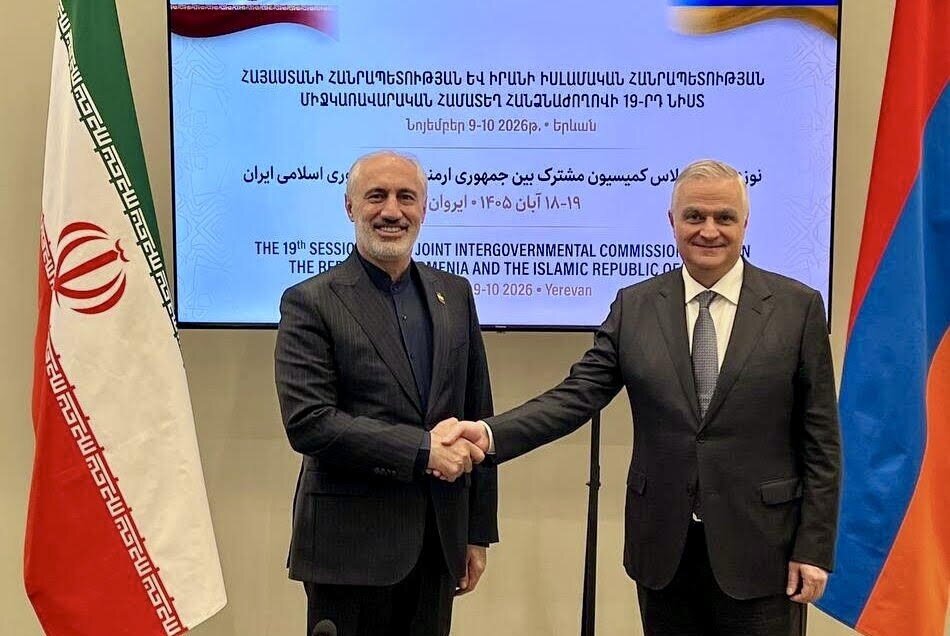
Iran and Armenia have formalized a new cooperation agreement following the 19th meeting of the Joint Economic Committee held in Yerevan on November 10. The document, signed by Iranian Vice President Seyed Hamid Pourmohammadi and Armenian Deputy Prime Minister Mher Grigoryan, outlines a strategic commitment to deepening ties in energy, transport, and infrastructure development.
A core component of the agreement focuses on optimizing the Nordooz border crossing. Iranian officials announced plans to construct a second bridge over the Aras River and expand the existing border terminal to accommodate higher traffic volumes. Tehran aims to increase daily truck crossings from the current 300 to 500, with additional improvements planned for regional transit routes, including the Jolfa–Nordooz road.
Beyond physical infrastructure, the two governments addressed logistical hurdles affecting cross-border trade. Measures to alleviate traffic congestion include relocating fuel stations and streamlining customs formalities. Both parties emphasized that these efforts are intended to foster long-term stability and economic integration, with Iranian officials projecting that the Nordooz crossing will become a primary land trade corridor within the next 18 months.
The stakes
The agreement serves to strengthen the geopolitical and economic bond between Tehran and Yerevan, potentially insulating both nations from regional volatility. Improved infrastructure benefits local traders and logistics firms, while the expansion of the Nordooz terminal signals a strategic pivot by Iran to prioritize land-based trade routes to the Caucasus.
Two readings
- Supporters view the agreement as a vital step toward regional stability and economic resilience, arguing that improved connectivity will lower trade costs and foster closer diplomatic ties.
- Critics may express concern over the deepening of Iran-Armenia relations, particularly regarding how these enhanced logistical corridors might be utilized to bypass international sanctions or influence regional power dynamics.
Source Tehran Times — tehrantimes.com/news/532047/Iran-Armenia-Joint-Economic-Committee-m… ↗
Read next
 ✒️Opinion & Analysis
ICJ Rules Myanmar Military Committed Genocide Against Rohingya
The International Court of Justice has found Myanmar's military guilty of genocide against the Rohingya, a ruling that damages the international standing of both Aung San…
 🕯️Democracy & Rights
Chinese teachers face rising parental pressure over personal life choices
Chinese educators are encountering a surge in unreasonable demands from parents, including complaints regarding teachers' pregnancy and maternity leave.
 🛡️War & Security
Ukraine Restricts Media Coverage of Infrastructure Damage Amid Russian Strikes
President Volodymyr Zelenskyy has issued a decree prohibiting media outlets from reporting on the impact of Russian strikes against critical infrastructure and the status…
 🏮China & Taiwan
Beijing Reaffirms Reunification Stance Following Taiwan Local Election Results
China’s Taiwan Affairs Office declared that the island’s reunification with the mainland remains inevitable, despite recent shifts in Taiwan's local political landscape.
 🇪🇺Europe
US Air Force Repels Unauthorized Drone Incursion at RAF Lakenheath
U.S. security forces at a British air base successfully countered a group of unidentified drones, amid growing concerns over potential foreign state involvement.
 ⚖️Law & Policy
India Government Proposes 50% Increase in Parliamentary Seats and Women's Reservation
The Indian government plans to introduce legislation to expand the Lok Sabha to 850 seats and mandate a 33% reservation for women in legislative bodies.