Bavarian Politician Ilse Aigner Emerges as Leading Candidate for German President
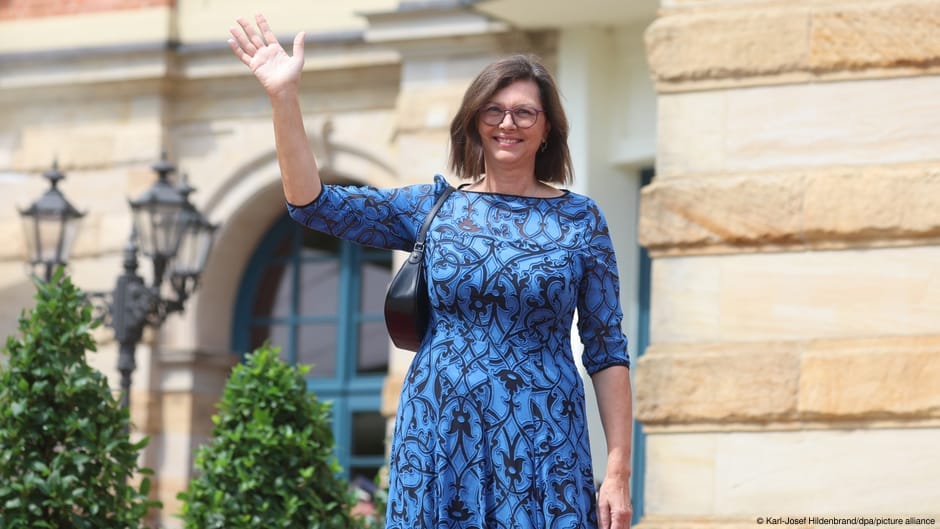
Chancellor Friedrich Merz has endorsed Ilse Aigner as the primary candidate to succeed Frank-Walter Steinmeier as Germany's president. The Federal Convention is scheduled to elect the new head of state on January 30, 2027.
 🗳️Elections
Photo: DW English
Key points
- Ilse Aigner endorsed as the leading candidate for German president.
- The Federal Convention will hold the election on January 30, 2027.
- Aigner would be the first female and first unmarried president of Germany.
Bavarian politician Ilse Aigner has been positioned as the frontrunner to replace Frank-Walter Steinmeier as Germany's next president. The endorsement by Chancellor Friedrich Merz, leader of the Christian Democratic Union (CDU), signals a high probability of success for the veteran Christian Social Union (CSU) member, given the existing majority held by the CDU, CSU, and their coalition partners in the Federal Convention.
Aigner, currently the president of the Bavarian parliament, brings a diverse professional background to the potential role, having worked as a telecommunications technician and in the aviation industry before entering politics. Her career includes a tenure as Germany's federal minister for agriculture and consumer protection under Angela Merkel. Despite her extensive experience, she would be a historic choice as the first female, single, and never-married president of the country.
The move is viewed by political observers as a strategic realignment within the conservative bloc. By supporting Aigner, Merz may effectively neutralize the chancellor ambitions of Bavarian Premier Markus Söder, as it is unlikely the CDU would support two high-ranking officials from the regional CSU party. Aigner’s selection is expected to consolidate unity within the center-right alliance ahead of the upcoming electoral cycle.
The stakes
If elected, Aigner will assume the role of Germany's moral authority and head of state in March 2027. Her appointment would likely settle internal power dynamics within the conservative alliance, potentially sidelining rival ambitions within the CSU while securing a prominent leadership position for the party at the federal level.
Two readings
- Supporters view Aigner as a pragmatic, experienced leader whose career demonstrates resilience and an ability to navigate complex political pressure without scandal.
- Critics argue that her nomination is a calculated maneuver by the CDU leadership to suppress internal competition and maintain control over the conservative political agenda.
Source DW English — dw.com/en/who-is-ilse-aigner-leading-candidate-for-germany-s-next-p… ↗
Read next
 ✒️Opinion & Analysis
ICJ Rules Myanmar Military Committed Genocide Against Rohingya
The International Court of Justice has found Myanmar's military guilty of genocide against the Rohingya, a ruling that damages the international standing of both Aung San…
 🕯️Democracy & Rights
Chinese teachers face rising parental pressure over personal life choices
Chinese educators are encountering a surge in unreasonable demands from parents, including complaints regarding teachers' pregnancy and maternity leave.
 🛡️War & Security
Ukraine Restricts Media Coverage of Infrastructure Damage Amid Russian Strikes
President Volodymyr Zelenskyy has issued a decree prohibiting media outlets from reporting on the impact of Russian strikes against critical infrastructure and the status…
 🏮China & Taiwan
Beijing Reaffirms Reunification Stance Following Taiwan Local Election Results
China’s Taiwan Affairs Office declared that the island’s reunification with the mainland remains inevitable, despite recent shifts in Taiwan's local political landscape.
 🇪🇺Europe
US Air Force Repels Unauthorized Drone Incursion at RAF Lakenheath
U.S. security forces at a British air base successfully countered a group of unidentified drones, amid growing concerns over potential foreign state involvement.
 ⚖️Law & Policy
India Government Proposes 50% Increase in Parliamentary Seats and Women's Reservation
The Indian government plans to introduce legislation to expand the Lok Sabha to 850 seats and mandate a 33% reservation for women in legislative bodies.