Turkish Vice President Signals Potential Early Election Date in 2028
Vice President Cevdet Yılmaz announced that while the next Turkish elections are set for 2028, they could be moved forward by one or two months. He also confirmed that the ruling People's Alliance intends to nominate President Recep Tayyip Erdoğan for another term.
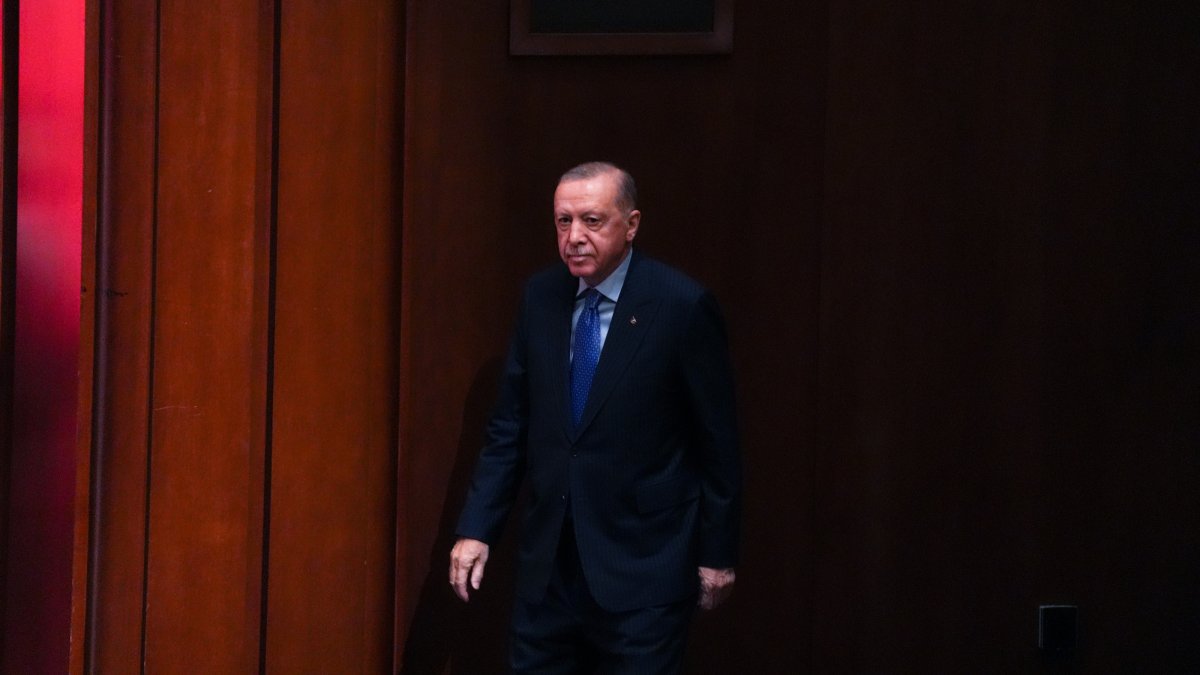 🗳️Elections
Photo: Daily Sabah
Key points
- Elections are officially set for May 2028 but could be moved forward by 1-2 months.
- The ruling People's Alliance has confirmed consensus on nominating President Erdoğan for another term.
- Triggering an early election requires 360 parliamentary votes, while the ruling coalition currently holds 326.
Turkish Vice President Cevdet Yılmaz stated on Thursday that the nation’s upcoming elections, officially scheduled for May 2028, may be held slightly earlier than planned. During a press conference in Ankara, Yılmaz suggested a shift of one or two months is being discussed, though he cautioned the public against relying on speculative reporting regarding the electoral calendar.
Yılmaz further confirmed that the ruling People's Alliance, comprised of the Justice and Development Party (AK Party) and the Nationalist Movement Party (MHP), has reached a consensus to support President Recep Tayyip Erdoğan as their candidate for the next cycle. Under current constitutional provisions, an early election requires the support of 360 out of 600 parliamentary seats. The ruling alliance currently holds 326 seats, necessitating cross-party cooperation to trigger such a move.
Despite the Vice President's comments, Treasury and Finance Minister Mehmet Şimşek emphasized that an early election is not currently part of the government’s active agenda. Şimşek noted that the national budget was developed without accounting for an early vote, reinforcing the administration's official stance that the electoral timeline remains focused on the standard 2028 schedule.
The stakes
An early election would allow the ruling alliance to potentially consolidate power or capitalize on favorable political conditions, though it requires securing significant opposition support in Parliament. For the opposition, the decision to back or block such a move will determine their ability to influence the timing of the transition and the political landscape leading up to the end of Erdoğan's term.
Two readings
- Supporters view the potential adjustment as a pragmatic administrative decision to ensure smooth governance and maintain political momentum for the ruling coalition.
- Critics argue that any discussion of early elections is a strategic maneuver designed to test the opposition's unity and secure a path for Erdoğan to extend his tenure.
Source Daily Sabah — dailysabah.com/politics/elections/turkiye-elections-due-in-2028-cou… ↗
Read next
 ✒️Opinion & Analysis
ICJ Rules Myanmar Military Committed Genocide Against Rohingya
The International Court of Justice has found Myanmar's military guilty of genocide against the Rohingya, a ruling that damages the international standing of both Aung San…
 🕯️Democracy & Rights
Chinese teachers face rising parental pressure over personal life choices
Chinese educators are encountering a surge in unreasonable demands from parents, including complaints regarding teachers' pregnancy and maternity leave.
 🛡️War & Security
Ukraine Restricts Media Coverage of Infrastructure Damage Amid Russian Strikes
President Volodymyr Zelenskyy has issued a decree prohibiting media outlets from reporting on the impact of Russian strikes against critical infrastructure and the status…
 🏮China & Taiwan
Beijing Reaffirms Reunification Stance Following Taiwan Local Election Results
China’s Taiwan Affairs Office declared that the island’s reunification with the mainland remains inevitable, despite recent shifts in Taiwan's local political landscape.
 🇪🇺Europe
US Air Force Repels Unauthorized Drone Incursion at RAF Lakenheath
U.S. security forces at a British air base successfully countered a group of unidentified drones, amid growing concerns over potential foreign state involvement.
 ⚖️Law & Policy
India Government Proposes 50% Increase in Parliamentary Seats and Women's Reservation
The Indian government plans to introduce legislation to expand the Lok Sabha to 850 seats and mandate a 33% reservation for women in legislative bodies.