Pakistan Military Reports 74 Militants Killed in Recent Intelligence-Based Operations
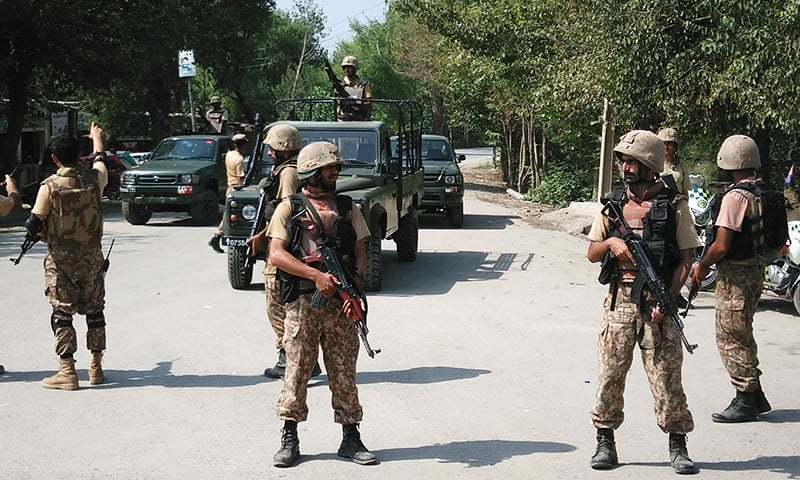
Pakistan's security forces have reported the deaths of 74 militants across Khyber Pakhtunkhwa and Balochistan during intensified intelligence-led counterterrorism operations.
 🕌Middle East
Photo: Dawn
Key points
- 74 militants killed in recent operations across two provinces
- Military recovered large caches of explosives and weaponry
- President Zardari reaffirmed commitment to the Azm-i-Istehkam campaign
Pakistan’s military media wing, the Inter-Services Public Relations (ISPR), announced on Friday that security forces eliminated 74 militants during a series of intelligence-based operations conducted in the Khyber Pakhtunkhwa and Balochistan provinces. The military stated that 35 individuals were killed in North Waziristan’s Mir Ali district, while another eight were neutralized in the Orakzai district over a 48-hour period.
Additionally, the ISPR reported that 31 militants were killed since November 3 in the Kurram area of the Quetta district. During these engagements, security forces recovered significant caches of weapons, ammunition, and improvised explosive devices. The military characterized the operations as part of the ongoing "Azm-i-Istehkam" campaign, aimed at dismantling militant networks and preventing future attacks.
President Asif Ali Zardari praised the security forces for their performance, asserting that the state would not permit externally supported groups to undermine national stability. The government frequently uses the term "Fitna-al-Khawarij" to describe the Tehreek-i-Taliban Pakistan, while also alleging that certain Balochistan-based groups receive support from India to destabilize the region.
The stakes
The success of these operations is critical for the Pakistani state as it faces a documented surge in militant activity, with recent data from the Pakistan Institute for Conflict and Security Studies showing 49 attacks in a single week. If the military sustains this pressure, it may temporarily disrupt militant logistics and recruitment, though persistent violence suggests a long-term challenge to state authority in the border regions.
Two readings
- Supporters view these operations as a necessary and professional display of state strength required to restore order and eliminate foreign-backed threats.
- Critics and security analysts often point to the cyclical nature of these offensives, questioning whether kinetic military action alone can resolve the underlying political and regional grievances fueling the insurgency.
Source Dawn — dawn.com/news/2044260/security-forces-kill-74-terrorists-during-ibo… ↗
Read next
 ✒️Opinion & Analysis
ICJ Rules Myanmar Military Committed Genocide Against Rohingya
The International Court of Justice has found Myanmar's military guilty of genocide against the Rohingya, a ruling that damages the international standing of both Aung San…
 🕯️Democracy & Rights
Chinese teachers face rising parental pressure over personal life choices
Chinese educators are encountering a surge in unreasonable demands from parents, including complaints regarding teachers' pregnancy and maternity leave.
 🛡️War & Security
Ukraine Restricts Media Coverage of Infrastructure Damage Amid Russian Strikes
President Volodymyr Zelenskyy has issued a decree prohibiting media outlets from reporting on the impact of Russian strikes against critical infrastructure and the status…
 🏮China & Taiwan
Beijing Reaffirms Reunification Stance Following Taiwan Local Election Results
China’s Taiwan Affairs Office declared that the island’s reunification with the mainland remains inevitable, despite recent shifts in Taiwan's local political landscape.
 🇪🇺Europe
US Air Force Repels Unauthorized Drone Incursion at RAF Lakenheath
U.S. security forces at a British air base successfully countered a group of unidentified drones, amid growing concerns over potential foreign state involvement.
 ⚖️Law & Policy
India Government Proposes 50% Increase in Parliamentary Seats and Women's Reservation
The Indian government plans to introduce legislation to expand the Lok Sabha to 850 seats and mandate a 33% reservation for women in legislative bodies.