Turkey and Qatar Sign New Bilateral Defence Agreement in Istanbul
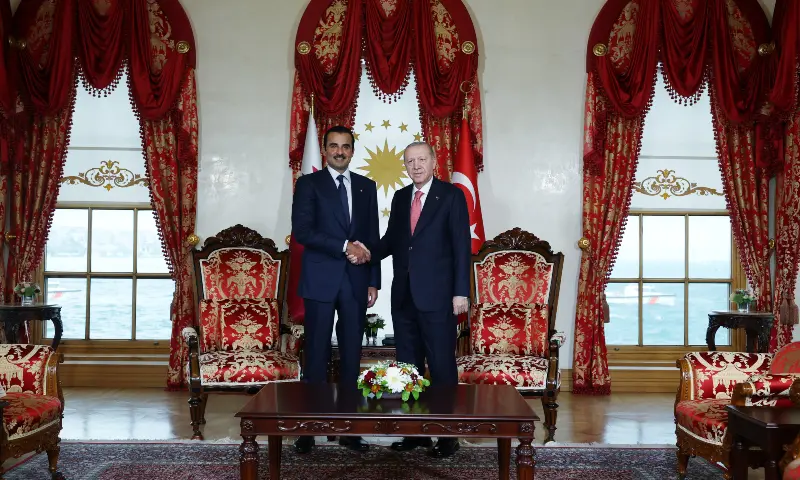
Turkish President Recep Tayyip Erdogan and Qatari Emir Sheikh Tamim bin Hamad Al Thani signed a new bilateral defence pact in Istanbul, aiming to deepen regional cooperation.
 🕌Middle East
Photo: Dawn
Key points
- Turkey and Qatar signed a bilateral defence agreement in Istanbul.
- The pact follows a meeting between President Erdogan and Qatari Emir Sheikh Tamim bin Hamad Al Thani.
- Leaders also discussed regional conflicts, including Gaza, Syria, and Libya.
Turkey and Qatar formalized a new defence agreement on Friday, with Turkish President Recep Tayyip Erdogan stating the pact deepens the alliance between the two governments. The signing followed a meeting in Istanbul between President Erdogan and Qatari Emir Sheikh Tamim bin Hamad Al Thani, who arrived in Turkey after attending the UN COP31 climate summit.
According to the Turkish presidency, the accord introduces a new dimension to bilateral relations and paves the way for expanded collaboration within the defence industrial sector. While official statements omitted specific operational details, Erdogan emphasized that both nations remain committed to regional security, dialogue, and preventing renewed conflict in the Gulf.
During their discussions, the two leaders also addressed wider geopolitical issues, reviewing the humanitarian crisis and military actions in Gaza, diplomatic normalization efforts in Syria, and political developments in Libya. This pact follows a separate regional agreement reached in August involving Turkey, Saudi Arabia, and Pakistan.
The stakes
This agreement enhances strategic alignment between Ankara and Doha, solidifying Turkey's military footprint in the Gulf while providing Qatar with an influential regional security partner. If the unreleased terms include mutual defence guarantees similar to Turkey's recent pact with Saudi Arabia, the deal could alter regional deterrence balances and draw both capitals closer on Middle Eastern security interventions.
Two readings
- Supporters view the agreement as a vital step toward regional stability, cooperative defense manufacturing, and coordinated humanitarian diplomacy in crisis zones.
- Critics argue that opaque bilateral military pacts risk deepening regional polarization and complicating broader multilateral security frameworks in the Middle East.
Source Dawn — dawn.com/news/2044322/turkiye-qatar-sign-defence-agreement-turkish-… ↗
Read next
 ✒️Opinion & Analysis
ICJ Rules Myanmar Military Committed Genocide Against Rohingya
The International Court of Justice has found Myanmar's military guilty of genocide against the Rohingya, a ruling that damages the international standing of both Aung San…
 🕯️Democracy & Rights
Chinese teachers face rising parental pressure over personal life choices
Chinese educators are encountering a surge in unreasonable demands from parents, including complaints regarding teachers' pregnancy and maternity leave.
 🛡️War & Security
Ukraine Restricts Media Coverage of Infrastructure Damage Amid Russian Strikes
President Volodymyr Zelenskyy has issued a decree prohibiting media outlets from reporting on the impact of Russian strikes against critical infrastructure and the status…
 🏮China & Taiwan
Beijing Reaffirms Reunification Stance Following Taiwan Local Election Results
China’s Taiwan Affairs Office declared that the island’s reunification with the mainland remains inevitable, despite recent shifts in Taiwan's local political landscape.
 🇪🇺Europe
US Air Force Repels Unauthorized Drone Incursion at RAF Lakenheath
U.S. security forces at a British air base successfully countered a group of unidentified drones, amid growing concerns over potential foreign state involvement.
 ⚖️Law & Policy
India Government Proposes 50% Increase in Parliamentary Seats and Women's Reservation
The Indian government plans to introduce legislation to expand the Lok Sabha to 850 seats and mandate a 33% reservation for women in legislative bodies.