WHO Director-General Calls for Political Solutions to Resolve Gaza Conflict
World Health Organization leader Tedros Adhanom Ghebreyesus has urged global leaders to prioritize peace and political diplomacy as the primary means to address the crisis in Gaza.
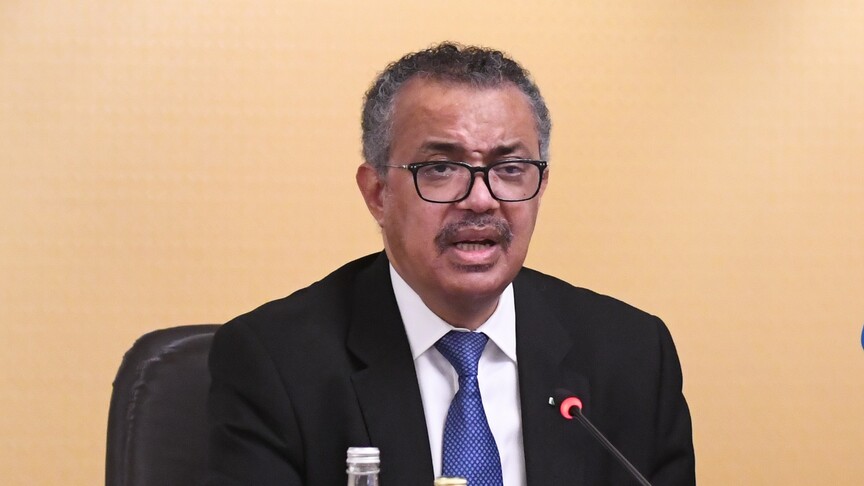 🕌Middle East
Photo: Anadolu
Key points
- WHO chief Tedros Adhanom Ghebreyesus calls for political solutions in Gaza.
- Emphasis placed on the necessity of diplomatic courage to achieve peace.
- Link drawn between global health resilience, climate change, and conflict mitigation.
World Health Organization (WHO) Director-General Tedros Adhanom Ghebreyesus has issued a formal appeal to international leaders to seek political resolutions for the ongoing conflict in Gaza. Speaking on the sidelines of the COP31 climate summit in Antalya, Türkiye, the WHO chief asserted that peace remains the most effective remedy for the region's humanitarian crisis and urged global figures to demonstrate the courage required to pursue diplomatic pathways.
While acknowledging that there has been some marginal improvement regarding the situation on the ground, Tedros emphasized that current progress is insufficient to meet the needs of the population. He maintained that the primary responsibility for ending the suffering lies with political leadership, which must shift its focus toward sustainable, long-term stability rather than short-term mitigation.
The WHO official, whose term concludes in mid-August, also addressed the intersection of conflict and global health infrastructure. During a joint briefing with Turkish Health Minister Kemal Memisoglu, Tedros highlighted the necessity of protecting medical systems from both geopolitical instability and the escalating health risks posed by climate change, calling for enhanced international coordination and financing to ensure the resilience of hospitals and clinics.
The stakes
The call for political intervention highlights the limits of humanitarian aid in conflict zones, suggesting that without a formal diplomatic breakthrough, health systems in Gaza will remain fundamentally compromised. If political leaders fail to prioritize a resolution, the burden on international health organizations will continue to grow, leaving local medical infrastructure in a state of perpetual crisis.
Two readings
- Supporters argue that the WHO chief is correctly identifying that humanitarian relief is a stop-gap measure and that only a political settlement can address the root causes of the health catastrophe.
- Critics may contend that the WHO should remain strictly focused on technical health operations rather than attempting to influence the high-level diplomatic and military strategies of sovereign nations.
Source Anadolu — aa.com.tr/en/world/-most-courageous-leaders-choose-peace-who-chief-… ↗
Read next
 ✒️Opinion & Analysis
ICJ Rules Myanmar Military Committed Genocide Against Rohingya
The International Court of Justice has found Myanmar's military guilty of genocide against the Rohingya, a ruling that damages the international standing of both Aung San…
 🕯️Democracy & Rights
Chinese teachers face rising parental pressure over personal life choices
Chinese educators are encountering a surge in unreasonable demands from parents, including complaints regarding teachers' pregnancy and maternity leave.
 🛡️War & Security
Ukraine Restricts Media Coverage of Infrastructure Damage Amid Russian Strikes
President Volodymyr Zelenskyy has issued a decree prohibiting media outlets from reporting on the impact of Russian strikes against critical infrastructure and the status…
 🏮China & Taiwan
Beijing Reaffirms Reunification Stance Following Taiwan Local Election Results
China’s Taiwan Affairs Office declared that the island’s reunification with the mainland remains inevitable, despite recent shifts in Taiwan's local political landscape.
 🇪🇺Europe
US Air Force Repels Unauthorized Drone Incursion at RAF Lakenheath
U.S. security forces at a British air base successfully countered a group of unidentified drones, amid growing concerns over potential foreign state involvement.
 ⚖️Law & Policy
India Government Proposes 50% Increase in Parliamentary Seats and Women's Reservation
The Indian government plans to introduce legislation to expand the Lok Sabha to 850 seats and mandate a 33% reservation for women in legislative bodies.