Israeli President Tasks Gadi Eisenkot with Forming New Government
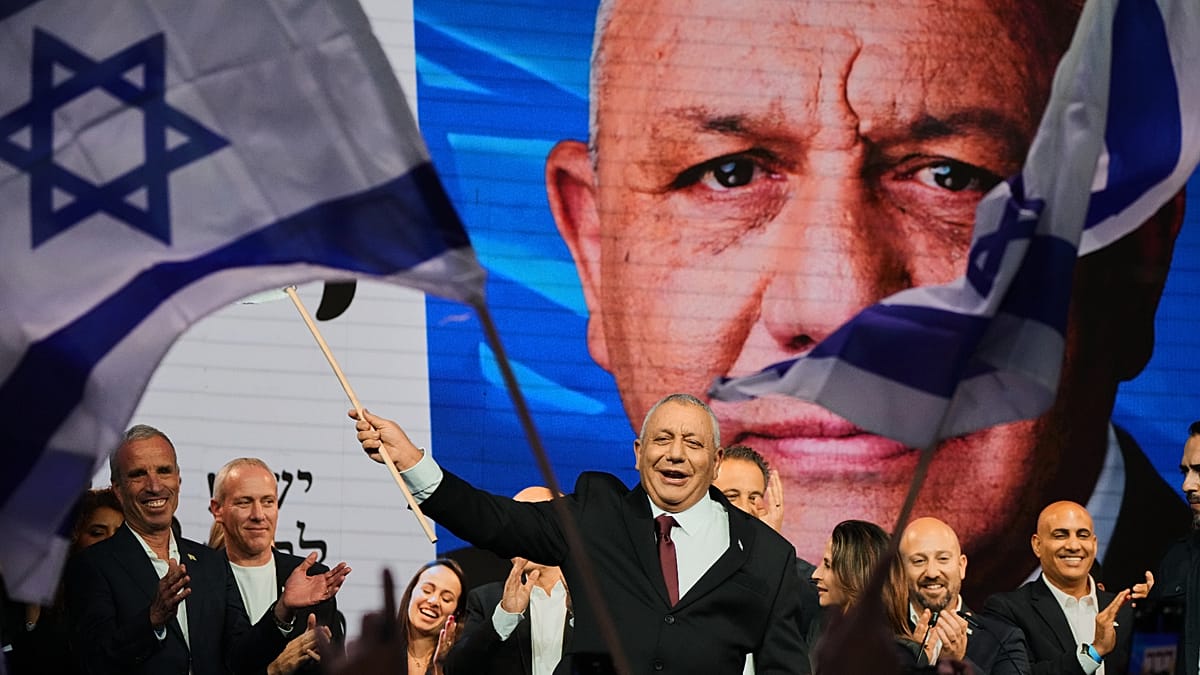
President Isaac Herzog has officially invited Gadi Eisenkot, leader of the centrist Yashar party, to form a government after securing support from a majority of Knesset members.
 🕌Middle East
Photo: Euronews
Key points
- President Herzog tasks Gadi Eisenkot with government formation after securing 67 Knesset signatures.
- Netanyahu's camp failed to reach a majority, garnering only 46 signatures despite Likud being the largest party.
- Eisenkot has 28 days to form a coalition, with a possible 14-day extension before alternative options are explored.
Israeli President Isaac Herzog announced on Saturday his decision to task Gadi Eisenkot, the leader of the centrist Yashar party, with the mandate to form a new government. The decision follows a series of consultations with parliamentary leaders after last month's legislative elections failed to produce a clear majority for any single political bloc.
According to the official statement from the President’s office, Eisenkot secured the backing of 67 members of the 120-seat Knesset, significantly outperforming incumbent Prime Minister Benjamin Netanyahu, who received support from 46 lawmakers. The formal ceremony to confer the mandate is scheduled for Sunday, granting Eisenkot an initial 28-day window to assemble a coalition, with a potential 14-day extension available if required.
The move comes amidst a fragmented political landscape, where neither the Yashar-led opposition nor Netanyahu’s right-wing camp achieved an outright majority in the recent vote. While Netanyahu’s Likud party remains the single largest faction with 27 seats, the surge of Arab parties—which secured a record 19 seats—has complicated traditional coalition building. Prior to the President's announcement, Netanyahu had proposed the creation of a national unity government to address the ongoing deadlock.
The stakes
If Eisenkot succeeds, he will end the prolonged political uncertainty that has gripped Israel, potentially sidelining Netanyahu and shifting the country's governing coalition toward the center. Failure to secure a cabinet would trigger a complex secondary phase of negotiations, potentially leading to further rounds of political maneuvering or, in the worst case, additional legislative elections.
Two readings
- Supporters view Eisenkot’s appointment as a necessary step toward restoring stability and ending the cycle of political gridlock that has hindered effective governance.
- Critics argue that the coalition math remains precarious and that a government led by the Yashar party may struggle to maintain long-term cohesion given the diverse interests of the supporting factions.
Source Euronews — euronews.com/2026/11/08/netanyahu-rival-eisenkot-to-be-tasked-with-… ↗
Read next
 ✒️Opinion & Analysis
ICJ Rules Myanmar Military Committed Genocide Against Rohingya
The International Court of Justice has found Myanmar's military guilty of genocide against the Rohingya, a ruling that damages the international standing of both Aung San…
 🕯️Democracy & Rights
Chinese teachers face rising parental pressure over personal life choices
Chinese educators are encountering a surge in unreasonable demands from parents, including complaints regarding teachers' pregnancy and maternity leave.
 🛡️War & Security
Ukraine Restricts Media Coverage of Infrastructure Damage Amid Russian Strikes
President Volodymyr Zelenskyy has issued a decree prohibiting media outlets from reporting on the impact of Russian strikes against critical infrastructure and the status…
 🏮China & Taiwan
Beijing Reaffirms Reunification Stance Following Taiwan Local Election Results
China’s Taiwan Affairs Office declared that the island’s reunification with the mainland remains inevitable, despite recent shifts in Taiwan's local political landscape.
 🇪🇺Europe
US Air Force Repels Unauthorized Drone Incursion at RAF Lakenheath
U.S. security forces at a British air base successfully countered a group of unidentified drones, amid growing concerns over potential foreign state involvement.
 ⚖️Law & Policy
India Government Proposes 50% Increase in Parliamentary Seats and Women's Reservation
The Indian government plans to introduce legislation to expand the Lok Sabha to 850 seats and mandate a 33% reservation for women in legislative bodies.