Pakistan Interior Minister Naqvi and Federal Minister Sanaullah Clash Over Public Remarks
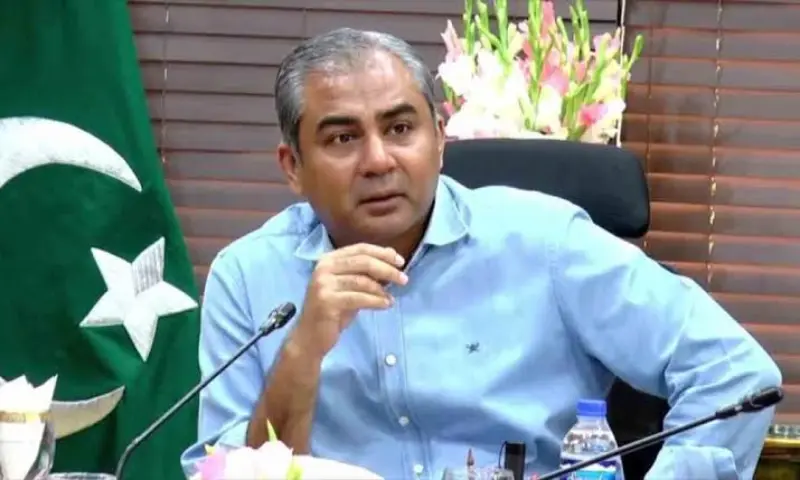
Pakistani Interior Minister Mohsin Naqvi has sharply criticized an unnamed federal minister, shortly after Inter-Provincial Coordination Minister Rana Sanaullah publicly questioned the conduct of businessmen attending a high-profile economic forum.
 🕌Middle East
Photo: Dawn
Key points
- Interior Minister Mohsin Naqvi responded to months of public criticism by an unnamed federal minister.
- The spat follows Inter-Provincial Coordination Minister Rana Sanaullah's criticism of businessmen at a July economic forum.
- Sanaullah defended open debates within the cabinet while raising questions about political party funding practices.
Pakistani Interior Minister Mohsin Naqvi has hit back at a federal minister for continuous media criticism directed at him, warning that a public response would severely damage the critic's reputation. In an informal conversation with media, Naqvi stated he had endured the remarks for two-and-a-half years, accusing the unnamed official of seeking daily attention on television.
The exchange follows comments by Inter-Provincial Coordination Minister Rana Sanaullah, who in a televised interview questioned the integrity of certain business figures present at the Pakistan Economic Summit held in July. Sanaullah criticized Naqvi for initiating debates on creating new administrative units at an economic gathering and alleged that some attendees habitually curried favor with incoming rulers and military leadership.
Naqvi strongly defended the business community, describing them as respectable citizens, chamber of commerce leaders, and major national taxpayers. He also questioned the consistency of political fundraising practices from these very business groups during election cycles. Sanaullah countered by defending differing viewpoints within the cabinet, noting that political debate cannot be subjected to rigid internal discipline.
The stakes
This public fallout exposes deep friction within Pakistan's federal administration and coalition governance, risking policy alignment and executive cohesion. If left unmanaged, the growing rift between senior ministers could destabilize legislative agendas and intensify tensions among ruling coalition partners.
Two readings
- Supporters read the exchange as a healthy manifestation of democratic pluralism and free expression within a diverse ruling coalition.
- Critics read the public feud as a sign of dysfunctional internal governance and administrative drift within the federal cabinet.
Source Dawn — dawn.com/news/2046332/naqvi-hits-back-at-minister-for-repeated-crit… ↗
Read next
 ✒️Opinion & Analysis
ICJ Rules Myanmar Military Committed Genocide Against Rohingya
The International Court of Justice has found Myanmar's military guilty of genocide against the Rohingya, a ruling that damages the international standing of both Aung San…
 🕯️Democracy & Rights
Chinese teachers face rising parental pressure over personal life choices
Chinese educators are encountering a surge in unreasonable demands from parents, including complaints regarding teachers' pregnancy and maternity leave.
 🛡️War & Security
Ukraine Restricts Media Coverage of Infrastructure Damage Amid Russian Strikes
President Volodymyr Zelenskyy has issued a decree prohibiting media outlets from reporting on the impact of Russian strikes against critical infrastructure and the status…
 🏮China & Taiwan
Beijing Reaffirms Reunification Stance Following Taiwan Local Election Results
China’s Taiwan Affairs Office declared that the island’s reunification with the mainland remains inevitable, despite recent shifts in Taiwan's local political landscape.
 🇪🇺Europe
US Air Force Repels Unauthorized Drone Incursion at RAF Lakenheath
U.S. security forces at a British air base successfully countered a group of unidentified drones, amid growing concerns over potential foreign state involvement.
 ⚖️Law & Policy
India Government Proposes 50% Increase in Parliamentary Seats and Women's Reservation
The Indian government plans to introduce legislation to expand the Lok Sabha to 850 seats and mandate a 33% reservation for women in legislative bodies.