Pakistan Interior Minister Sets Boundaries on Free Speech
Pakistan's Interior Minister Mohsin Naqvi has stated that freedom of speech should not be used to cross four red lines: terrorism, hate speech, incitement to violence, and sexual exploitation of children. He urged social media platforms to take action against terrorist groups operating on their networks.
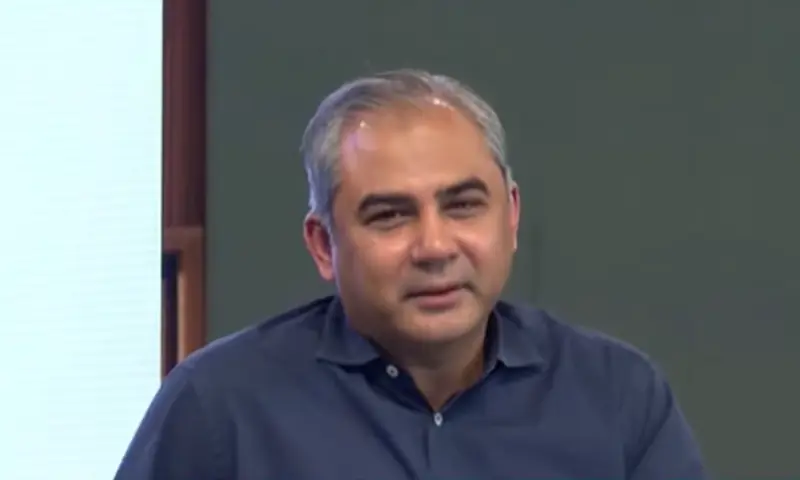 🕌Middle East
Photo: Dawn
Pakistan's Interior Minister Mohsin Naqvi has asserted that freedom of speech has its limits and should not be used as a shield for those who cross certain boundaries. He identified four non-negotiable red lines for the state: terrorism, hate speech, incitement to violence, and sexual exploitation of children.
Naqvi made these remarks at a seminar on social media platforms and the post-truth era, where he also criticized social media platforms for acting on only 47% of complaints lodged by the Counter Terrorism Department. He defended the establishment of the Social Media Protection and Regulatory Authority, which aims to regulate social media platforms and ensure they are accountable for their content.
The interior minister emphasized that registration with the authority is not meant to silence anyone, but rather to ensure that social media platforms are accountable when something goes wrong. He also announced plans to develop a centralized system to track complaints and to enforce regulations step by step, with blocking an entire platform being a last resort.
The stakes
The implementation of these regulations could have significant implications for social media platforms and their users in Pakistan. If successful, it could lead to a reduction in the spread of hate speech and terrorist content online, but it also raises concerns about censorship and the potential for abuse of power.
Two readings
- Supporters of the regulations see them as a necessary step to protect citizens from harm and to prevent the spread of terrorist content online, and argue that they will help to maintain a balance between freedom of speech and national security.
- Critics, on the other hand, view the regulations as an attempt to curb freedom of speech and to silence dissenting voices, and argue that they could be used to target opposition groups and minority communities.
Source Dawn — dawn.com/news/2046873/free-speech-not-a-licence-to-cross-four-red-l… ↗
Read next
 ✒️Opinion & Analysis
ICJ Rules Myanmar Military Committed Genocide Against Rohingya
The International Court of Justice has found Myanmar's military guilty of genocide against the Rohingya, a ruling that damages the international standing of both Aung San…
 🕯️Democracy & Rights
Chinese teachers face rising parental pressure over personal life choices
Chinese educators are encountering a surge in unreasonable demands from parents, including complaints regarding teachers' pregnancy and maternity leave.
 🛡️War & Security
Ukraine Restricts Media Coverage of Infrastructure Damage Amid Russian Strikes
President Volodymyr Zelenskyy has issued a decree prohibiting media outlets from reporting on the impact of Russian strikes against critical infrastructure and the status…
 🏮China & Taiwan
Beijing Reaffirms Reunification Stance Following Taiwan Local Election Results
China’s Taiwan Affairs Office declared that the island’s reunification with the mainland remains inevitable, despite recent shifts in Taiwan's local political landscape.
 🇪🇺Europe
US Air Force Repels Unauthorized Drone Incursion at RAF Lakenheath
U.S. security forces at a British air base successfully countered a group of unidentified drones, amid growing concerns over potential foreign state involvement.
 ⚖️Law & Policy
India Government Proposes 50% Increase in Parliamentary Seats and Women's Reservation
The Indian government plans to introduce legislation to expand the Lok Sabha to 850 seats and mandate a 33% reservation for women in legislative bodies.