Ra’am Party Signals Support for Potential Eisenkot Government in Israel
The United Arab List has indicated it may support a government led by Gadi Eisenkot without requiring a formal coalition agreement. This move aims to prevent reliance on ultra-Orthodox parties while maneuvering against Benjamin Netanyahu.
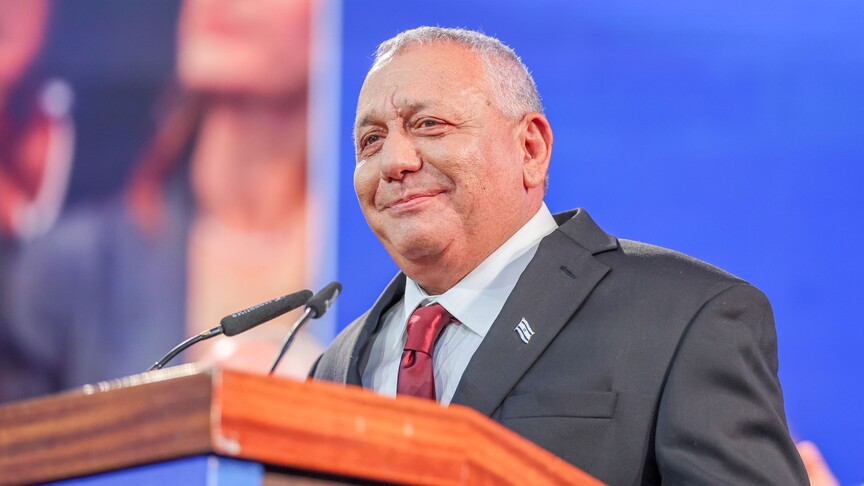 🕌Middle East
Photo: Anadolu
Key points
- Ra’am party offers external support to Gadi Eisenkot to replace Netanyahu.
- The move aims to bypass the need for ultra-Orthodox party participation.
- The Joint List remains non-committal, refusing to support or actively topple the government.
The United Arab List (Ra’am), led by Mansour Abbas, has signaled its willingness to support a potential government formed by Gadi Eisenkot without the necessity of a formal coalition deal. This development follows President Isaac Herzog’s recent decision to task Eisenkot with the formation of a new administration following the October 27 legislative elections.
According to reports, the decision by the eight-member Ra’am faction is a strategic maneuver designed to decouple the government from the influence of the ultra-Orthodox United Torah Judaism party. By offering external support, the party seeks to facilitate a transition away from the current leadership under Benjamin Netanyahu, aligning with the stated goals of the Arab electorate.
Conversely, the Joint List, which holds 11 seats, has adopted a more cautious stance. While representatives indicated they would not actively move to collapse an Eisenkot-led government, they have stated they will not provide a vote of confidence in the absence of a formal agreement. With anti-Netanyahu factions holding 67 seats, the parliamentary arithmetic remains complex as opposition leaders continue to express hesitation regarding the inclusion of Arab parties in a governing coalition.
The stakes
If successful, this arrangement could provide the necessary parliamentary support to end Benjamin Netanyahu’s tenure without forcing a formal alliance that might alienate other coalition partners. However, the reliance on external support from Arab parties remains a polarizing issue in Israeli politics, potentially creating a fragile legislative environment that could struggle to pass significant policy changes.
Two readings
- Supporters argue that this pragmatic approach is essential to achieving a change in government and ensuring the Arab public’s electoral mandate is respected.
- Critics contend that forming a government dependent on Arab parties, even informally, undermines the stability of the state and ignores the ideological objections of mainstream opposition factions.
Source Anadolu — aa.com.tr/en/middle-east/united-arab-list-to-back-possible-eisenkot… ↗
Read next
 ✒️Opinion & Analysis
ICJ Rules Myanmar Military Committed Genocide Against Rohingya
The International Court of Justice has found Myanmar's military guilty of genocide against the Rohingya, a ruling that damages the international standing of both Aung San…
 🕯️Democracy & Rights
Chinese teachers face rising parental pressure over personal life choices
Chinese educators are encountering a surge in unreasonable demands from parents, including complaints regarding teachers' pregnancy and maternity leave.
 🛡️War & Security
Ukraine Restricts Media Coverage of Infrastructure Damage Amid Russian Strikes
President Volodymyr Zelenskyy has issued a decree prohibiting media outlets from reporting on the impact of Russian strikes against critical infrastructure and the status…
 🏮China & Taiwan
Beijing Reaffirms Reunification Stance Following Taiwan Local Election Results
China’s Taiwan Affairs Office declared that the island’s reunification with the mainland remains inevitable, despite recent shifts in Taiwan's local political landscape.
 🇪🇺Europe
US Air Force Repels Unauthorized Drone Incursion at RAF Lakenheath
U.S. security forces at a British air base successfully countered a group of unidentified drones, amid growing concerns over potential foreign state involvement.
 ⚖️Law & Policy
India Government Proposes 50% Increase in Parliamentary Seats and Women's Reservation
The Indian government plans to introduce legislation to expand the Lok Sabha to 850 seats and mandate a 33% reservation for women in legislative bodies.