Qatar and Canada Formalize Strategic Partnership in Ottawa Dialogue
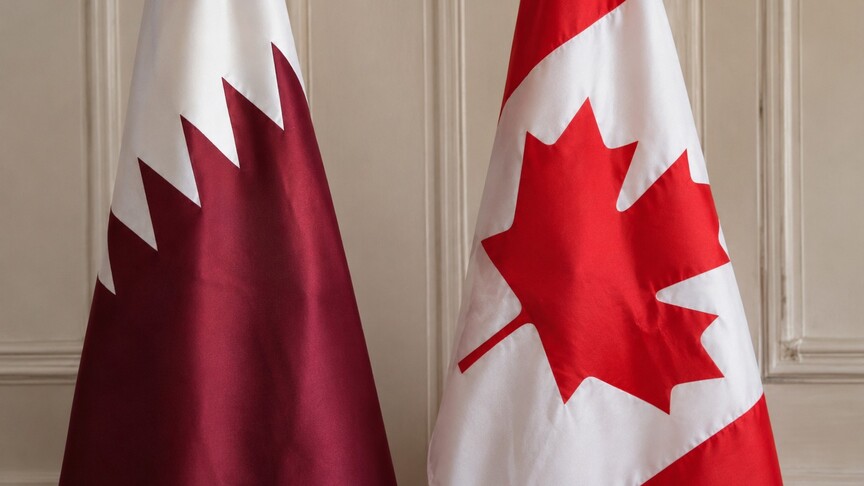
Qatar and Canada held their inaugural Strategic Dialogue in Ottawa, pledging closer cooperation on Middle East stability, humanitarian aid, and defense.
 🕌Middle East
Photo: Anadolu
Key points
- Inaugural Strategic Dialogue held in Ottawa between Qatar and Canada.
- Joint rejection of West Bank annexation and support for a two-state solution.
- Commitment to future defense, security, and humanitarian cooperation through 2027.
Qatar and Canada have formally committed to deepening their diplomatic and security ties following their first Strategic Dialogue held in Ottawa on November 24. Co-chaired by Qatari Prime Minister and Foreign Minister Mohammed bin Abdulrahman bin Jassim Al Thani and Canadian Foreign Minister Anita Anand, the meeting focused on establishing a framework for long-term cooperation under the banner of a strengthened strategic partnership.
A significant portion of the discussions centered on regional conflicts, specifically the situations in Syria and the Palestinian territories. Both nations emphasized the necessity of a two-state solution, explicitly rejecting the annexation of the West Bank and labeling Israeli settlements as illegal obstacles to peace. Furthermore, the ministers called for the implementation of UN Security Council Resolution 2803, urging a sustained ceasefire in Gaza and the protection of humanitarian aid delivery through UNRWA.
Beyond Middle Eastern affairs, the dialogue addressed broader security concerns, including maritime freedom in the Strait of Hormuz and the Bab al-Mandab. The two nations also pledged to enhance military collaboration through training and defense industry exchanges, while coordinating efforts to combat terrorism and cyber threats. The partnership is set to continue with a follow-up summit scheduled for 2027 in Doha.
The stakes
This dialogue signals a shift toward a more formalized alignment between Qatar and Canada on global security and humanitarian issues. By aligning their positions on the Palestinian conflict and regional stability, both countries aim to increase their influence in international mediation efforts, though the effectiveness of these diplomatic stances remains tied to the broader geopolitical consensus within the UN.
Two readings
- Supporters view the alignment as a vital step in bolstering international law and humanitarian standards in conflict zones through coordinated middle-power diplomacy.
- Critics may argue that such declarations have limited practical impact on the ground in Gaza or Syria, serving primarily as symbolic gestures rather than drivers of immediate policy change.
Source Anadolu — aa.com.tr/en/world/qatar-canada-reaffirm-support-for-syria-s-recove… ↗
Read next
 ✒️Opinion & Analysis
ICJ Rules Myanmar Military Committed Genocide Against Rohingya
The International Court of Justice has found Myanmar's military guilty of genocide against the Rohingya, a ruling that damages the international standing of both Aung San…
 🕯️Democracy & Rights
Chinese teachers face rising parental pressure over personal life choices
Chinese educators are encountering a surge in unreasonable demands from parents, including complaints regarding teachers' pregnancy and maternity leave.
 🛡️War & Security
Ukraine Restricts Media Coverage of Infrastructure Damage Amid Russian Strikes
President Volodymyr Zelenskyy has issued a decree prohibiting media outlets from reporting on the impact of Russian strikes against critical infrastructure and the status…
 🏮China & Taiwan
Beijing Reaffirms Reunification Stance Following Taiwan Local Election Results
China’s Taiwan Affairs Office declared that the island’s reunification with the mainland remains inevitable, despite recent shifts in Taiwan's local political landscape.
 🇪🇺Europe
US Air Force Repels Unauthorized Drone Incursion at RAF Lakenheath
U.S. security forces at a British air base successfully countered a group of unidentified drones, amid growing concerns over potential foreign state involvement.
 ⚖️Law & Policy
India Government Proposes 50% Increase in Parliamentary Seats and Women's Reservation
The Indian government plans to introduce legislation to expand the Lok Sabha to 850 seats and mandate a 33% reservation for women in legislative bodies.